
Black or green growth on a UK indoor unit means the coil, drain or filters have stayed wet. You may wash the removable filters, wipe the plastic fascia the manual allows, and dry everything before it runs again. Do not flood the coil with bleach, neat disinfectant or a cocktail of bathroom sprays. Those products can attack coatings and fins and do not fix a blocked drain. If mould is inside the fins, returns after a proper clean, or anyone in the home is reacting to it, stop and book a service. An F-gas engineer cleans the wet side. They should not open the gas circuit because of mould.
Spots on the louvres after a summer of shut windows
Mesh filters and the plastic around the intake are the parts you can see. The drain pan and the back of the coil are the parts that stay damp in a British summer, especially in flats that dry washing indoors and keep windows shut. A musty smell at start-up is the early warning. Spots on the louvres come later. HSE ventilation guidance is the backdrop: a closed, damp room keeps feeding the coil. Mould on the wall beside the unit can be a building damp problem that the split is only stirring. Condensate leaking into plaster feeds that growth. Fixing the stain with emulsion while the drain still overflows will bring the spots back. Separate a housing damp issue from a dirty filter before you blame the badge on the fascia.
A dirty wet coil can distribute a musty smell into that room. It is not a whole-house ventilation system. Energy Saving Trust's air-to-air heat pump page is about moving heat, not about treating mould. Clean the filters, stop leaks, and get the coil cleaned if growth is inside. Deal with building damp separately. Say if a bedroom, a nursery or someone with a breathing condition is involved, and whether the home already has damp walls.
A cloth on the plastic, then hands off the fins
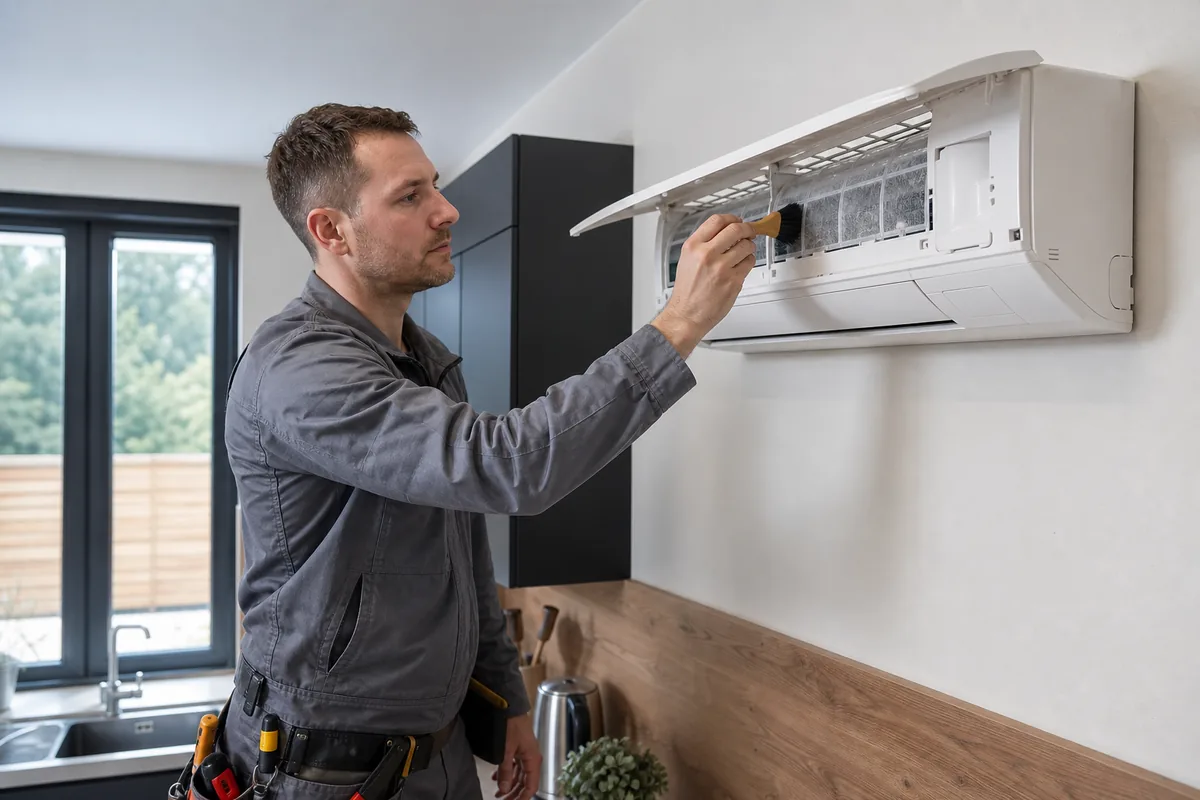
With the unit off, remove the filters and wash them. Wipe smooth plastic with a cloth dampened with diluted mild detergent if the manual agrees, then dry it. Wear gloves if you are sensitive to mould, and do not shake dirty filters over the bed. Ventilate the room. Let every piece dry before you reassemble. Do not spray bleach into the fins. Do not mix products. Do not run an ozone gadget or a fogger into the intake. Do not remove the evaporator cover if that means exposing wiring. Bleach can damage fins and coatings and it does not clear a blocked drain. If you cannot see the end of the growth, you are finished as the homeowner. The rest is a coil and drain clean on a service visit.
Book an F-gas engineer if growth is on the coil itself, if the pan is slimy, if water leaks, or if the smell returns within days. GOV.UK certification is what that company carries if the unit has to be opened properly. People with asthma or other respiratory conditions should not be the ones scrubbing a contaminated coil. Say that when you book. Do not keep running cooling to hide the smell. Cooling makes more water. Fan-only after a filter wash can dry a mild case. It will not scour a blocked drain. If there is heavy growth, a leak, or someone unwell is sleeping in the room, leave it off. Light marks on a washed filter, fully dried, are different. If you are unsure, leave it off. Refrigerant handling has nothing to do with mould unless a separate fault, such as icing, is freezing the coil and then soaking it. Even then, you do not open the gas circuit yourself.
Core buying guides
Start with these high-intent guides, then dig into the rest of the library.
Related guides
Sources and further reading
How this guide was prepared
This guide was written by the Local AC Installers Editorial Team. We compare official guidance, legislation and established consumer information, separate general information from project-specific advice, and show publication dates and sources. We do not accept installer accreditation claims at face value.