
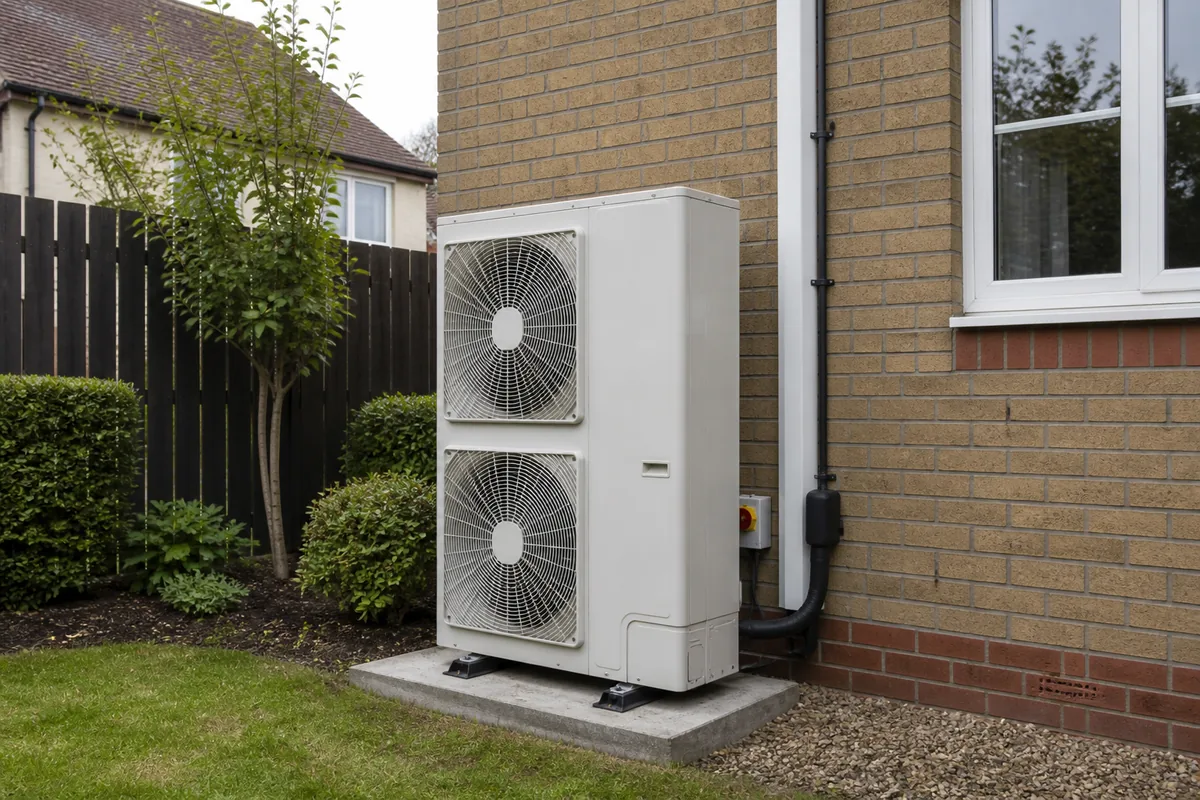
A quiet outdoor unit is a stated sound power, a stated night or low-speed figure, and a mount that does not turn the wall into a loudspeaker. One decibel number with no distance and no mode is not a specification. Ask for those figures on the exact outdoor model, then ask how it will be isolated. Neighbour windows and your own bedroom wall decide the position. In England, planning noise conditions on the Planning Portal are a separate test from the brochure.
Sound power, not a lone decibel
Sound power is the noise the machine makes as a source. Sound pressure is what you hear at a distance, and it changes with the garden, the fence and the wall. Quotes that print one dB figure without saying which it is are hard to compare. Ask for sound power, and for the sound pressure at the distance the manufacturer states.
The figure that matters at 11pm
Then ask for the night figure, or the low and quiet mode figure, on that same model. Full speed on a hot afternoon is not the number that matters at 11pm. A unit with no published low mode is a different buy from one that can drop its fan and compressor.
Figures to demand on the exact outdoor model
The lowest dB on the brochure is the night noise only if they say which mode and which measure it is.
- Ask for sound power on the exact outdoor model.
- Ask for the night or quiet-mode figure.
- Ask what the mounts are.
- Reject a single dB with no mode and no distance.
Rubber pads under a rigid bedroom bracket
Anti-vibration feet or mounts stop the compressor writing a hum into brick and joists. A rigid bracket on a bedroom wall can be louder indoors than the datasheet suggests outdoors. Rubber pads under a unit that is bolted solid do very little. A quiet model often does not fix a bracket on the bedroom wall. Vibration through the wall is the mount and the position.
Planning noise beside the datasheet
Ground stands suit weak or noisy walls. They can be worse for a neighbour whose seating is a metre away. The quietest catalogue unit in the wrong place still fails. Keep manufacturer air gaps.
In England, permitted development for an air source heat pump is tied to conditions on the Planning Portal, including noise and siting. Meeting a sales conversation is not the same as meeting that test. Flats, listed buildings and extra units often need an application anyway. A planning leaflet does not replace the datasheet. F-gas commissioning still matters: a short-cycling or undercharged unit is louder than the same model set up properly. Certification of the company is part of the buy, not an extra.
Wrong when a tight box is sold as the quiet fix
A tight acoustic box often adds noise by starving the coil. Buying on one decibel with no distance and no mode, or boxing the unit until it cannot breathe, is the wrong way to chase a quiet outdoor unit.
Core buying guides
Start with these high-intent guides, then dig into the rest of the library.
Related guides
Sources and further reading
How this guide was prepared
This guide was written by the Local AC Installers Editorial Team. We compare official guidance, legislation and established consumer information, separate general information from project-specific advice, and show publication dates and sources. We do not accept installer accreditation claims at face value.