
Server room cooling needs planned maintenance that preserves continuous process protection while meeting F-gas and building inspection duties. Use qualified contractors for refrigerant work, keep required records, test alarms, and schedule service so the room retains the agreed level of cooling during visits.
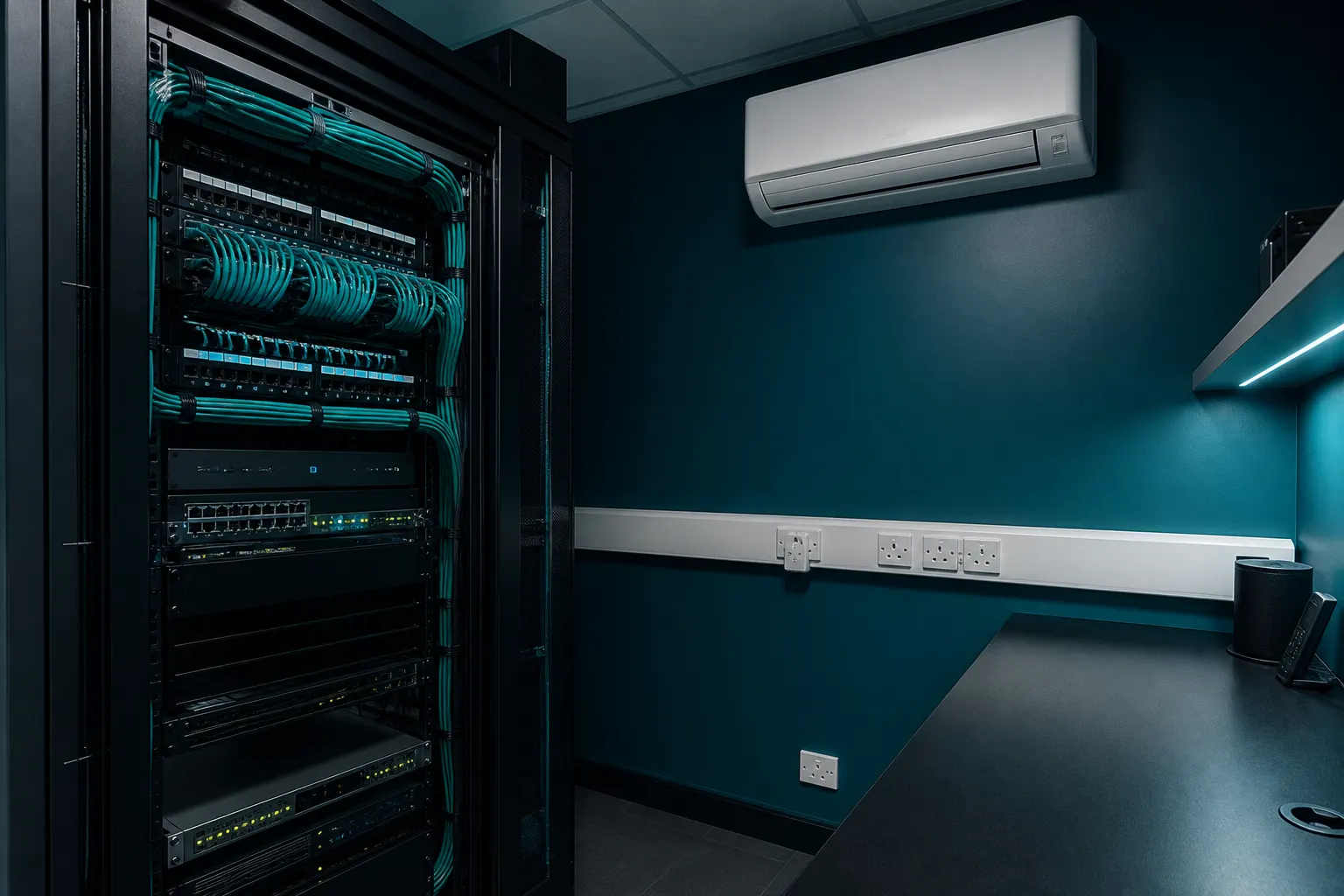
Maintain for continuous availability
Filters, coils, fans, drains, controls and outdoor heat exchangers need routine attention. Neglect can reduce capacity gradually until a hot day or added IT load exposes the shortfall.
Where resilience exists, rotate or isolate units so maintenance does not remove all cooling. Where only one unit exists, plan temporary cooling, reduced IT load or an accepted downtime window before work starts.
- Agree service frequency based on hours of use and environment.
- Clean or replace filters before airflow is badly restricted.
- Test condensate pumps and overflow protection.
- Verify alarm and remote notification paths after service.
Understand F-gas operator and contractor duties
Fluorinated greenhouse gas rules affect installation, servicing, leak checking and record-keeping for many stationary refrigeration and air conditioning systems. Work on equipment containing F-gas must be carried out by people and companies with the appropriate qualifications and certification.
Leak-check intervals and other duties can depend on the refrigerant and the system's CO2-equivalent charge. Check current GOV.UK guidance for the installed equipment rather than relying on outdated assumptions.
Keep records that support compliance and troubleshooting
Useful records include equipment identity, refrigerant type and charge, maintenance visits, leak checks, repairs, alarm tests and significant IT load changes. Labels and drawings of isolation points speed emergency response.
Contracts should state who holds operator responsibilities, who stores records and how quickly faults are attended. Ambiguity is a common cause of missed checks.
Remember wider building inspection triggers
Separately from F-gas leak checks, air conditioning systems in buildings can fall under the inspection regime commonly associated with TM44-style assessments when the effective rated output controlled by the relevant person exceeds 12 kW. Combined systems may need careful interpretation.
An accredited adviser should confirm whether the building's relevant systems are in scope. Maintenance alone does not automatically satisfy that inspection duty.
Frequently asked questions
Who is responsible for F-gas compliance on a server room unit?
Duties can fall on the operator of the equipment and on certified businesses carrying out controlled work. Contracts should allocate practical responsibilities, and current GOV.UK guidance should be checked for the specific system.
Can in-house staff top up refrigerant?
No. Handling fluorinated greenhouse gases in scope of the rules requires appropriate qualifications and, for relevant company activities, certification. Unqualified work risks safety, legality and equipment damage.
How is server room maintenance different from office AC servicing?
The plant often runs continuously, downtime risk is higher, and alarm or redundancy testing is more important. Service visits should preserve process cooling protection wherever possible.
Does a maintenance contract replace a TM44-style inspection?
No. Routine maintenance and statutory air conditioning inspections are different obligations. Assess both against the installed systems.
What should be checked after every service visit?
Confirm the system is cooling, drains are clear, set points and alarms are restored, access panels are secure and any temporary arrangements have been removed.
Core buying guides
Start with these high-intent guides, then dig into the rest of the library.
Related guides
Sources and further reading
How this guide was prepared
This guide was written by the Local AC Installers Editorial Team. We compare official guidance, legislation and established consumer information, separate general information from project-specific advice, and show publication dates and sources. We do not accept installer accreditation claims at face value.