
Most SME server room problems after installation are not mysterious refrigerant faults. They are design omissions: comfort settings on process loads, blocked condensate, recirculated hot aisle air, no alarm path, and single outdoor units with no maintenance access. Quotes that copy a meeting-room split onto a network cupboard look cheap until the first summer weekend. The authoritative buying move is to interrogate failure behaviour and heat-load basis before comparing capital cost.
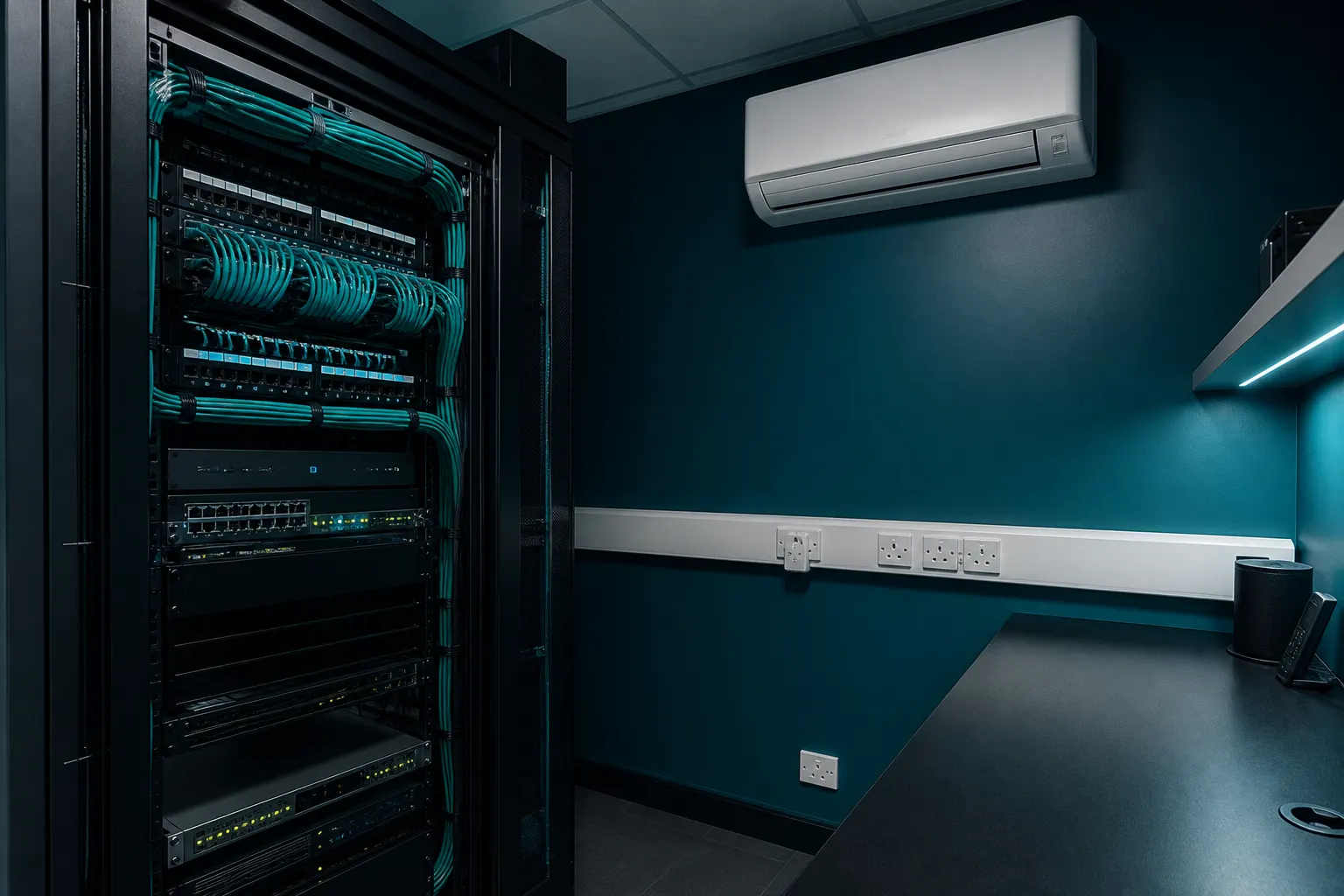
Process cooling is a different product
Office air conditioning is built around intermittent occupancy. IT equipment rejects heat continuously, including nights and bank holidays. A system that shares schedules with office plant, or that cannot run when the floor is empty, is already the wrong architecture.
Nameplate IT load is a starting proxy, not the finished design. UPS losses, distribution, lighting and growth all matter. ASHRAE thermal guidance for IT spaces exists because inlet conditions at equipment are the point, not a thermostat reading in the aisle.
The failure modes that hurt small rooms
Condensate is a quiet killer. A pump failure or blocked tray can flood a cupboard that never had a floor drain. Outdoor units boxed into recesses recirculate their own discharge and lose capacity on hot days. Filters left inaccessible mean the system is never maintained until it trips.
Redundancy is misunderstood. Two indoor units on one outdoor circuit is not N+1. Separate power and controls matter if the goal is surviving a single plant failure.
- Ask what happens if the indoor fan, outdoor unit or drain fails.
- Require monitoring that reaches a human, not only a local beep.
- Confirm service clearances for the life of the kit.
- Separate IT cooling from comfort schedules in writing.
Why comfort quotes look attractive
A domestic-style split can be the right answer for a low-density closet with good outdoor air and a serious alarm plan. It becomes the wrong answer when sold without those conditions. The price gap versus a more resilient design is visible; the downtime cost is not.
Buyers should demand the heat-load basis, duty at design outdoor conditions, alarm method, condensate route and maintenance access on one page. If those lines are missing, the quote is incomplete regardless of VAT-inclusive total.
A practical SME buying sequence
Measure or estimate continuous load, decide whether growth is likely, choose single or redundant plant, then site outdoor equipment for service and airflow. Only then compare installers. Tools and cost guides help frame budget; operations questions decide survival.
Keep F-gas duties and leak-check thresholds in view for the specific refrigerant charge. Continuous plant raises the value of planned maintenance contracts with clear response times.
Frequently asked questions
Can a domestic split cool a server cupboard?
Sometimes for modest continuous loads with suitable outdoor conditions, drainage and alarms. It must be assessed as process cooling, not comfort cooling.
Is monitoring optional?
For unattended IT spaces it is part of the design. A failure at 2am with no notification is an operational incident waiting to happen.
What should I compare besides price?
Heat-load assumptions, duty, resilience, alarms, condensate design, electrical isolation and how the unit will be serviced without shutting IT down.
Core buying guides
Start with these high-intent guides, then dig into the rest of the library.
Related guides
Sources and further reading
How this guide was prepared
This guide was written by the Local AC Installers Editorial Team. We compare official guidance, legislation and established consumer information, separate general information from project-specific advice, and show publication dates and sources. We do not accept installer accreditation claims at face value.