
A squash court is a tall narrow box. Two people working hard are a people load on a small floor, and the glass back can add solar gain into the viewing end. Do not size the club from the lounge floor area and ignore the courts, and do not blow a strong draught across the playing volume, where it is uncomfortable and can upset the ball. The gallery, the bar and the courts are different zones. If several courts push the effective rated output over 12 kW, the operator has the TM44 inspection duty on GOV.UK's air conditioning inspections page. Use an F-gas certified company.
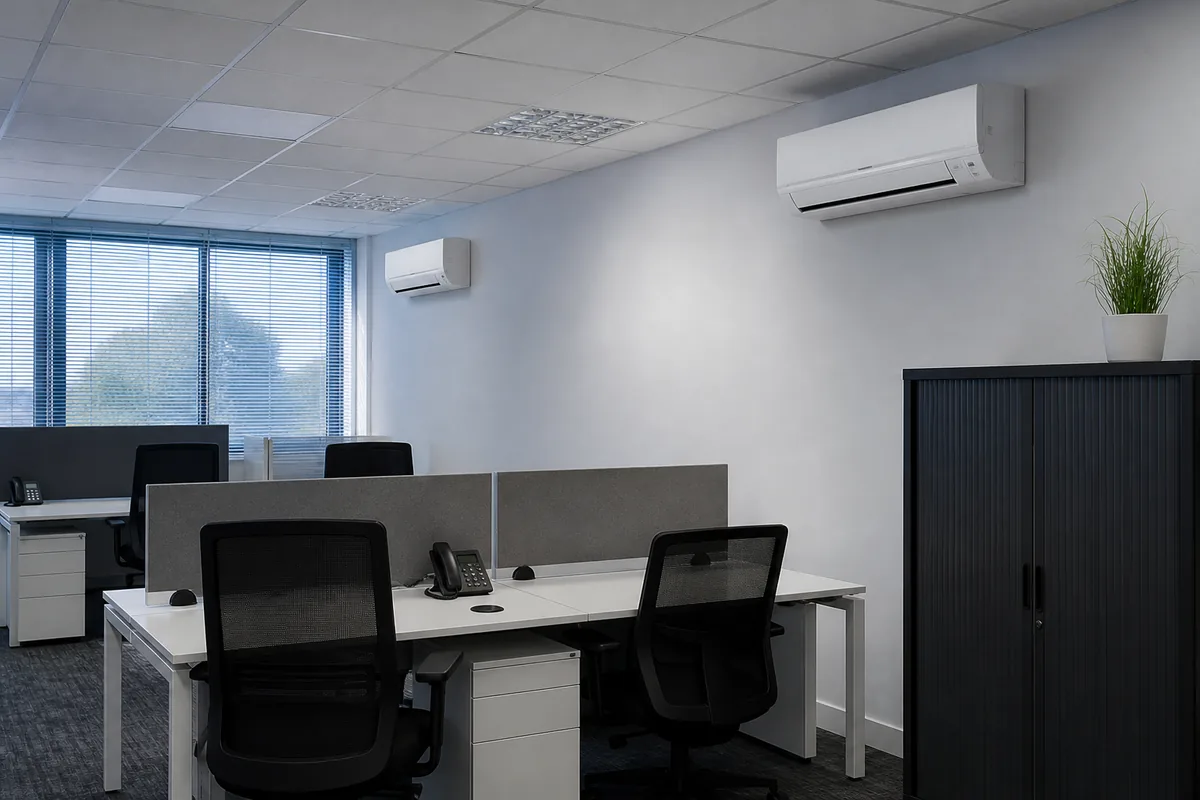
A tall court with a small floor plate
The floor plate is small and the height is not. Warm, moist air sits up the walls after a long game. A unit sized like a shop of the same floor area will be short, and a unit that jets across the court at player height is the wrong shape of air. Prefer modest high-level movement that mixes without a cross-court stream.
Glass back, gallery lights and the lounge door
The glass back and the gallery lights are fabric and equipment heat at one end. The lounge and the bar are a separate evening load. A door from a hot court into a cooled gallery will swing both. Say how that door is used between games.
Moisture that does not get a long recovery
Games follow games. The court does not get a long recovery. Moisture from play will wet the coil, so the drain has to cope and must not drip onto the floor. Ventilation is still separate. Cooling recirculates. A stale court with a low temperature is not a finished design.
- Size courts from players and height, not lounge area.
- Avoid a strong draught across the court.
- Treat the gallery and bar as other zones.
A coil that ices if the court is chased cold
Club staff fall under HSE workplace temperature guidance: reasonable comfort, no legal maximum. Players are the short, hard gain. A setpoint that tries to make the court cold will ice the coil and still fail between bookings. Hold a livable band and recover in the gap you really have.
Fixings that have to miss play and glass
Court walls are not casual fixing grounds. The indoor unit, if the court is cooled at all, has to miss play, glass and the floor zone, and be serviceable from outside the court or in a planned closed slot. Many clubs cool the gallery and lounge properly and keep the court air movement minimal. That is a valid outcome if it is chosen on purpose.
Evening bookings, housing and more than one court
Several courts plus a bar can cross 12 kW even when one court looks small. Roof plant needs structure, anti-vibration mounts and a noise check toward housing, because evening bookings are the running hours. Three-phase power and trustee or landlord consent are the usual club constraints.
Frequently asked questions
Can we size the squash courts from the club lounge area?
No. Each court is a tall box with a hard people load on a small floor. The lounge is a different zone. Size the courts from players, height and how fast the next booking arrives.
Core buying guides
Start with these high-intent guides, then dig into the rest of the library.
Related guides
Sources and further reading
How this guide was prepared
This guide was written by the Local AC Installers Editorial Team. We compare official guidance, legislation and established consumer information, separate general information from project-specific advice, and show publication dates and sources. We do not accept installer accreditation claims at face value.