
A high-wall indoor is the default UK split because cool air thrown from above mixes a bedroom or living room well. A floor console sits low, which suits a wall under a window, a dormer with little height, or a room where winter heat from low level matters. Both are splits with an outdoor condenser, a drain and an F-gas install. The console is not a portable. Survey the furniture before you choose the body.
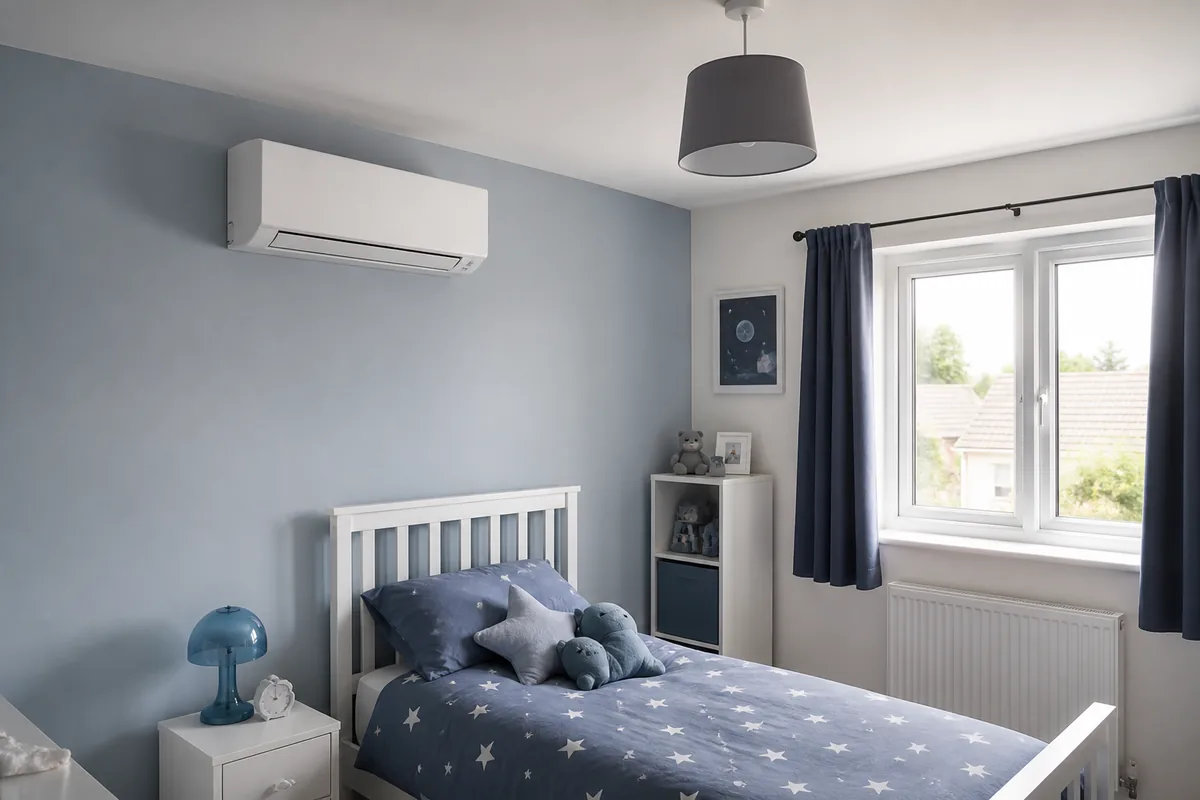
Cool air falling from a clear high wall
Cool air wants to fall. A wall unit high on a clear wall can cover the occupied zone without blowing straight into a face, if the vanes are set with a little care. That is why Sensira, AY, Perfera and the rest of the domestic market are wall units. They also stay above sofas, cots and radiators. Daikin and Mitsubishi Electric both sell that high-wall default, and both also sell domestic floor consoles.
High-wall units fail when the only solid wall is above a tall wardrobe, when the eaves cut the height, or when you need the indoor under glazing because that is the only place a drain can fall. That is a survey finding, not a style preference. If the wall height and the furniture allow a high-wall unit, price that first for cooling. Ask for a console only where the survey shows a reason: eaves, a window cill, heating bias, or a wall that cannot take a high indoor. Same kW, same outdoor position.
Skirting height, sofas and a gravity drain
Consoles such as the domestic floor models from Daikin and Mitsubishi sit at skirting height. Heating mode can put warm air out low, which some people prefer in a room that also relies on the split in winter. Energy Saving Trust describes that air-to-air heating. Cooling still works, but the jet is easier to block with a sofa, a basket or a bed.
Measure the furniture you actually own. A console behind a settee cools the settee. A wall unit above a curtain pelmet cools the curtain. A console on an outside wall can sometimes drain by gravity. On an internal wall it needs a pump, same as a wall unit. The casing is more exposed to knocks and dust. Filter cleaning is easy, which only helps if someone does it. As a 2026 illustration, the floor console usually carries an equipment premium over a plain wall unit of similar nominal kW, and labour is in the same band unless the route is harder. Expect the familiar high hundreds to a few thousand pounds including VAT for a straightforward single split, with the console at the upper part of that equipment choice. Do not compare different kW as if the body style were the only gap. GOV.UK F-gas certification is required for either body. Neither is a hose portable. Photos that show furniture and window cills are what the survey needs, including whether winter heat is part of the job.
Frequently asked questions
Is a floor console more efficient than a wall unit?
Not as a rule. Compare the published data for the same nominal kW. Body position changes comfort and furniture clash more than it changes the badge. Do not invent a SEER gap from the shape.
Can a floor console heat a room better?
Low-level supply can feel better in heating mode in some rooms. It still has to be sized for heat loss. It is not a radiator replacement unless the survey says the output covers the room.
Does a floor console avoid F-gas rules?
No. It is a split with a refrigerant circuit. The company that commissions it needs F-gas certification.
Core buying guides
Start with these high-intent guides, then dig into the rest of the library.
Related guides
Sources and further reading
How this guide was prepared
This guide was written by the Local AC Installers Editorial Team. We compare official guidance, legislation and established consumer information, separate general information from project-specific advice, and show publication dates and sources. We do not accept installer accreditation claims at face value.