
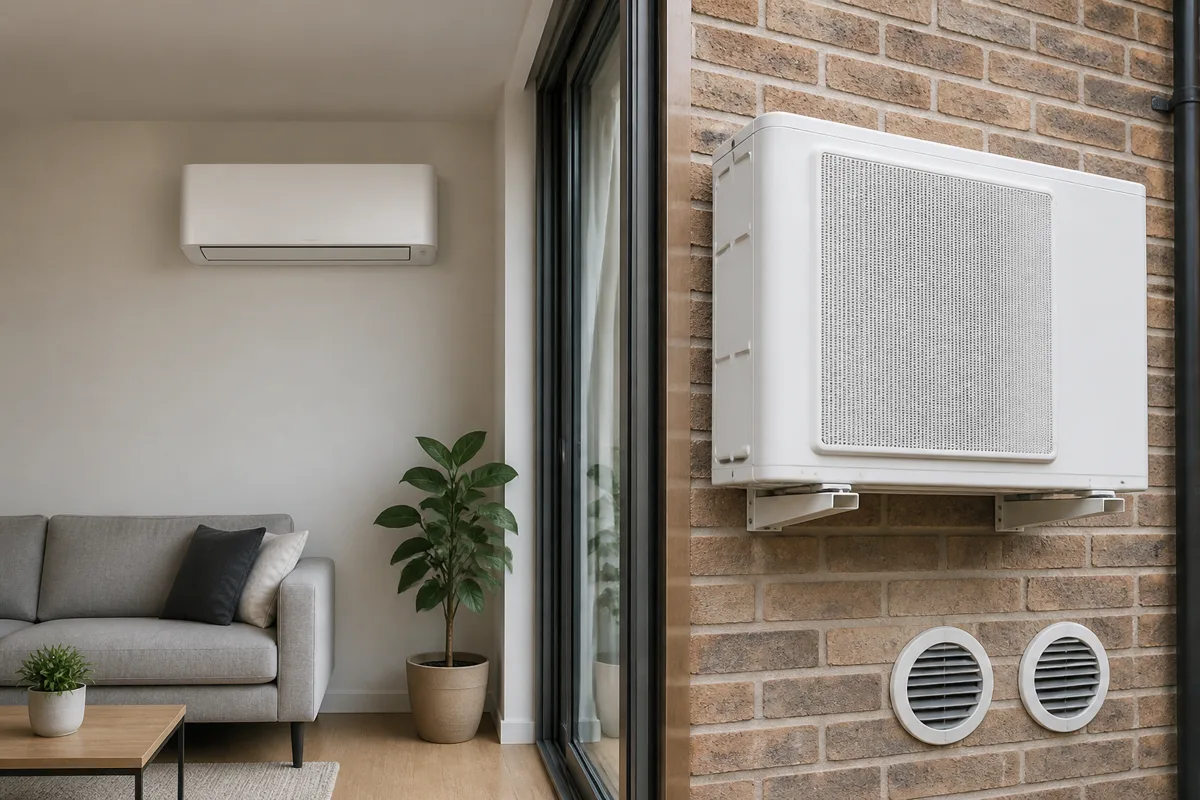
Every air conditioner must reject heat outdoors somehow, so no outdoor unit really means the outdoor hardware is hidden or replaced by holes. The realistic options are a portable with a hose, or a monobloc through-wall unit where the whole machine sits inside and breathes through two core-drilled vents in the external wall. Monoblocs exist for flats, conservation areas and freeholders who refuse condensers, and they work, but they carry the compressor noise indoors, cost more per kW than a split, and still need two visible external grilles. Treat them as the consent workaround, not the default.
Why the outdoor unit exists at all
Cooling is heat transport. A split system moves heat through refrigerant pipes to a condenser outside, which is efficient and quiet indoors precisely because the noisy compressor lives in the outdoor box.
Remove the outdoor unit and the heat still has to leave. Portables push it through a hose. Monoblocs pull outdoor air through one wall vent, dump heat into it, and blow it back out through a second vent. Physics is conserved, convenience is traded.
- Monobloc: one indoor cabinet, two core-drilled holes, no external box.
- The compressor is in the room, so night noise needs checking against sound data.
- Efficiency is below an equivalent split, so running costs are higher per kW.
- External grilles still alter the elevation; conservation officers do notice them.
- Heating versions exist and follow the same trade-offs.
Where monoblocs genuinely earn their place
Flats where the freeholder refuses external plant, elevations where planning will not accept a condenser, and rooms with no realistic pipe route to an outdoor position. In those cases the choice is monobloc or nothing, and a monobloc beats a summer of portable hoses.
The flat and apartment guide and the leaseholder consent guide explain why external condensers get refused. A monobloc quote alongside a split quote gives leaseholders a real negotiating position.
Cost and installation shape
As a 2026 illustration, monobloc equipment typically prices above an equivalent single split before labour, and installation still involves structural core drilling, condensate drainage and a dedicated electrical check. It is not a DIY product at the fixed end.
Two neat 160 to 200 mm grilles on a rendered rear wall are usually acceptable; on a listed front elevation they may need consent like anything else. Ask the installer to photograph grille positions in the survey.
Deciding between the three no-condenser routes
One hot month, tenant, or no budget for building work: portable. Permanent cooling with no chance of external plant consent: monobloc. Any property where a condenser is actually possible: price the split first, because it wins on noise, efficiency and lifetime cost.
Use the quote form and state that external units are restricted. Installers who know monoblocs will say so; those who only fit splits will tell you honestly.
Frequently asked questions
Can you get air conditioning without an outdoor unit in the UK?
Yes. Monobloc through-wall units keep all hardware indoors and vent through two holes in an external wall, and portables vent through a hose. Both cost more to run than a split and bring compressor noise into the room, so they suit properties where a condenser is not allowed.
Are monobloc air conditioners noisy?
They are quieter than most portables but louder indoors than a split, because the compressor is inside the cabinet in the room. Check the manufacturer's sound pressure figures at low fan speed if the unit is for a bedroom.
Do monobloc units need planning permission?
There is no condenser, which removes the most common objection, but the external grilles still change the elevation. Listed buildings and conservation area street walls deserve a check before drilling. Leaseholders still need freeholder consent for the wall penetrations.
Core buying guides
Start with these high-intent guides, then dig into the rest of the library.
Related guides
Sources and further reading
How this guide was prepared
This guide was written by the Local AC Installers Editorial Team. We compare official guidance, legislation and established consumer information, separate general information from project-specific advice, and show publication dates and sources. We do not accept installer accreditation claims at face value.