
In cooling, a UK outdoor unit blows hot because it is rejecting the heat it has taken from the room, plus the energy the compressor uses. A warm plume on a summer day, with cold air indoors, is the machine working. It is not a fault to cure with a cover, a water spray, or a refrigerant top-up. You can check that indoor air is actually cool, that the outdoor coil is not blocked, and that you are not in heating by mistake. Call an F-gas engineer if the outdoor air is hot while the indoor air never cools, if the plume is scorching with a burning smell, or if the outdoor unit blows cold in cooling and the room stays warm.
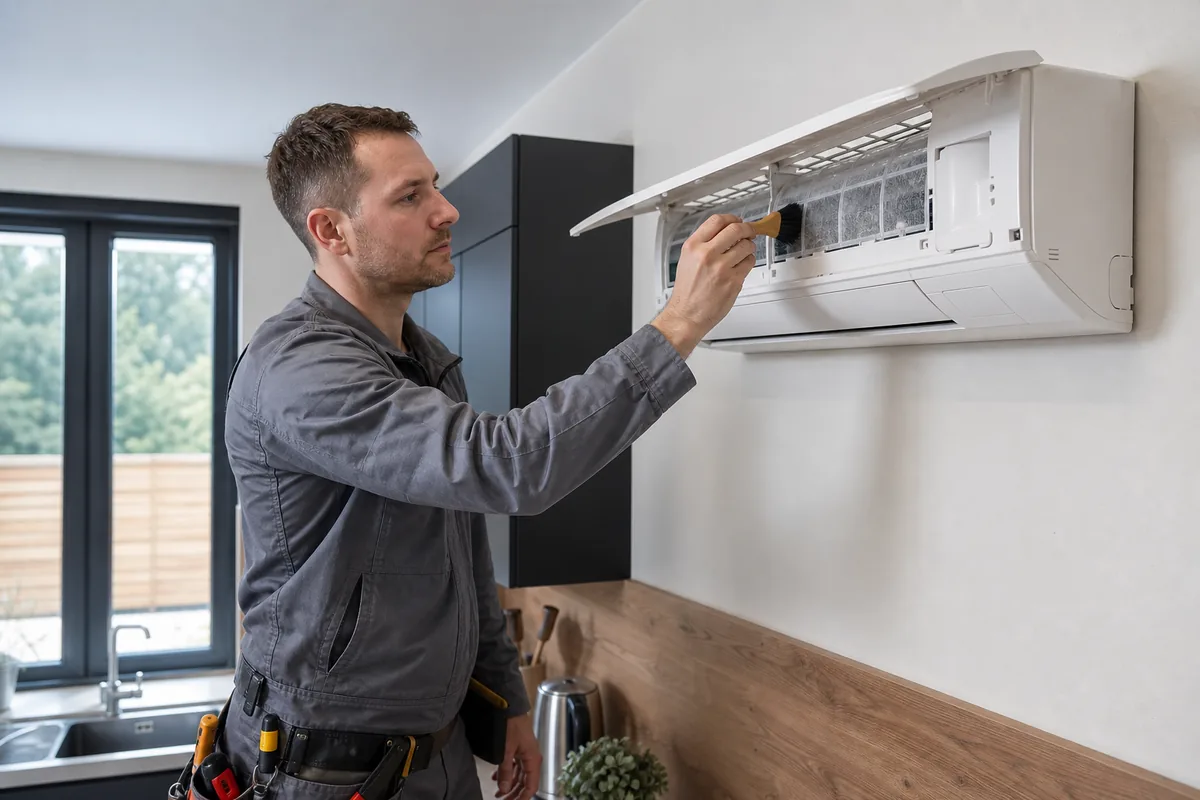
A warm plume against a July balcony wall
A split does not destroy heat. It moves it. Energy Saving Trust describes that as what an air-to-air unit does. The indoor coil collects heat from room air. The outdoor coil dumps that heat into the garden, the lightwell or the balcony. On a hot UK afternoon the air leaving the outdoor fan is warmer than the already warm garden. Put a hand in the outdoor airstream only from a safe distance, clear of the fan. Warm is expected. A neighbour complaint about heat on a balcony is sometimes just the plume against a confined wall. GOV.UK noise guidance is about how councils deal with complaints, which is a different problem from a normal plume. The fix for a trapped plume is siting and airflow, not a different gas.
Heating reverses the plume
In heating the opposite is true: the outdoor unit blows cold. People who switch modes and then feel the same pipe run get confused. Check the remote icon before you decide the condenser is ill.
Bins, shrubs, and a winter cover still on
Confirm the indoor stream goes cool within a reasonable time in cooling, with a setpoint below the room temperature and filters that are not choked. Look at the outdoor coil from the ground. A mat of seeds, a wheelie bin hard against the fan, or a cover left on from winter will make the plume hotter and the room cooler less well. Remove only what you can reach safely with the fan stopped and the isolator off. Do not jetwash the fins. Give the unit space. Planting that has grown across the coil since the install day is a common British summer find. Cut plants back. Do not relocate the condenser yourself. Moving it means pump-down and a new pipe run, which is F-gas work.
Indoor air that never goes cold
If the outdoor unit roars hot air and the indoor unit never gets cool, the heat is not coming out of the room properly. That can be airflow, a control fault, or a refrigerant problem. Normal cooling makes a warm outdoor plume, so a hotter plume is not a rule you can use to diagnose low refrigerant. Poor indoor cooling with that plume needs a proper test. Stop experimenting once filters, mode and a clear coil are done. Say whether the room gets cold, and whether the unit sits on a balcony, in a lightwell, or on a wall beside a neighbour's window.
Stop if the plume smells of burning
Stop at once if the plume smells of burning, if the fan housing is too hot to be near, or if a breaker trips. Isolate if you can do that safely. Scorching is not normal heat rejection. Do not spray the outdoor unit with a hose while it is running. Water in the electrics trips breakers and does not replace a diagnosis. An F-gas engineer, under GOV.UK certification, should measure performance. If you asked for cooling and the outdoor plume is cold while the room stays warm, check you are not in heat mode, then stop and call. Leave flare nuts and service ports alone in every case.
Frequently asked questions
Should I cool the outdoor unit with a hosepipe on hot days?
No. Spraying a running condenser risks the electrics and bends fins if the jet is hard. Clear leaves and give it air. If the room will not cool, book an engineer.
My outdoor unit blows cold in summer. Is that right?
If you asked for cooling, the outdoor unit should be rejecting heat, so the plume should be warm. A cold outdoor plume in cooling, with a warm room, is a reason to stop and call an F-gas engineer. Check you are not in heat mode first.
Core buying guides
Start with these high-intent guides, then dig into the rest of the library.
Related guides
Sources and further reading
How this guide was prepared
This guide was written by the Local AC Installers Editorial Team. We compare official guidance, legislation and established consumer information, separate general information from project-specific advice, and show publication dates and sources. We do not accept installer accreditation claims at face value.