
A studio is one thermal zone, which makes it the cheapest flat to cool properly and the most punishing to cool badly, because you sleep inside whatever noise you buy. A single wall split around 2.5 to 3.5 kW covers most UK studios including kitchen appliance gain, sized up a step for top floors and big glazing. The obstacles are consent and siting: freeholder permission is needed for any external unit, and the outdoor position must respect neighbours a wall away. Where consent fails, a quiet portable or a monobloc through-wall unit are the fallbacks. Prioritise low night-time sound figures above everything else.
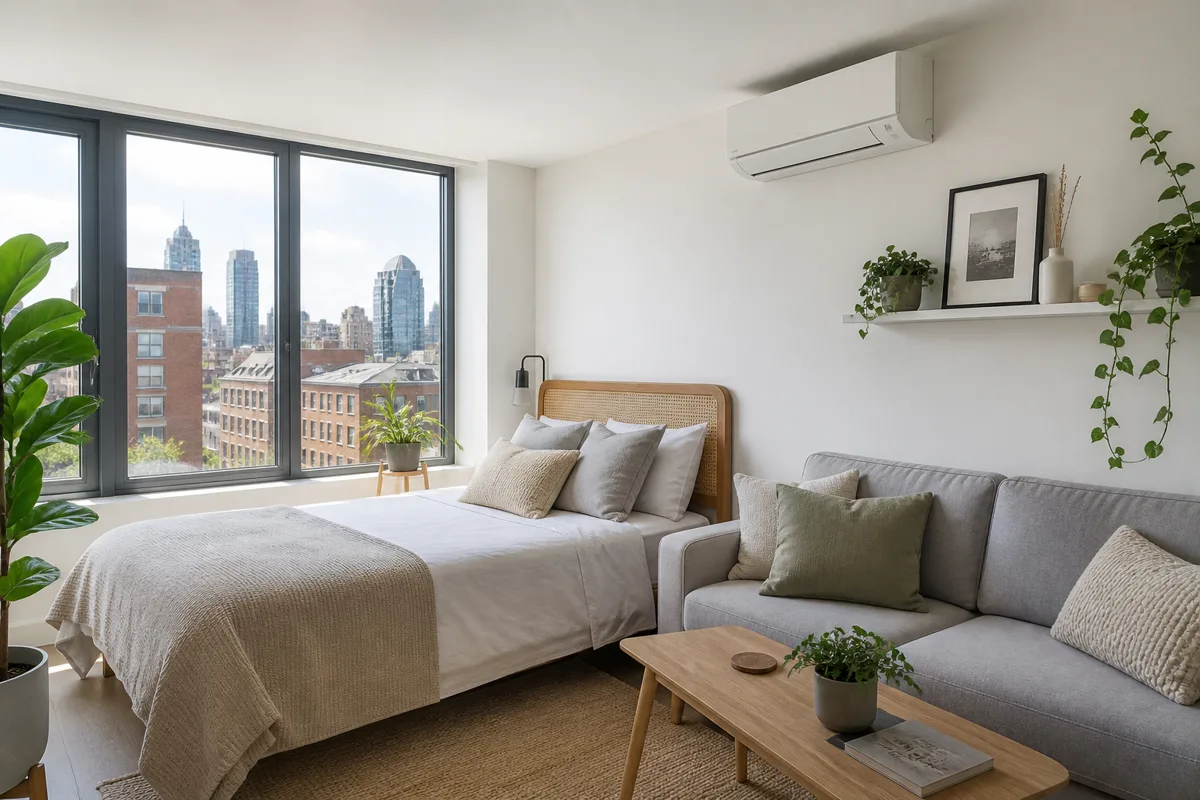
Sizing one room that does everything
Studios combine living gain, cooking gain and sleeping hours in one volume. A compact studio around 25 to 35 square metres with normal glazing usually lands at 2.5 kW; add capacity for south or west glass walls, top floor solar gain, or open mezzanines.
One correctly sized unit beats an oversized one, which short-cycles and leaves humidity behind. The sizing guide covers the calculation and the 5 kW guide covers larger open plan cases.
- 2.5 kW suits most compact studios; 3.5 kW covers glassy or top-floor ones.
- Night sound figures at low fan speed matter more than any other spec.
- Position the indoor unit to wash air across the space, not at the bed.
- Kitchen gain is inside the room; allow for it in sizing.
- Reversible units heat the studio cheaply in winter as a bonus.
Consent before anything
Studios sit in blocks, so freeholder or management company consent is the gate, and planning permission is usually needed for external units on flats. Balconies, walls and roofs each carry different rules, covered in the flat and apartment guide and the leaseholder consent guide.
Ask early and in writing. The licence to alter can take longer than the installation, and a refused condenser turns the project into a monobloc or portable decision.
The no-consent fallbacks
A quiet modern portable handles heatwave nights if you accept the hose and the hum. Monobloc through-wall units keep hardware inside with two vent grilles out, no condenser, and better efficiency than a portable, though the compressor sound sleeps in the room with you.
The air conditioner without an outdoor unit guide compares both routes honestly, including the sound figures worth checking before buying anything you will sleep beside.
Cost shape and quotes
As a 2026 illustration, a single quality wall split in a studio with a straightforward pipe run commonly lands in the low thousands installed, with block access, long condensate routes or roof condensers adding cost. Monoblocs price similarly once building work is counted; portables are hundreds upfront and dearer per hour.
Use the quote form with floor level, a photo of the external wall and whether the freeholder has been approached. Installers who work in blocks will flag consent steps immediately.
Frequently asked questions
What size air conditioner does a studio flat need?
Most compact UK studios need around 2.5 kW of cooling, stepping to 3.5 kW for large glazing, west orientation or top floors. Oversizing causes short cycling and humidity problems, so a survey calculation beats guessing upward.
Can I install air conditioning in a studio flat?
Yes with freeholder consent and, usually, planning permission for the external unit. Where external plant is refused, monobloc through-wall units and quality portables are workable fallbacks with known noise trade-offs.
How much does studio flat air conditioning cost?
As a 2026 illustration, a single wall split installed commonly lands in the low thousands of pounds, plus any freeholder licence costs. Portables run a few hundred upfront with roughly triple the running cost per hour of cooling.
Core buying guides
Start with these high-intent guides, then dig into the rest of the library.
Related guides
Sources and further reading
How this guide was prepared
This guide was written by the Local AC Installers Editorial Team. We compare official guidance, legislation and established consumer information, separate general information from project-specific advice, and show publication dates and sources. We do not accept installer accreditation claims at face value.