
A UK split that puffs dust on the first run of summer is usually shedding what settled on the filters and in the intake while it sat idle, or it is picking up plaster and sanding dust from building work. Wash and dry the filters, vacuum around the intake, and do not run the unit while someone is sanding in the same room. Grey fluff that stops after a clean is housekeeping. Black mouldy dust, insulation fibres that keep coming, or dust with a burning smell is not. Do not open the gas circuit to solve dust.
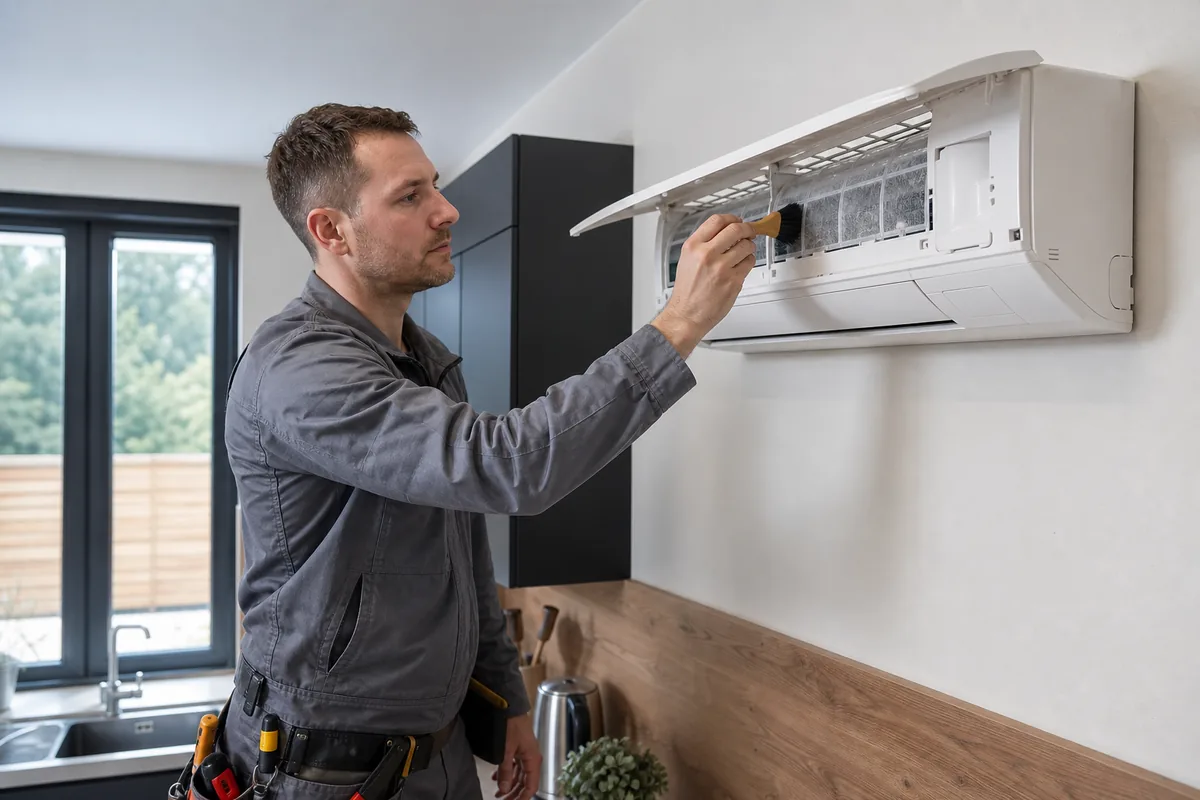
Dust that settled while the split sat idle
Wall units spend autumn to spring switched off in a lot of homes. Household dust, pollen and cooking film settle on the mesh. The first afternoon you ask for cooling, the fan lifts that layer and blows it across the bed or the sofa. It looks dramatic and often lasts one good filter wash.
Plastering, floor sanding and loft work are harsher. Fine gypsum and wood dust pass a tired filter and stick to a wet coil, which is how next month's musty smell starts. If decorators are in, fit the filters, keep the unit off until the sanding stops, and clean again before the first real cooling day. HSE ventilation guidance matters here because the unit is moving whatever is already in the room air. Any fan will move sanding dust. A new indoor unit will not stop that while the work is still going on.
The mesh wash that belongs to the household
Follow the manual to slide the filters out. Wash them in lukewarm water, dry them fully, and refit them. Vacuum the visible plastic around the intake. Do not vacuum the fins hard enough to flatten them. After the wash, run fan-only for a short spell and see if the plume stops. Wipe the louvres with a barely damp cloth. Do not use polish or oil. If you have had builders in, clean the room surfaces first so the unit is not simply redistributing plaster from the top of a wardrobe.
Grey fluff that stops after that clean is housekeeping. If this is a rental or a flat with a managing agent, access and who pays for a coil clean still matter, and the photos of the filters keep the visit on filtration. GOV.UK certification for F-gas work is the bar if someone later has to open the refrigerant circuit, which dust alone does not justify.
Frequently asked questions
Is dust from the air conditioner dangerous?
Ordinary household dust on a first start is unpleasant rather than an emergency. Black mouldy debris, insulation fibres that keep coming, or dust with a burning smell should stop the unit until someone qualified has seen it.
Should I take the filters out to get more airflow?
No. The filters are there so the coil stays clean. Running without them turns a one-off puff into a clogged coil and a musty smell. Do not run without filters to blow the dust out faster.
Will a new indoor unit stop building dust?
Not during sanding and plastering. Any fan will move that dust. Keep the system off until the dusty work finishes, then wash the filters before you rely on it.
What if the dust arrives with a burning smell?
Stop immediately if dust arrives with a burning smell or if sparkling or smoke is visible. Isolate at the rotary isolator if you can do that safely and leave it off. An F-gas engineer, and an electrician if there is burning, should see it before it runs again.
The discharge stays dusty after a filter wash. What next?
Book a service if the discharge stays dusty after clean filters, if the dust is black or slimy, or if debris is falling from inside the coil rather than from the mesh. That coil clean is an engineer visit. Do not split the indoor unit open on the kitchen table.
Can an open loft hatch feed fibres into the unit?
A return grille near a loft hatch can pull insulation fibres if the hatch is open. Fibres that keep coming are a reason to stop the unit until someone qualified has seen it, not a reason to add refrigerant.
Core buying guides
Start with these high-intent guides, then dig into the rest of the library.
Related guides
Sources and further reading
How this guide was prepared
This guide was written by the Local AC Installers Editorial Team. We compare official guidance, legislation and established consumer information, separate general information from project-specific advice, and show publication dates and sources. We do not accept installer accreditation claims at face value.