
A zone in a house is a space with its own indoor unit and its own setpoint. One bedroom is one zone. An open kitchen diner is one zone only if one indoor can actually treat that volume. Closed doors stop a landing unit from cooling the rooms beyond them. Several single splits mean several outdoor units and full independence. One multi-split means one outdoor unit and combination limits. Draw the zones before you compare prices.
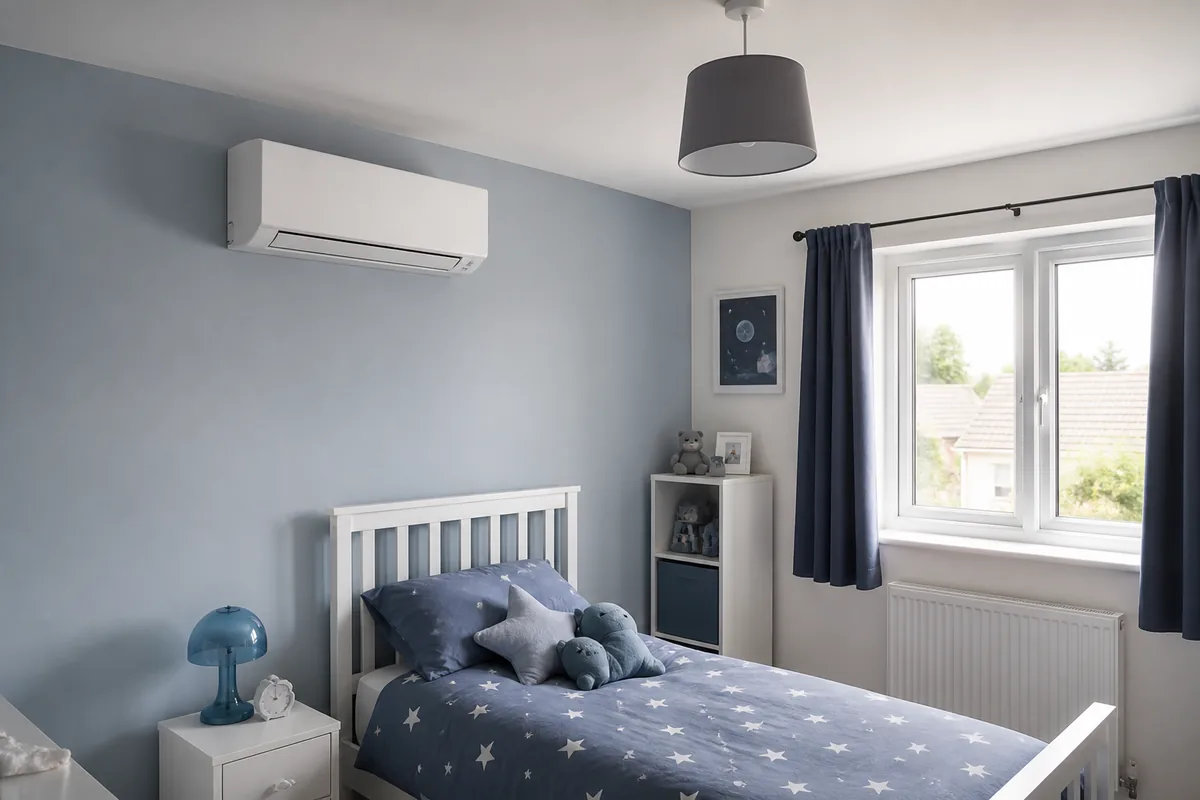
Night bedrooms and a daytime office
List the rooms you will actually cool or heat, and whether they are used at the same time. Two bedrooms at night and a home office by day is a different load from a whole house running together in a heatwave. Empty guest rooms do not need equipment just to colour in a plan.
One indoor holds its room with the door shut
Each indoor you do buy should be able to hold its room with the door shut. Hoping that a large lounge unit will condition the hall, the study and the upstairs landing is how people end up with one cold sofa and warm bedrooms. One indoor, one setpoint, one zone. Each split indoor has its own control. That is the zone thermostat in domestic practice. A multi-split does not force every room to the same setpoint.
Bi-folds, roof lights and cooking
A kitchen diner with bi-folds and a roof light can be one zone and still need a larger indoor, a cassette, or two indoors aimed at the sitting end and the cooking end.
- Closed doors are zone boundaries.
- Open plan needs a surveyed throw.
- Cooking adds heat the energy label never saw.
- Simultaneous use decides multi-split capacity.
A landing unit will not cool the bedrooms
Stairs are a chimney, not a duct. A little cool air will drift, and most of the capacity will not. If upstairs comfort matters, upstairs needs its own indoor. That is a second zone, with its own filter and its own drain. Each bedroom you want comfortable with the door shut should have its own indoor. Spare rooms you can leave out of the plan. Size each one. Do not copy the lounge kilowatts into a small box room.
Several outdoors, or one outdoor with combination limits
Two or three single splits are simple to understand: each room works if its own outdoor unit works, and a fault is local. They need several outdoor positions, several circuits and several planning checks against neighbours and, where relevant, heat-pump guidance on the Planning Portal. A multi-split uses one outdoor unit and sometimes a branch box. It saves facade space. It also means the outdoor capacity must cover the rooms you will run together, and a fault on the outdoor unit stops every room. Write the simultaneous pattern in a sentence the installer can size to. One outdoor unit is one zone for the whole house only if the indoors and the outdoor combination are designed for the rooms you will run together. One indoor in the lounge is one zone, not a whole-house system. F-gas certification still covers whoever commissions the refrigerant side, whether you buy one circuit or three. GOV.UK publishes that certification. Energy Saving Trust's air-to-air pages describe the equipment.
When one lounge zone is the wrong house
The single-lounge approach is wrong when upstairs comfort matters and the only indoor is downstairs, and it is wrong when empty guest rooms are coloured in just to fill a plan. Ask for a schedule: room name, indoor type, cooling kilowatts, heating kilowatts, setpoint you care about, and drain method. As a 2026 illustration, each extra straightforward bedroom zone on its own split often sits in the same broad installed band as a first zone, while a multi-split version can cost less outdoor kit and more pipework. The cheaper drawing is the one that matches the rooms you use. Controls follow the zones. One remote per indoor is normal. Whole-house schedules are optional. The survey measures glass and asks how you cook.
Core buying guides
Start with these high-intent guides, then dig into the rest of the library.
Related guides
Sources and further reading
How this guide was prepared
This guide was written by the Local AC Installers Editorial Team. We compare official guidance, legislation and established consumer information, separate general information from project-specific advice, and show publication dates and sources. We do not accept installer accreditation claims at face value.