
Bungalow air conditioning in the UK is usually one or more wall-mounted or ducted splits, with easier single-storey pipe runs and a trickier roof-space or loft-room load. Outdoor units still need quiet, legal positions. A bungalow is not automatically a cheap job if the loft conversion overheats.
Why bungalows show up in real enquiries
Single-storey homes overheat in loft rooms, conservatories, and west-facing living rooms with big glass. They are also common among occupants who want heating as well as cooling without another boiler drama. The install can be simpler than a three-storey townhouse: shorter pipe, no scaffold to a third-floor bedroom. It can also be harder: limited external wall that is not next to a neighbour, and a loft already full of tanks.
Do not skip the survey because it is only a bungalow. Heat gain through a converted loft with roof windows can exceed a downstairs reception. Size the hot room, not the floor area of the whole footprint. Leasehold park homes and some estate covenants restrict outdoor units. Check before you fall in love with a wall.
- Size the hot room, especially loft conversions.
- Ground-standing condensers often beat thin cavity-wall brackets.
- Covenants and park-home rules can block outdoor plant.
Indoor options
Wall-mounted in the living room and a second in the loft bedroom is a common pattern. Multi-split if you want one outdoor. Ducted from the loft into rooms below if you want hidden air conditioning and the loft can take the unit plus condensate.
Conservatories attached to bungalows are brutal solar loads. They may need their own unit and still struggle if the roof is glass. Be honest about that at quote stage. Heating mode is popular in bungalows with ageing boilers. Reverse-cycle can take the living space. Hot water remains a separate conversation.
Outdoor units on single-storey plots
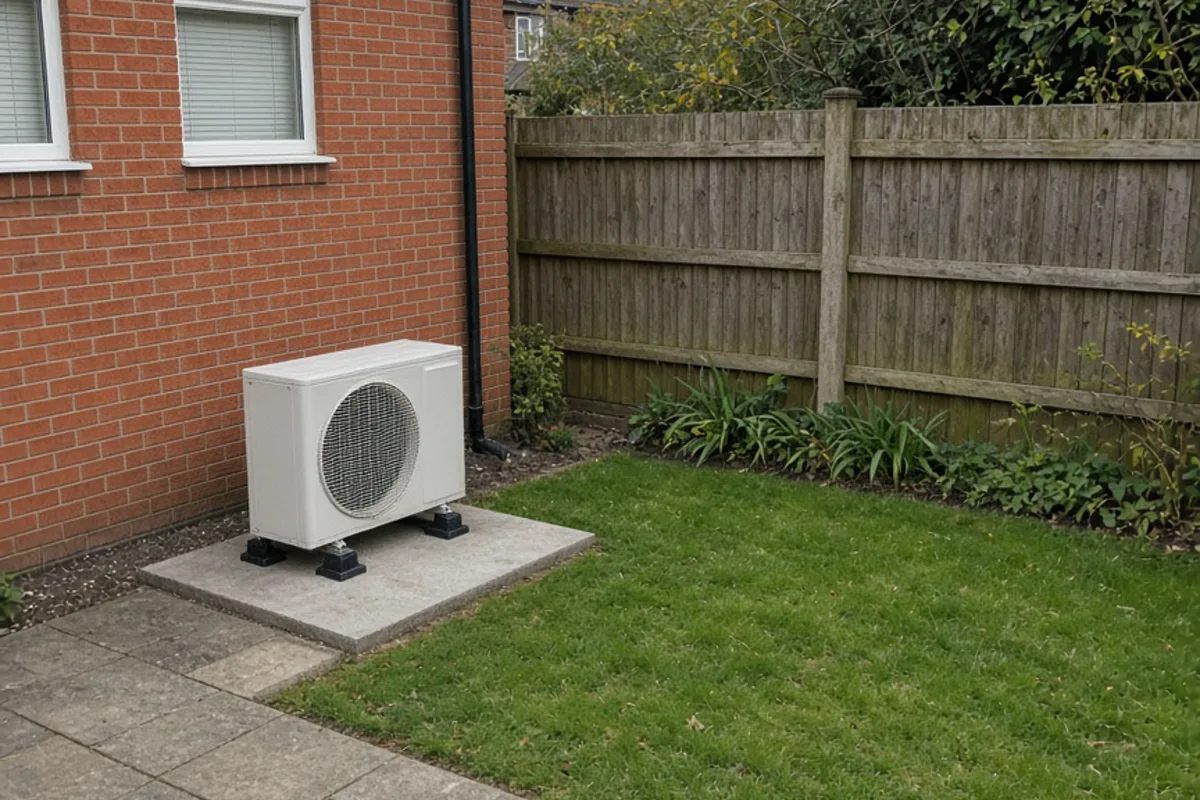
Rear gardens, side passages, and gable walls. Keep clearances, avoid bedroom windows, and think about prevailing wind and leaves. Ground standing on a slab with anti-vibration feet often beats a thin wall bracket on a cavity that was never meant to take a condenser.
Planning and permitted development still apply. A bungalow in a conservation area is not exempt because it is single storey. Noise travels across open gardens. A unit that would pass on a London terrace can annoy a quiet cul-de-sac. Ask for sound data and a neighbour-aware site.
Brief for a bungalow quote
Which rooms overheat, loft or not, conservatory or not, photos of all elevations, and any covenant. Mention if you want heating. If access is a narrow lane, say so. Van and material access changes the day rate more than people expect.
Use the quote form with the postcode. Bungalows are local work. We introduce nearby F-gas installers, not a national day-rate.
Frequently asked questions
Is a bungalow cheaper to air-condition than a house?
Labour can be lower without high-level access. Loft conversions, conservatories and long rear gardens can erase that. Quote the building you have.
Can one outdoor unit do the whole bungalow?
Sometimes, with a multi-split or ducted system, if diversity and pipe lengths work. Every room still needs an indoor outlet. One wall unit in the lounge will not cool a closed bedroom.
Do bungalows need planning permission for air conditioning?
Same tests as other houses: outdoor unit, listed status, conservation area, and any estate rules. Single storey is not a planning category that skips those tests.
Core buying guides
Start with these high-intent guides, then dig into the rest of the library.
Related guides
Sources and further reading
How this guide was prepared
This guide was written by the Local AC Installers Editorial Team. We compare official guidance, legislation and established consumer information, separate general information from project-specific advice, and show publication dates and sources. We do not accept installer accreditation claims at face value.