
A comms cabinet runs hot when switches, PoE and a recorder dump heat into a closed cupboard faster than the doors, grilles or fans can pass it on. The first checks are load, dust, and whether the cabinet can breathe. A split becomes reasonable when inlet air is still too warm after those limits are honest, or when the cupboard is small and sealed. Keep water off the kit, keep the refrigerant work with an F-gas certified company, and do not core a riser without asking who owns the fire stopping.
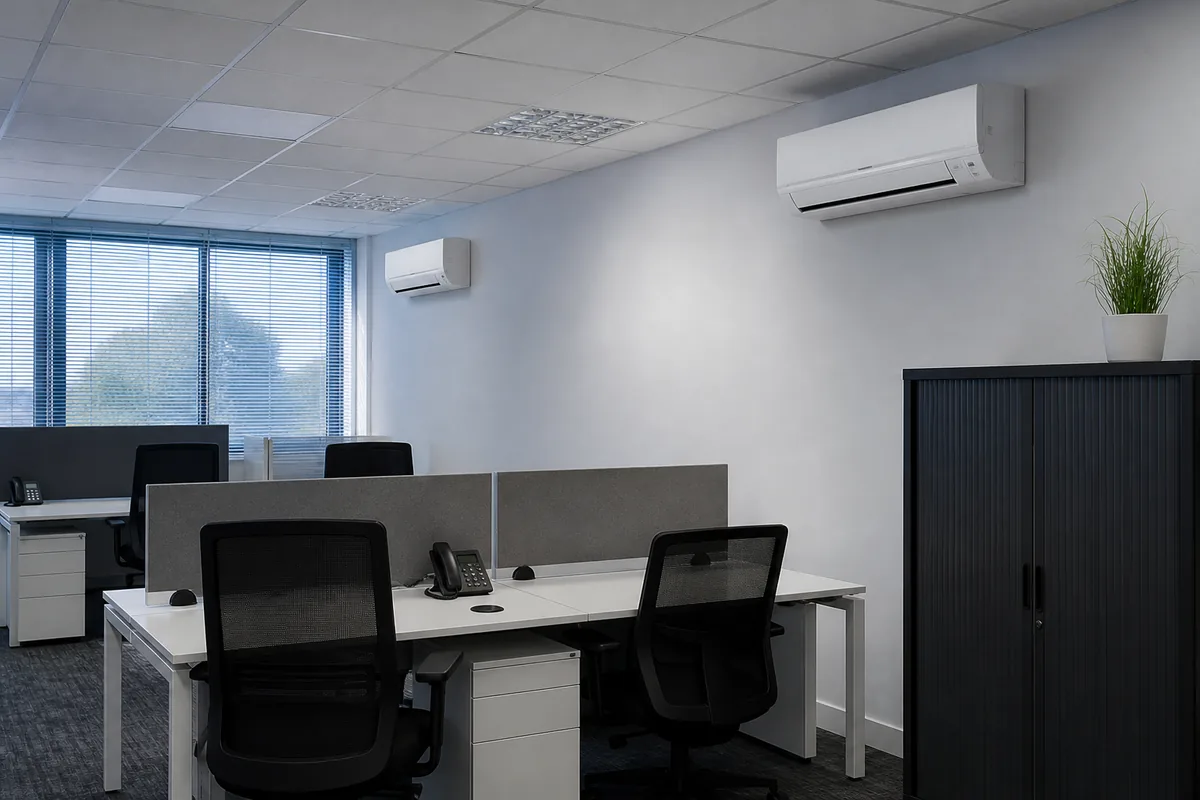
PoE, dust and a cabinet that used to be fine
Cabinets that were fine for a few switches become hot when PoE lighting, extra access points or a network video recorder arrive. Add up the kit rather than blaming the season first. Feel is a poor instrument. A simple temperature reading at the equipment inlet, taken safely without poking live terminals, tells you whether you have a real problem. Dust on fans and a cabinet shoved against a cold wall with no gap will mimic a shortage of cooling. Clean the filters the cabinet already has. Confirm the doors are not sealed solid if the design expected a vent. Then decide whether passive vents and cabinet fans have any headroom left. A door fan is sometimes enough if the load is modest and the cupboard can pass cooler air from a benign corridor. If the inlet is still hot with the fans running and the vents clear, look at proper cooling. Measure inlet temperature, not the corridor.
Boxes in the return, a drain, and a fire-rated wall
Many UK comms cupboards are also the cleaner's store. Boxes block the return air. A comfort split hung high can work if the supply actually reaches the cabinet intake and the exhaust has somewhere to go. Blowing cold air at the cupboard door from the corridor will not. Condensate is the hazard. A pump or a gravity drain must fail safely, away from switches and patch panels. An alarm or a visible drip into a place that does not destroy the network is part of the quote. So is power: a dedicated circuit from a competent electrician, not a trailing lead across the floor. Coring into a fire-rated wall or a landlord riser to pass a lineset can breach compartmentation. The survey should say who makes that good. Listed buildings and tenant fit-out rules can forbid the obvious external wall. The Planning Portal page on heat pumps is only a starting point for outdoor plant. A condenser over a neighbour's window still needs a human decision. If the cupboard opens onto a workplace, HSE temperature guidance is about people, while the equipment maker's limit is about the kit. Those numbers are not the same. Cooling the cabinet so the switches survive can still leave the room acceptable for the person who visits it twice a day. An open cupboard door may cool the kit and may also breach security, fire strategy and dust control. Treat it as a temporary measure, not the design. Someone who can see the heat load, the drain, the outdoor position and the fire-stopping should specify the cooling. An F-gas certified installer commissions the refrigerant side. GOV.UK publishes that certification. Your IT supplier should state the load.
Frequently asked questions
Will a door fan be enough?
Sometimes, if the load is modest and the cupboard can pass cooler air from a benign corridor. If the inlet is still hot with the fans running and the vents clear, look at proper cooling.
Can we leave the cupboard door open instead?
An open door may cool the kit and may also breach security, fire strategy and dust control. Treat it as a temporary measure, not the design.
Who should specify the cooling?
Someone who can see the heat load, the drain, the outdoor position and the fire-stopping. An F-gas certified installer commissions the refrigerant side. Your IT supplier should state the load.
What should the quote include?
Heat estimate, indoor position relative to the cabinet, drain failure behaviour, outdoor position, electrical supply and who monitors alarms. As a 2026 illustration, a small split for a single overheating cupboard is often in the low thousands of pounds including VAT when the pipe route is short, and it climbs when the condenser has to travel to a roof. Compare that with the cost of one outage before you delay.
How should a continuous-running cupboard be looked after?
Service it. Continuous running loads filters and coils faster than a bedroom. Anything that opens the refrigerant circuit stays with certified people. Recovery at end of life is compulsory. Venting is not a disposal method. Where the plant is large enough, check GOV.UK air conditioning inspections as a separate duty from the filter wash.
Are people-comfort numbers the same as equipment limits?
No. If the cupboard opens onto a workplace, HSE temperature guidance is about people, while the equipment maker's limit is about the kit. Cooling the cabinet so the switches survive can still leave the room acceptable for the person who visits it twice a day.
Core buying guides
Start with these high-intent guides, then dig into the rest of the library.
Related guides
Sources and further reading
How this guide was prepared
This guide was written by the Local AC Installers Editorial Team. We compare official guidance, legislation and established consumer information, separate general information from project-specific advice, and show publication dates and sources. We do not accept installer accreditation claims at face value.