
Rack cooling takes heat out at the equipment, with in-rack, in-row or close-coupled units, so the hot exhaust does not become the room temperature. Room cooling treats the whole space and hopes the racks are arranged so hot air does not short-circuit back into the intakes. A small cupboard often ends up with room cooling because there is no row to cool. A growing data room often outgrows a single wall unit. The survey starts from the heat the equipment rejects, not from the floor area.
Heat at the rack, not the thermometer by the door
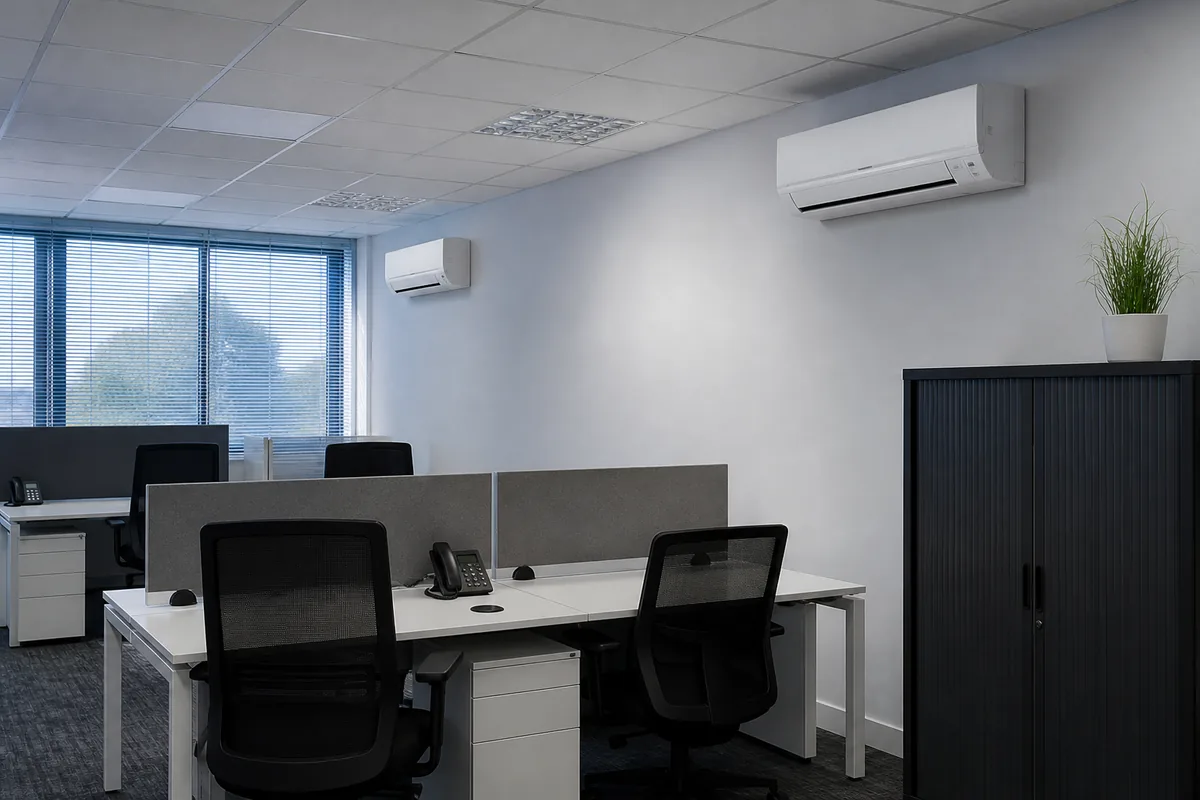
Servers, switches and storage dump almost all of their electrical input as heat. If that exhaust is swallowed straight back into the front of the same kit, inlet temperatures climb even though the room thermometer by the door looks fine. Blanking unused rack spaces and keeping a hot path and a cold path, even in a simple front-to-back arrangement, is often the first win. In-rack or in-row cooling shortens that path. It costs more equipment and it wants a service plan, a drain and a condenser or a water loop somewhere. It earns its place when the load is dense and a comfortable room for people is not the goal. Start with equipment heat, not carpet area. Room cooling lowers the space temperature. Rack or row cooling captures heat at the equipment so exhaust air is less able to recirculate into the intakes. Denser loads tend toward the second. A wall split is sometimes enough for a light load in a small room with sensible airflow. It is a poor fit for dense racks, continuous critical duty, or a drain that would sit over the equipment. Condensate must not drip onto live kit.
A cupboard split, a failed condenser, and water over the kit
A single cabinet or two in a ventilated store, with modest PoE and a server or two, may be served by a properly sized split that runs for long hours, provided the intake air is the cool supply and the exhaust can leave. Domestic units designed for a bedroom afternoon are a weak choice for continuous duty. Ask for equipment rated for the hours you will actually run. Redundancy is a business question. One split and no plan for failure means the room climbs when the condenser stops. Two units, an alarm, or a procedure to shut non-essential kit down should be written beside the quote. This page is not a design specification for a data centre. Any refrigerant system needs an F-gas certified company when the circuit is worked on. GOV.UK publishes that certification. End of life means recovery, not venting. A water-cooled row unit shifts the risk to leaks of a different kind. Either way, do not route a drain or a joint over the top of a rack if a leak would take the business with it. Outdoor condensers need a position, a power supply and a noise check. Plant on a roof above a tenanted flat will be heard. The Planning Portal heat-pump guidance is a domestic starting point, not an approval for a noisy pack beside a neighbour's window. As a 2026 illustration, a small split for a tidy comms cupboard is often discussed in the low thousands of pounds including VAT, while in-rack or in-row cooling for a serious room is a different project and can sit well above that before redundancy and monitoring. Load growth of a few kilowatts changes the answer. Measure the load before you decorate the choice. If the cooling plant is large enough, the GOV.UK air conditioning inspection rules may apply on top of your own maintenance. Confirm the current threshold. A service contract that only washes a filter will miss a failed condenser at 2am unless there is an alarm. A portable unit rejects heat badly, needs a bucket or a drain, and is easy to knock over beside live kit. Treat it as a short emergency measure while a surveyed system is installed. HSE temperature guidance is about people in a workplace. It is not a server inlet target.
Frequently asked questions
Is a wall split enough for a server rack?
Sometimes, for a light load in a small room with sensible airflow. It is a poor fit for dense racks, continuous critical duty, or a drain that would sit over the equipment. Size from the heat load.
What is the difference between cooling the room and cooling the rack?
Room cooling lowers the space temperature. Rack or row cooling captures heat at the equipment so exhaust air is less able to recirculate into the intakes. Denser loads tend toward the second.
Can we use a portable unit as a permanent fix?
A portable unit rejects heat badly, needs a bucket or a drain, and is easy to knock over beside live kit. Treat it as a short emergency measure while a surveyed system is installed.
Core buying guides
Start with these high-intent guides, then dig into the rest of the library.
Related guides
Sources and further reading
How this guide was prepared
This guide was written by the Local AC Installers Editorial Team. We compare official guidance, legislation and established consumer information, separate general information from project-specific advice, and show publication dates and sources. We do not accept installer accreditation claims at face value.