
At 27°C a compressor dehumidifier dries washing for less than half the electricity per litre of a vented or condenser tumble dryer, and about the same as a heat pump dryer; at 20°C it is still more than a third cheaper per litre. For laundry, pick a 20 litre compressor model with a laundry mode, such as the MeacoDry Arete One 20L, and run it in a small, closed, heated room: on Meaco's figures an 8 kg load holding about 4.8 litres costs around 55p at 27°C and 60% humidity and about 77p at 20°C, at the Ofgem cap of 26.32p per kWh. In an unheated 10°C room the same load costs about £1.61, more than the condenser dryers we checked (£1.09 to £1.25 a load), and heating the room costs extra. We have not tested any of these products.
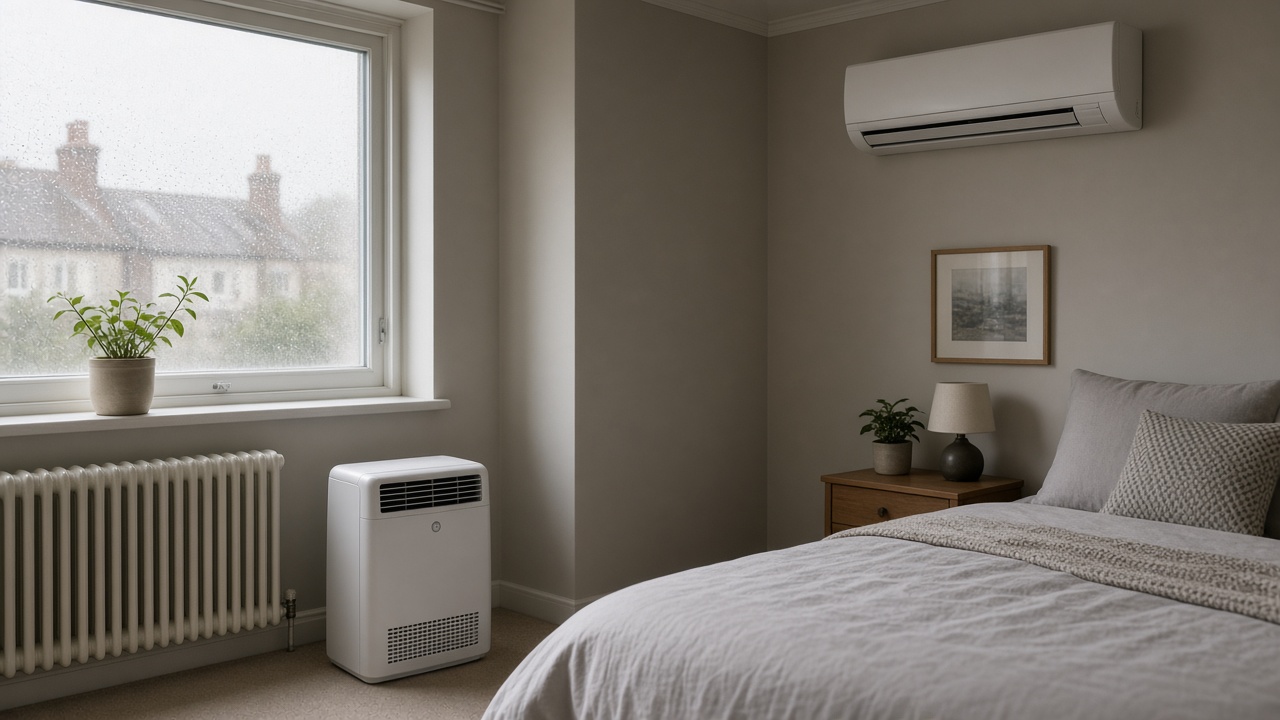
Cost per litre is the fair comparison
Every tumble dryer energy label figure comes from the same test: the standard cotton programme, which the GB label rules define as drying cotton from an initial moisture content of 60% down to 0%. Rated capacity is the dry weight of the textiles (Article 2 of the same regulation), and the test standard, IEC/EN 61121, works moisture content out against the conditioned dry mass of the load, so a dryer rated at 8 kg is tested on a load holding about 4.8 litres of water. Divide the label's kWh by that, and you get the electricity each dryer uses per litre, the same unit a dehumidifier's figures give you.
For the dehumidifiers, we divide each model's power draw by the litres an hour it extracts in the cooler condition its maker publishes. Only models with a laundry mode and a published cooler-condition figure are listed. All are Meaco, because Meaco is the maker in our dataset that publishes both. Figures were read from Meaco's pages on 21 November 2026.
Rows at 20°C and 60% are a harder test than rows at 27°C and 60%, so compare within one condition only.
| Model | Condition | Power | kWh per litre | Cost per litre |
|---|---|---|---|---|
| MeacoDry Arete One 25L | 27°C and 60% | 267 W | 0.43 | 11p |
| MeacoDry Arete One 20L | 27°C and 60% | 216 W | 0.43 | 11p |
| MeacoDry Arete Two 20L | 27°C and 60% | 230 W | 0.46 | 12p |
| MeacoDry Arete Two 25L | 27°C and 60% | 290 W | 0.46 | 12p |
| MeacoDry Arete One 12L | 27°C and 60% | 151 W | 0.48 | 13p |
| MeacoDry Arete Two 12L | 27°C and 60% | 155 W | 0.50 | 13p |
| MeacoDry ABC 12L | 27°C and 60% | 165 W | 0.53 | 14p |
| MeacoDry Arete One 10L | 27°C and 60% | 151 W | 0.60 | 16p |
| MeacoDry Arete Two 10L | 27°C and 60% | 152 W | 0.61 | 16p |
| MeacoDry ABC 10L | 27°C and 60% | 165 W | 0.66 | 17p |
| MeacoDry Arete One 6L | 27°C and 60% | 101 W | 0.69 | 18p |
| Meaco 20L Low Energy | 20°C and 60% | 219 W | 0.62 | 16p |
| Meaco 12L Low Energy | 20°C and 60% | 157 W | 0.79 | 21p |
| Meaco DD8L Pro | 20°C and 60% | 623 W | 1.88 | 49p |
Tumble dryers: 16 models from four manufacturer groups
We read the full-load energy figure for the standard cotton programme from each model's official product fiche or spec sheet, from Bosch, Siemens, Beko, Hotpoint, Indesit and Hoover. Bosch and Siemens are both BSH brands and Hotpoint and Indesit are both Whirlpool brands, so that is four manufacturer groups. Where the maker's own UK page did not carry it, we used the fiche the supplier lodged in the EU product database (EPREL). Every model is a UK variant. All five heat pump dryers we could verify are Bosch or Siemens, so that group is narrower than the others. Beko's DSV64 is marked discontinued on Beko's site but still shows its label data.
Since 10 April 2026, GB ecodesign rules have required a new household tumble dryer over 3 kg placed on the market to have an energy efficiency index no higher than 85, which the government says phases out new air-vented and condenser models. Many homes still have one, which is why they are in the comparison.
| Model | Type | Rated load | kWh per load | Cost per load | Cost per litre |
|---|---|---|---|---|---|
| Bosch WTR88T81GB | Heat pump | 8 kg | 1.40 | 37p | 8p |
| Siemens WT45M231GB | Heat pump | 8 kg | 1.80 | 47p | 10p |
| Bosch WTH85223GB | Heat pump | 8 kg | 1.87 | 49p | 10p |
| Bosch WQG24509GB | Heat pump | 9 kg | 2.05 | 54p | 10p |
| Bosch WTH84000GB | Heat pump | 8 kg | 2.18 | 57p | 12p |
| Bosch WTA74100GB | Vented | 6 kg | 3.45 | 91p | 25p |
| Beko DSV64 | Vented | 6 kg | 3.65 | 96p | 27p |
| Bosch WTA74200GB | Vented | 7 kg | 3.90 | £1.03 | 24p |
| Beko DTGV8000W | Vented | 8 kg | 4.80 | £1.26 | 26p |
| Hoover HLE V10DG-80 | Vented | 10 kg | 6.03 | £1.59 | 26p |
| Bosch WTN85201GB | Condenser | 7 kg | 4.15 | £1.09 | 26p |
| Siemens WT46E381GB | Condenser | 7 kg | 4.20 | £1.11 | 26p |
| Bosch WTN83202GB | Condenser | 8 kg | 4.71 | £1.24 | 26p |
| Hotpoint C HD C82 GGGD UK | Condenser | 8 kg | 4.75 | £1.25 | 26p |
| Indesit I2 D81W UK | Condenser | 8 kg | 4.75 | £1.25 | 26p |
| Beko DTLCE80121W | Condenser | 8 kg | 4.75 | £1.25 | 26p |
The comparison, by dryer type
At 27°C and 60%, the 20 and 25 litre Arete One models are the cheapest laundry-mode dehumidifiers per litre, about 11p. For an 8 kg load holding 4.8 litres, that is about 55p. In a cooler room the cost per litre rises: about 16p at 20°C and 60%, and about 33p at 10°C and 60%, on Meaco's table further down. Against each type of dryer, per litre of water removed:
- Vented dryers (5 models): 24p to 27p a litre, median 26p. At 27°C a dehumidifier costs less than half per litre; in a 10°C room it does not.
- Condenser dryers (6 models): 26p a litre, median 26p. At 27°C a dehumidifier costs less than half per litre; in a 10°C room it costs more.
- Heat pump dryers (5 models): 8p to 12p a litre, median 10p. About level with a dehumidifier, or slightly cheaper on paper, and the label test cycle for a full load takes under 4 hours on all five.
| Dryer type | Models | Cost per load (median) | Cost per litre (median) |
|---|---|---|---|
| Heat pump | 5 | 37p to 57p (49p) | 8p to 12p (10p) |
| Condenser | 6 | £1.09 to £1.25 (£1.24) | 26p (26p) |
| Vented | 5 | 91p to £1.59 (£1.03) | 24p to 27p (26p) |
How long a load takes depends on the room
A '20 litre' dehumidifier extracts 20 litres a day at 30°C and 80% humidity. A UK room in winter is much cooler and drier than that. Meaco publishes a water removal table for the Arete One 20L at cooler room conditions, and it shows why the same machine can take 8 hours or most of a day over the same load.
At 20°C and 80% humidity it removes about 0.58 litres an hour, so 4.8 litres takes roughly 8 hours. At 10°C and 80% it removes 0.24 litres an hour, so the same water takes about 20 hours, and each litre costs about 20p instead of 10p. These are Meaco's figures for room air at a steady condition, not a test with wet washing in the room, so treat the hours as a guide.
| Room condition | Litres a day | Power draw | Litres an hour | Hours for 4.8 litres | Cost per litre |
|---|---|---|---|---|---|
| 10°C and 50% | 2 | 179 W | 0.08 | 58 | 57p |
| 10°C and 60% | 3.4 | 180 W | 0.14 | 34 | 33p |
| 10°C and 80% | 5.68 | 184 W | 0.24 | 20 | 20p |
| 20°C and 50% | 5.78 | 211 W | 0.24 | 20 | 23p |
| 20°C and 60% | 8.5 | 216 W | 0.35 | 14 | 16p |
| 20°C and 80% | 14.02 | 225 W | 0.58 | 8 | 10p |
| 27°C and 60% | 12 | 216 W | 0.50 | 10 | 11p |
Setting up the room so it works
Meaco's own dehumidifier buying guide gives the practical rules. The aim is to copy a warm, dry, breezy day on the washing line, indoors.
- Use the smallest room you can and close the door. The smaller the air volume, the faster the dehumidifier brings the humidity down.
- Keep the room warm. On Meaco's table the Arete One 20L removes about two and a half times as much water at 20°C as at 10°C, at the same 80% humidity.
- Run an extra spin first. The less water in the clothes, the less the dehumidifier has to remove. A washing machine's spin class shows this: class A leaves under 45% remaining moisture, class B 45 to 54%.
- Spread the load on the airer: small items low, large items high, hangers where you can, every item open to the dry air, and nothing dripping onto the machine.
- Point a fan at the clothes if you have one. Meaco says the extra airflow helps them dry much faster.
- Use laundry mode. Meaco recommends machines that switch themselves off after six hours of laundry drying, which caps the electricity used. On the room-condition figures above, a full 8 kg load may need a second run, especially in a cool room.
- Check the tank. An 8 kg load can hold about 4.8 litres, more than a 2.5 litre tank, so empty it partway or fit a drain hose.
Which size for laundry
Meaco's guide says a 12 litre compressor machine suits one person with a limited amount of washing, a larger machine suits a household of three or four drying regularly, and a 25 litre suits large families. On the published figures the 20 and 25 litre Arete models also use the least electricity per litre at 27°C, and both have a 4.8 litre tank. We chose nothing on test, because we have not tested them.
For a cold, unheated room, our compressor vs desiccant dehumidifier guide explains why a desiccant model keeps working where a compressor one slows down. For costs outside laundry, see our dehumidifier running cost guide, and for every model compared, our best dehumidifier comparison. If the damp is in the whole house rather than on the airer, our dehumidifier vs air conditioning for damp guide covers when each makes sense.
Dehumidifiers by the numbers
Dehumidifiers are sold on the litres they remove at 30°C and 80% humidity, which no UK room reaches in winter. Meaco also publishes figures for cooler conditions, which is why these are the ones we can compare.
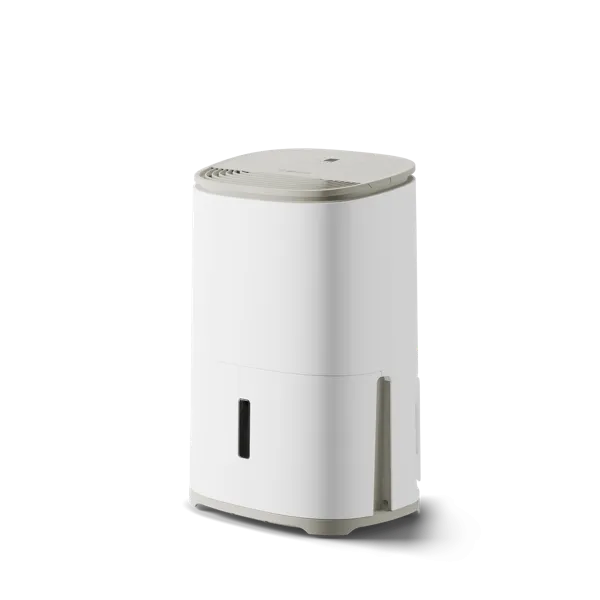
Flat or small house
MeacoDry Arete One 12L
7.5 litres a day at 27°C and 60%, 151 W, from 35 dB
About 4p an hour while running. The quietest of the three, with a 2.5 litre tank.
Check price on AmazonPhoto: Meaco
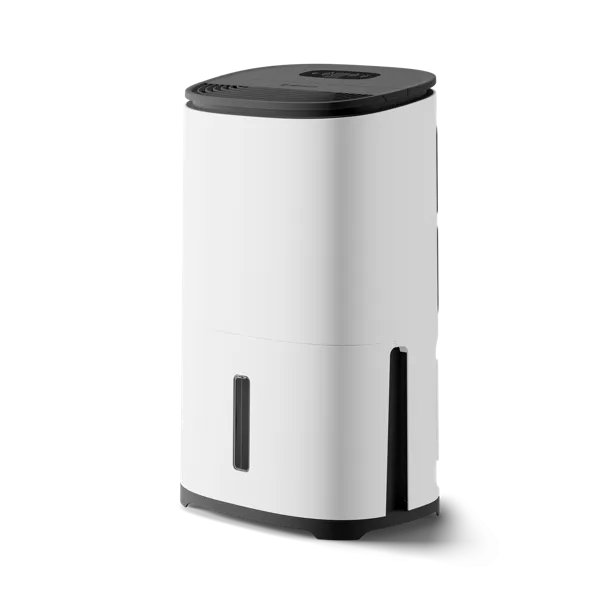
Family house or laundry
MeacoDry Arete One 20L
12 litres a day at 27°C and 60%, 216 W, from 38 dB
About 6p an hour while running. Rated by Meaco for homes of up to four bedrooms.
Check price on AmazonPhoto: Meaco
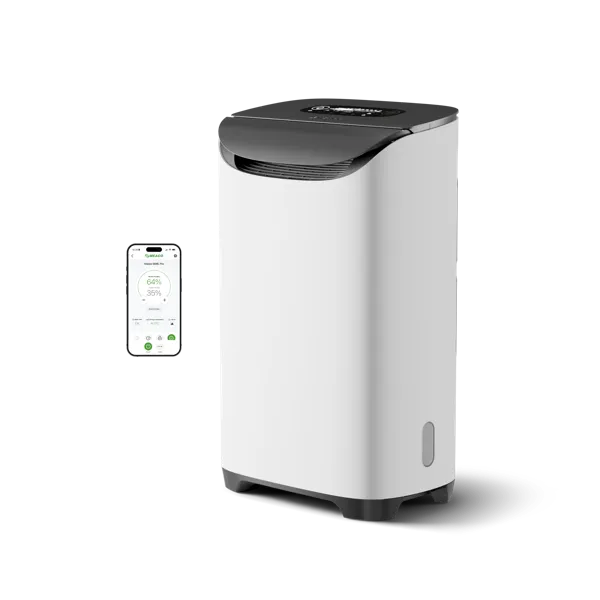
Garage, boat or cold room
Meaco DD8L Pro
up to 7.97 litres a day at 20°C and 60%, 623 W, from 40 dB
About 16p an hour while running. A desiccant model rated down to 1°C, where a compressor machine stops working.
Check price on AmazonPhoto: Meaco
Comparing another model? Ask for its extraction and its wattage in cooler conditions, then divide: fewer watts per litre is better.
Frequently asked questions
Is it cheaper to dry clothes with a dehumidifier than a tumble dryer?
In a warm room, yes: than a vented or condenser dryer, at less than half the cost per litre at 27°C on makers' figures. The MeacoDry Arete One 20L works out at about 11p a litre at 27°C and 60%, against medians of 26p for the vented and 26p for the condenser dryers we checked. A heat pump dryer is about level, with a median of 10p. In an unheated 10°C room the dehumidifier's cost per litre rises to about 33p, more than a condenser dryer, and heating the room costs extra.
How long does a dehumidifier take to dry a load of washing?
It depends on the room. On Meaco's figures for the Arete One 20L, about 4.8 litres takes around 8 hours at 20°C and 80% humidity, and around 20 hours at 10°C and 80%. A small, closed, warm room is quickest.
What size dehumidifier do I need to dry clothes?
Meaco's guide suggests a 12 litre compressor model for one person with a little washing, one of the larger machines for a household of three or four drying regularly, and a 25 litre machine for large families.
Do I need a laundry mode?
It helps. Meaco's guide recommends machines whose laundry mode switches off after six hours of laundry drying, which caps the electricity used.
Should I close the door when drying clothes with a dehumidifier?
Yes. Meaco advises the smallest space possible, because a smaller air volume lets the dehumidifier bring the humidity down faster.
Does spin speed matter?
Yes. The washing machine label's spin-drying class shows how much water is left: class A leaves under 45% remaining moisture and class B 45 to 54%. Less water means less for the dehumidifier to remove.
Core buying guides
Start with these high-intent guides, then dig into the rest of the library.
Related guides
- Best Dehumidifiers UK: 54 Compared, Including for Bedrooms, Bathrooms and Mould
- How Much Does a Dehumidifier Cost to Run? UK Cost per Hour, Day and Month
- Compressor vs Desiccant Dehumidifier: Which One for Which Room
- Dehumidifier or air conditioning for a damp UK room?
- Garage Dehumidifier UK: What Still Works at 10°C, on Makers' Figures
More costs guides
Sources and further reading
- Meaco: dehumidifier specifications
- Meaco: MeacoDry Arete One 20L, specification and water removal table (checked 25 Nov 2026)
- Meaco: dehumidifier buying guide, including tips for drying laundry (PDF, checked 25 Nov 2026)
- Ofgem: energy price cap, 1 October to 31 December 2026
- legislation.gov.uk: Regulation (EU) No 392/2012 as it applies in GB, Article 2 definitions of rated capacity (dry textiles) and the standard cotton programme (checked 25 Nov 2026)
- IEC 61121:2002 tumble dryer test method, symbols for test load mass and initial moisture content (free preview, checked 25 Nov 2026)
- legislation.gov.uk: Household Tumble Dryers Regulations 2026, SI 2026/318 (checked 25 Nov 2026)
- GOV.UK: raising standards for household tumble dryers, government response (updated 24 March 2026, checked 25 Nov 2026)
- legislation.gov.uk: Regulation (EU) 2019/2014 as it applies in GB, Annex II spin-drying efficiency classes (checked 25 Nov 2026)
- Electrolux UK: what's the difference between spin classes in washing machines (checked 25 Nov 2026)
- Bosch: WTR88T81GB heat pump tumble dryer spec sheet (checked 25 Nov 2026)
- Siemens: WT45M231GB heat pump dryer spec sheet (checked 25 Nov 2026)
- Bosch: WTH85223GB product fiche (checked 25 Nov 2026)
- Bosch: WTH85223GB spec sheet, heat pump tumble dryer (checked 25 Nov 2026)
- Bosch: WQG24509GB product fiche (checked 25 Nov 2026)
- Bosch: WQG24509GB spec sheet, heat pump tumble dryer (checked 25 Nov 2026)
- Bosch: WTH84000GB product fiche (checked 25 Nov 2026)
- Bosch: WTH84000GB spec sheet, heat pump tumble dryer (checked 25 Nov 2026)
- Bosch: WTA74100GB vented tumble dryer spec sheet (checked 25 Nov 2026)
- Bosch: WTA74200GB vented tumble dryer spec sheet (checked 25 Nov 2026)
- Beko UK: DSV64 6kg vented tumble dryer, specification (discontinued, checked 25 Nov 2026)
- Beko UK: DTGV8000W product fiche, air vented (checked 25 Nov 2026)
- EPREL: Hoover HLE V10DG-80 product fiche, air-vented (checked 25 Nov 2026)
- Bosch: WTN85201GB product fiche (checked 25 Nov 2026)
- Bosch: WTN85201GB spec sheet, condenser tumble dryer (checked 25 Nov 2026)
- Siemens: WT46E381GB condenser tumble dryer spec sheet (checked 25 Nov 2026)
- Bosch: WTN83202GB product fiche (checked 25 Nov 2026)
- Bosch: WTN83202GB spec sheet, condenser tumble dryer (checked 25 Nov 2026)
- EPREL: Hotpoint C HD C82 GGGD UK product fiche, condenser (checked 25 Nov 2026)
- EPREL: Indesit I2 D81W UK product fiche, condenser (checked 25 Nov 2026)
- EPREL: Beko DTLCE80121W product fiche, condenser (checked 25 Nov 2026)
How this guide was prepared
This guide was written by the Local AC Installers Editorial Team. We compare official guidance, legislation and established consumer information, separate general information from project-specific advice, and show publication dates and sources. We do not accept installer accreditation claims at face value.