
A damp UK room is usually a moisture problem, a cold-surface problem, or both. A dehumidifier pulls water vapour out of the air and collects it in a tank or a drain hose. A split air conditioner can also remove moisture while it cools, and many remotes offer a dry mode, but its main job is moving heat. For laundry steam, a wet spare room, or steady high humidity without much heat, a dehumidifier is often the right tool. For a room that overheats in summer and only feels clammy when it is hot, cooling that also dries can earn its place. Neither machine fixes rising damp, a leaking gutter, or mould that needs cleaning and a building repair. Start with moisture sources and ventilation, then choose the box that matches the job.
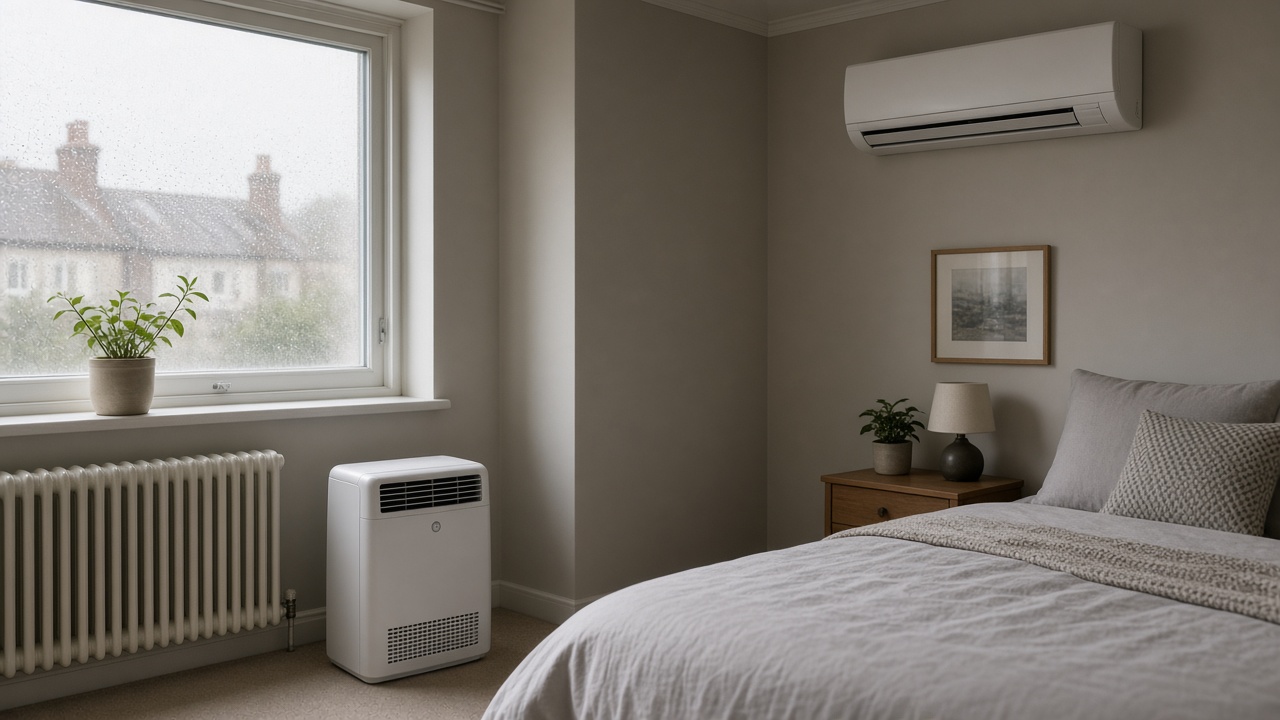
Condensation, damp air and cold surfaces
Condensation is liquid water that appears when moist air meets a surface colder than the dew point. UK bedrooms see it on single cold panes, on uninsulated corners, and behind furniture on external walls. The air can feel clammy even when the wall is not dripping yet. Relative humidity in the sixties and seventies percent with cool surfaces is a classic mould invitation.
Energy Saving Trust advice on damp and condensation keeps returning to two levers: make less moisture, and ventilate or extract what you do make. Cooking, showers, indoor clothes drying and unvented tumble dryers load the air quickly. Wipe-downs help. They do not replace an extract fan that actually runs through the steam.
GOV.UK guidance on damp and mould for housing emphasises health risk and the need to address causes, not only wipe marks. NHS patient advice in the same space, including leaflets used by trusts such as Manchester University NHS Foundation Trust, flags condensation as a common route to mould and mentions dehumidifiers as one help while you fix habits and defects. Treat medical and housing guidance as the priority frame. Product shopping sits underneath it.
Heat matters because warmer air holds more moisture before it condenses, and warmer surfaces stay above the dew point more often. That is why a freezing unused box room mists while a gently heated living room on the same wet day stays clearer. Cooling a room without a plan can sometimes make surfaces colder and shift where droplets form. Tool choice has to respect that physics.
Moisture vs cooling comparison
These tools solve different physics problems; the table keeps that honest.
| Job | Dehumidifier | Air Conditioning For Damp |
|---|---|---|
| Primary effect | Removes moisture from air | Lowers air temperature |
| By-product | Some heat rejected indoors | Dehumidifies as a side effect when cooling |
| Running cost focus | Litres removed per kWh | Comfort hours per kWh |
| Install complexity | Plug-in or fixed drain options | Full split install |
| Best for | Damp rooms without a heat problem | Hot rooms that also feel sticky |
What a dehumidifier actually removes
A compressor dehumidifier cools a coil inside the cabinet, condenses water from room air, and reheats the air a little before blowing it back. You see the result as litres in a tank. A desiccant model uses a moisture-absorbing wheel and often sounds different. Both are aimed at humidity, not at knocking five degrees off a heatwave loft.
Energy Saving Trust explicitly floats a dehumidifier as a option when moisture is excessive or when you must dry washing indoors. Put the unit in the room where the moisture is, close the door, and empty the tank before it floods the laminate. Continuous-drain hose kits help in a utility with a nearby sink. They do not help if you hide the machine in a hallway and hope a wet bedroom improves by telepathy.
Dehumidifiers add a little heat to the room as a by-product. In winter that can be welcome. In a small already-warm room it can feel stuffy if you set humidity targets without any fresh air. They also cost electricity. Run times should follow a humidistat target, not an all-day habit left on because the tank is big.
What they will not do is dry a soaked plaster wall fed by a leak. Building moisture needs a builder. Air moisture needs air treatment and ventilation. Mixing those diagnoses wastes money on a bigger dehumidifier while the gutter still overflows into the reveal.
What air conditioning removes, and what dry mode means
A cooling split runs refrigerant between an indoor coil and an outdoor unit. Room air passes over a cold indoor coil. Moisture condenses there and leaves through a condensate drain. That is real dehumidification, but it is tied to cooling operation and coil temperature. Energy Saving Trust describes reversible splits as air-to-air heat pumps when they heat. The same hardware family is what UK homes mean by wall air conditioning.
Dry mode on many remotes prioritises moisture removal with less aggressive temperature drop than full cool. It can help a muggy mild day when you do not want the room arctic. It is not a licensed mould-remediation process. Performance varies by model, fan speed and how wet the air is. If the room is cold and damp in November, dry mode may do little useful work because the system is not in its happy cooling condition.
Heating mode on a reversible split warms air and can make a room feel less clammy by lifting surface temperatures, yet it is not a dehumidifier. Long heating without ventilation in a wet-producing household can still leave moisture in the building. Do not buy a split only because the remote icon looks like a droplet if your real problem is winter condensation on cold glass with the heating off.
Outdoor units need a lawful, serviceable place. Planning Portal guidance for air source heat pumps is the householder starting point for many condenser siting questions in England. A damp bedroom on a second floor does not justify a cowboy bracket over a neighbour's yard. F-gas company certification on GOV.UK is mandatory territory for anyone who installs or opens the refrigerant circuit. A plug-in dehumidifier needs none of that regulatory stack.
When the dehumidifier is the right buy
Choose a dehumidifier when the room is damp without being a summer oven: indoor drying racks, a flat with weak extract, a guest room that smells musty after wet weeks, or a house waiting on a ventilation upgrade. Target a sensible relative humidity rather than zero. Bone-dry air is not the goal. Stopping the wet-window morning and the musty wardrobe corner is.
Choose it when you rent and cannot add an outdoor unit. Landlords and planning and F-gas trades are heavy machinery for a problem a portable appliance might shrink while extract fans and heating habits improve. Keep receipts and still report penetrating damp to whoever is responsible for the fabric.
Choose it as a partner even if you already own a split. Summer cooling can dry while it cools. Winter laundry evenings may still want a dehumidifier with the AC off. Different seasons, different tools.
Size by the room and the wet load, not by a warehouse bargain with a tank the size of a bucket and no humidistat. Look for a humidistat, auto-defrost if it will sit in a cool room, and a daily litre claim that matches something like clothes drying, not a swimming-pool brochure.
When air conditioning earns a place in the damp story
Choose cooling when the same room regularly overheats, sleeps badly in heatwaves, and feels humid because hot air is holding a lot of water. Pulling heat out will often pull water out with it, and comfort improves on two axes at once. That is a different purchase case from a north-facing cold bedroom that never overheats but still grows mould behind the wardrobe.
A surveyed split also makes sense when you want reversible heat in shoulder seasons for a loft office or a room the boiler never quite reaches, and damp is a secondary complaint in warm weather only. Be honest on the survey form about which problem pays the bill: heat, cool, or moisture. Installers who only hear mould may underspecify summer load or overpromise dry mode.
If mould is already visible, clean it with suitable products and fix moisture sources as EST and health guidance describe. Do not blow high-velocity air across a dirty patch as your only plan. Spores and damp need hygiene and cause control. Mechanical cooling is optional afterwards for climate, not a disinfectant.
Multi-splits and bigger systems still leave you with condensate drains that must fall correctly. A blocked drain that drips into a wall cavity creates the damp problem you thought you were solving. Commissioning and service matter.
- Cut moisture at source: lids on pans, fans through showers, less indoor drying when you can
- Use a dehumidifier for humidity-led damp without a heat problem
- Use AC when heat and summer clamminess travel together
- Book F-gas certified installers for any split that needs refrigerant work
Ventilation, mould risk and a sane order of operations
Both machines work better in a room that can be closed while they run, then aired on purpose afterwards. Continuous trickle ventilation and working extract fans are still the backbone. Insulation upgrades that seal a house without thinking about air paths can worsen condensation if moisture has nowhere to go. EST warns that insulation can reduce natural leakage and may need planned ventilation alongside it.
GOV.UK damp and mould material stresses health, especially for children and vulnerable people, and the duty to deal with causes in rented homes. If anyone in the household has breathing problems, treat persistent mould as a housing and health issue first. A shopping comparison between two white boxes is not the whole response.
Order of operations for most owner-occupiers: stop leaks and gutters, fix extract fans, change drying habits, heat gently where rooms are too cold, then add a dehumidifier if humidity stays high, and only then consider air conditioning if overheating or a wider comfort brief justifies the outdoor unit. Jumping straight to a multi-split because Instagram showed a dry-mode icon is how people spend thousands on the wrong season's problem.
Used with that discipline, dehumidifiers and air conditioners are complementary tools, not rivals in a forum fight. Match the machine to heat versus moisture, keep ventilation honest, and leave refrigerant circuits to certified hands when a split is truly the right next step.
Frequently asked questions
Can dry mode on my air conditioner replace a dehumidifier?
Sometimes in warm muggy weather. In cold damp winter rooms a dehumidifier is usually more appropriate. Dry mode is not a full substitute for ventilation and source control.
Will a dehumidifier stop black mould forever?
No. It can lower humidity that feeds mould. You still need to clean existing mould and fix leaks, cold bridges and poor extract.
Does air conditioning need F-gas certified installers?
Yes for installation and any work that opens the refrigerant circuit. Check GOV.UK F-gas company certification requirements before you book.
Is indoor clothes drying enough reason to buy AC?
Usually no. Try spin cycles, a drying rack with ventilation, an extract fan, or a dehumidifier first. AC is a bigger step with outdoor plant and planning checks.
Could cooling make condensation worse?
If you overcool surfaces while moisture stays high, droplets can still form. Balance temperature, humidity and ventilation rather than running maximum cool against a wet load.
Core buying guides
Start with these high-intent guides, then dig into the rest of the library.
Related guides
Sources and further reading
- Energy Saving Trust: How to get rid of damp
- Energy Saving Trust: Air-to-air heat pumps
- GOV.UK: Understanding and addressing the health risks of damp and mould in the home
- Manchester University NHS Foundation Trust: Damp and mould in the home
- GOV.UK: certification for companies working on equipment containing F-gas
- Planning Portal: air source heat pumps
How this guide was prepared
This guide was written by the Local AC Installers Editorial Team. We compare official guidance, legislation and established consumer information, separate general information from project-specific advice, and show publication dates and sources. We do not accept installer accreditation claims at face value.