
A through-wall monobloc puts the whole air conditioner inside, with two cores through the outside wall and grilles instead of a separate condenser. A split puts the compressor outdoors and is the better comfort buy whenever that outdoor unit is allowed: quieter in the room, and generally more efficient for the same cooling duty. Monoblocs earn their place as a consent workaround. Many are factory-sealed, so the install is not the same refrigerant job as a split, but the holes, electrics and building consent still matter. If anyone opens the circuit, F-gas rules apply.
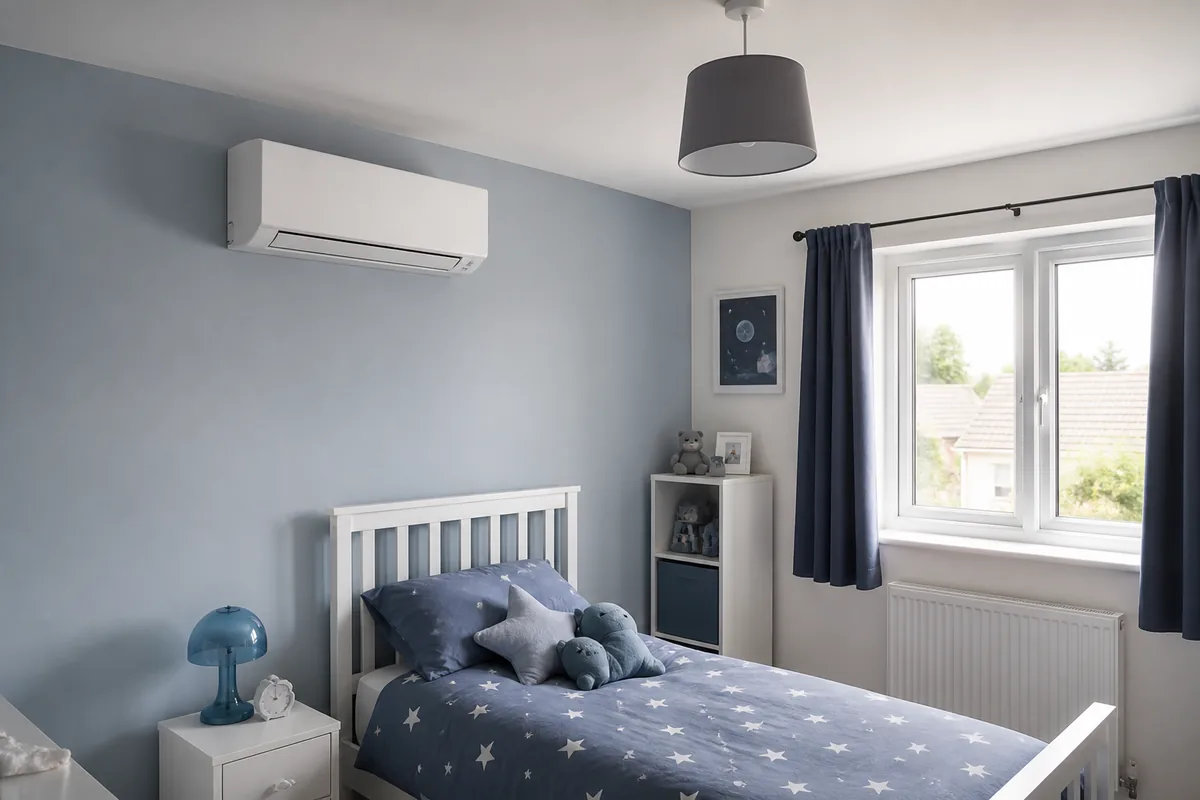
Two cores in the wall, compressor on your side
A split moves heat along refrigerant pipes to an outdoor coil. That is why the bedroom stays quieter. A monobloc pulls outside air through one hole, dumps the heat into it, and pushes it out of the second hole. The compressor is in the cabinet on your side of the wall. Physics still holds. You have moved the noise indoors. Expect a monobloc to be louder in the room than a split indoor of a similar cooling effort, because the compressor is there. It is usually quieter than a cheap portable with a hose, which is a low bar. Read the sound figure at the fan speed you would sleep with. If the number is missing, do not put it in a bedroom on faith. Outdoors you have grilles rather than a condenser, which can help a neighbour and still be audible through a light wall.
Survey first anyway. A monobloc in the 2 to 3 kW class will not do the work of a 5 kW living-room split. Ask for the published capacity of the exact unit. Do not treat it as a brandless bargain version of a wall split. It cools the room it sits in, at the capacity on its plate, which is often modest. It is not a whole-flat substitute for a correctly sized split or multi-split. Efficiency is generally behind a decent split of the same duty, so electricity per unit of cooling is usually higher. Ask for the manufacturer's published figures for that model. Do not invent a SEER, and do not assume a split's label applies to the monobloc. Energy Saving Trust describes air-to-air heat pumps. A monobloc is the workaround when that outdoor coil is not allowed, not a quieter version of the same machine.
Grilles, leases and a split priced first
No condenser removes the usual outdoor-unit objection, which is why flats and conservation elevations sometimes end up here. The cores and grilles are still an alteration. Listed buildings, street-facing conservation walls and leases can still say no. A neighbour can still hear a compressor if the wall is thin. The Planning Portal and Class G on legislation.gov.uk are the outdoor-unit rules a split still has to meet. They do not vanish because you chose grilles instead.
If the refrigerant circuit stays factory-sealed, the job is not the same F-gas opening as a split. GOV.UK certification applies the moment someone breaks the seal. Electrical work, making the holes weathertight and discharging condensate still need competent people. Factory-sealed units are not an invitation to DIY electrics or structure. As a 2026 illustration, monobloc equipment often looks dear per kW because you are buying the workaround, and core drilling is not free.
If an outdoor unit is realistically allowed, price the split first. If a freeholder or a planning constraint blocks external plant, ask for a monobloc with grille positions drawn on a photo, plus a note on indoor sound. Get both prices only when both are actually installable. Name the room. A firm that only sells splits should tell you that, and a firm that knows monoblocs should not pretend the noise matches a wall unit.
Core buying guides
Start with these high-intent guides, then dig into the rest of the library.
Related guides
Sources and further reading
How this guide was prepared
This guide was written by the Local AC Installers Editorial Team. We compare official guidance, legislation and established consumer information, separate general information from project-specific advice, and show publication dates and sources. We do not accept installer accreditation claims at face value.