
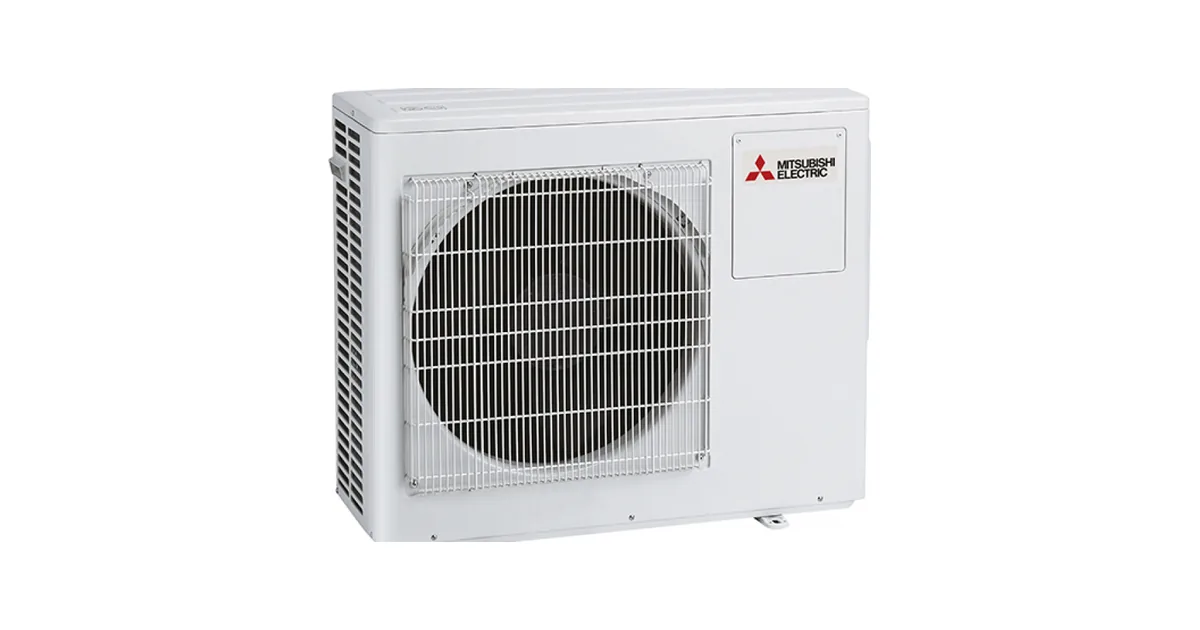
On a semi-detached or terraced house, the multi-split is usually the answer, because England and Wales allow only one outdoor unit under permitted development on a house that is not detached. On a detached house, where two are allowed, two condensers give you independent rooms.
One condenser with a simultaneous limit
Multi-split pipework comes back to a single condenser with a limit on how hard the indoors can run together. Add the indoor nameplates and you will overstate what a warm afternoon can do. The installer should show the outdoor model's simultaneous capacity against both rooms at the same time, which is exactly when a heatwave loads them.
Two single splits waste no capacity on sharing. Each indoor gets the outdoor it was matched to. You also get two lots of brackets, two electrical points and two things to hear. If one fails, the other room still cools. Stay inside one manufacturer on a multi system.
One multi-split outdoor unit vs two condensers
Figures are from the sources listed below, checked 21 November 2026. Running costs use the Ofgem price cap for October to December 2026 (26.32p per kWh of electricity) divided by the published efficiency.
| One multi-split outdoor unit | Two single condensers | |
|---|---|---|
| Units allowed without planning (England, Wales) | One on any house | Two on a detached house only |
| Wall or ground space | One position | Two positions |
| Fault in the outdoor unit | All connected rooms stop | Only that room stops |
| Installed cost, two rooms | About £2,500 to £5,000 | About £2,600 to £5,200 |
Class G counts boxes, not indoor badges
On the Planning Portal's current summary of Class G in England, only the first air source heat pump is permitted development on a house that is not detached, and on a block of flats. Detached houses can have two, if every other limit is met. A second condenser on a semi or a terrace often needs an application. Article 4 directions and existing conditions can remove rights anyway. Legislation.gov.uk is the Class G text.
Volume limits, highway-facing walls, conservation siting and listed curtilage still apply to whichever box you choose. A multi-split does not become exempt because it serves two rooms. Flats often still need permission plus the freeholder. Do not treat this as permission for your house.
One corner, two brackets, and the bill
One larger outdoor unit can be easier to site well, or harder if the only corner is by a neighbour. Two smaller units spread the noise and double the chances of a bad bracket. Isolation and distance from bedroom windows matter more than the multi-split logo.
As a 2026 illustration, two simple singles can cost more in labour and electrics than one multi serving the same two rooms, and a planning application can erase that arithmetic. Price both. Include the drain and the indoor kW so the cheaper option is not the one that cannot run both rooms after lunch. Energy Saving Trust describes air-to-air heat pumps. GOV.UK F-gas rules apply to both designs. Ask for model codes, simultaneous capacity, sound data, pipe lengths and a note on whether a second unit would rely on permitted development or an application. Say which rooms must run together on the hottest afternoon.
Frequently asked questions
If one multi-split outdoor fails, do all the rooms stop?
Yes. That is the trade for a single piece of plant. Two condensers keep the other room running. Weigh that against siting and planning, not only against the quote total.
Can I put two condensers on a semi under permitted development?
Often no. Current Class G guidance allows the first installation as permitted development on a house that is not detached, and the first two on a detached house, subject to every other condition. Check your local authority. Cooling-only use fails the condition that the unit is not used solely for cooling.
Is a multi-split cheaper to run?
Not automatically. It depends on the outdoor model, how often both rooms run, and whether each indoor is correctly sized. Ask for efficiency data on the proposed equipment. Do not invent a SEER advantage for sharing a condenser.
Can I add the indoor nameplates and call that the outdoor duty?
No. That overstates what a warm afternoon can do. Ask for the outdoor model's simultaneous capacity against both rooms at the same time.
Does a reversible multi-split escape the cooling-only condition?
A reversible badge does not help if the system will be used solely for cooling. Class G still includes that condition. A multi-split is not exempt because it serves two rooms.
Core buying guides
Start with these high-intent guides, then dig into the rest of the library.
Related guides
More homes guides
- The Most Reliable Air Conditioning Brands in the UK: What the Evidence Shows
- Air Conditioning on a Narrowboat or Widebeam: What Works
- Monobloc Air Conditioning vs a Split in the UK
- Nursery Bedroom Air Conditioning in the UK
- Mitsubishi Zen or Daikin Emura for a room you look at?
- What a 1 Ton Air Conditioner Is in kW
Sources and further reading
How this guide was prepared
This guide was written by the Local AC Installers Editorial Team. We compare official guidance, legislation and established consumer information, separate general information from project-specific advice, and show publication dates and sources. We do not accept installer accreditation claims at face value.