
A server room split system should be sized from measured and forecast IT heat load, not from office comfort rules of thumb. Treat the room as continuous process cooling, confirm low-ambient and year-round operation, manage supply and return airflow at the racks, and design condensate, power, alarms and maintenance access before installation begins.
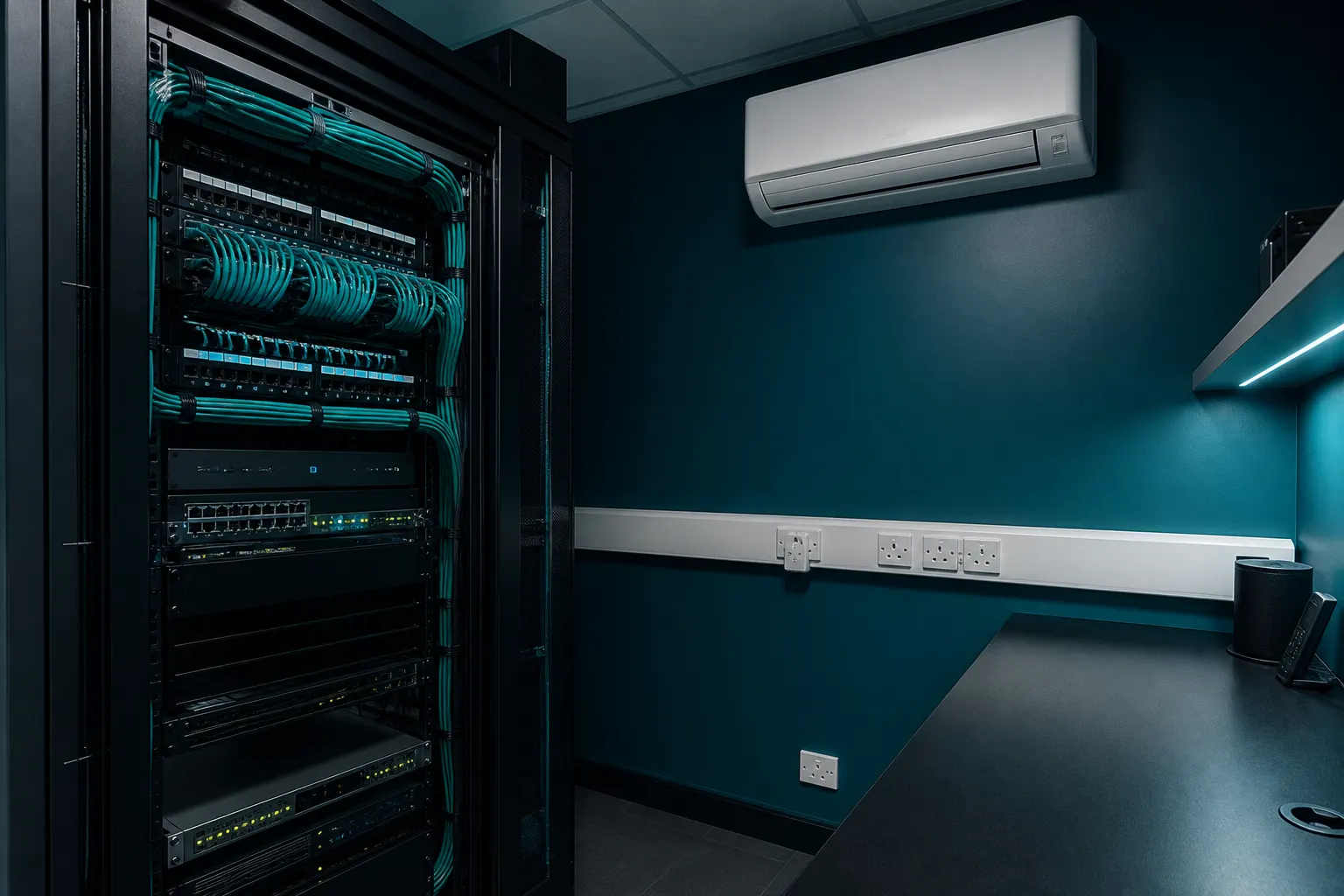
Treat the room as process cooling, not comfort cooling
Office comfort cooling is usually intermittent and occupied-hours based. Server rooms often need cooling whenever IT equipment is energised, including nights, weekends and holidays. A design that shares the office plant or switches off with the office schedule can leave equipment unprotected.
Confirm whether the proposed split system is suitable for continuous duty, the expected outdoor temperature range and the required indoor inlet conditions. Manufacturer environmental limits for the IT equipment should guide set points, with sensors placed where air enters critical kit rather than only on a distant wall.
- Record present IT electrical draw and a justified growth allowance.
- Separate server room controls from office occupancy schedules.
- Ask about year-round cooling and low outdoor-temperature operation.
- Document alarm thresholds and who receives them.
Survey the room before selecting equipment
A competent survey should cover rack layout, cable routes, UPS heat, lighting, room volume, fabric heat gains, outdoor-unit positions, refrigerant pipe length, condensate disposal and electrical capacity. Nameplate ratings alone can overstate continuous heat output, so measured demand over busy periods is a better design basis.
Airflow matters as much as nominal cooling capacity. Wall units that short-circuit supply air back into the return path can leave rack inlets hot while the thermostat reads acceptably. Blank unused rack spaces and keep cold supply air directed toward equipment inlets where practical.
Plan resilience, power and access
Decide what the installation must tolerate: single unit failure, filter cleaning, outdoor-unit isolation or a power outage. One split system with no backup may be acceptable for non-critical cupboards, but higher-value rooms often need N+1 cooling, independent power feeds or a tested temporary cooling plan.
Check that maintenance can be done without removing all cooling for long periods. Outdoor units need secure support, clear airflow and safe access. Indoor filters, drains and isolators should remain reachable without dismantling racks.
Install with F-gas, electrical and handover discipline
Stationary systems containing fluorinated greenhouse gases must be installed and serviced by appropriately qualified personnel, with company certification required for relevant work. Leak-checking and record-keeping duties can apply depending on refrigerant and charge, so current GOV.UK guidance should be checked for the specific system.
Handover should include equipment schedules, controls settings, commissioning results, refrigerant records where applicable, condensate route details, alarm configuration and a simple operating procedure. If the building's relevant air conditioning systems exceed 12 kW in combined effective rated output, assess inspection obligations with an accredited adviser.
Frequently asked questions
Can a domestic-style split cool a server room?
Some split products can cool small IT spaces, but suitability depends on continuous duty, low-ambient capability, capacity, airflow and resilience. Do not assume a comfort product is automatically appropriate for year-round process cooling.
Should the thermostat match office comfort settings?
Not necessarily. Use IT equipment inlet requirements and recognised datacom guidance rather than an arbitrary cold room target. Excessively low set points can waste energy without improving reliability.
Is one split system enough?
It can be for low-criticality rooms if downtime risk is accepted. For rooms that cannot tolerate a cooling failure, plan redundancy, independent power and a tested response procedure.
Does office air conditioning replace a dedicated server room unit?
Usually not. Shared office plant may lack independent out-of-hours control, continuous process rating or the airflow arrangement needed at the racks.
Core buying guides
Start with these high-intent guides, then dig into the rest of the library.
Related guides
Sources and further reading
How this guide was prepared
This guide was written by the Local AC Installers Editorial Team. We compare official guidance, legislation and established consumer information, separate general information from project-specific advice, and show publication dates and sources. We do not accept installer accreditation claims at face value.