
A window unit, sometimes called a window shaker because the compressor shakes in the opening, is usually a bad idea in a UK home. Sash windows do not seal around a box, the compressor noise sits in the room and on the street, the window will not lock, and condensate drips outside. Planning and listed-building rules can bite if you alter the frame. A wall split with the outdoor unit outside is the normal British installation.
A sash propped on a chassis above the pavement
A vertical sash slides in a box frame. A window unit wants a rectangular hole, a shelf, and a seal. People prop the sash on the chassis and fill the gaps with board or foam. The meeting rails no longer meet, the weights and cords are in the way, and the frame leaks rain and noise. A casement is not much kinder if you have to remove the opener for the summer.
The nickname is accurate. The compressor and the fan are in the window, so the room hears them at the volume of the machine working, not at a quiet indoor fan speed. On a terrace that faces a pavement, the street hears it too.
An unlocked ground-floor sash
The window often cannot be locked on the latch. Foam seals perish and let in weather. Condensate can drip onto a path or a neighbour's side of the boundary. A front elevation may need planning or listed consent to alter.
An unlocked sash on a ground floor is a security problem, not a cooling solution. Upper floors drop water onto people below.
Sleeping next to the compressor
Night use in a bedroom means you sleep next to the compressor or you switch it off and lose the cooling. Party walls and narrow streets make that noise a neighbour issue even though there is no separate condenser.
If the building is listed, or the window is in a conservation area, changing the frame can be a consent matter of its own. Do not cut a historic sash to suit a chassis.
A wall split instead of the opening
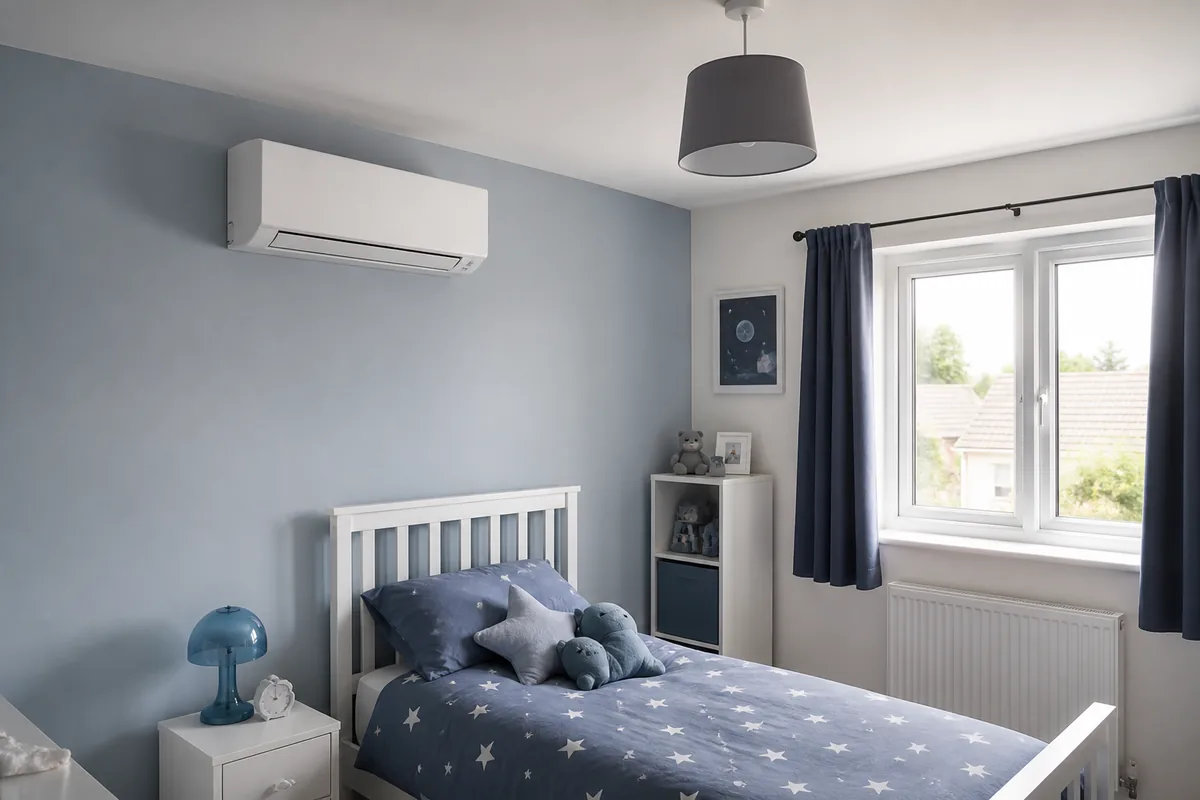
A 230 V split keeps the noisy compressor outdoors and the indoor unit high on an internal wall, with a drain that goes to a proper point. F-gas rules apply to that install. In England, outdoor heat pumps are judged against Planning Portal conditions, which is a clearer path than an altered window. A window unit is usually noisier and less efficient, and you live with it in the opening all summer. A surveyed reverse-cycle split is the better medium-term buy when an outdoor position exists.
Where a lease forbids any outdoor unit, a window chassis rarely becomes acceptable instead. The honest limits are a UK 230 V portable as a short-term compromise, or no mechanical cooling until consent exists. Importing a 115 V window unit adds the wrong voltage to a bad fit.
Stop before you order the chassis
Photograph the window, the wall beside it, and the outside elevation before you buy. An installer can often find a rear wall, a flat roof with a proper frame, or a ground stand that the sash search assumed did not exist. Ask for indoor sound at low fan and outdoor sound at the neighbour boundary as part of that quote. Those figures are why people abandon window units once they have heard a proper split on a quiet setting.
Frequently asked questions
Will a window unit fit a UK sash window?
Only as a clumsy, leaky, insecure prop. It is a poor seal, the sash usually will not lock, and the compressor is noisy in the room. A split is the usual answer.
Are window units allowed on a street-facing window?
Altering the window can need planning or listed-building consent, and the noise and drips annoy neighbours. Check before you cut or brace anything.
Core buying guides
Start with these high-intent guides, then dig into the rest of the library.
Related guides
Sources and further reading
How this guide was prepared
This guide was written by the Local AC Installers Editorial Team. We compare official guidance, legislation and established consumer information, separate general information from project-specific advice, and show publication dates and sources. We do not accept installer accreditation claims at face value.