
A short beep when you press the remote is the indoor unit acknowledging infrared. Repeated beeps with no button press are a warning: filter reminder, condensate pump high level, or a fault pattern that belongs to that model only. Do not mute it by pulling the buzzer plug out. Note how many beeps, whether a lamp flashes, and whether water is involved. Wash filters only if you are clearing a filter reminder the manual describes. If the beep is continuous, the ceiling is wet, or a breaker trips, switch off and call an F-gas engineer. Do not invent a beep count from another manufacturer's chart, and do not open the gas circuit.
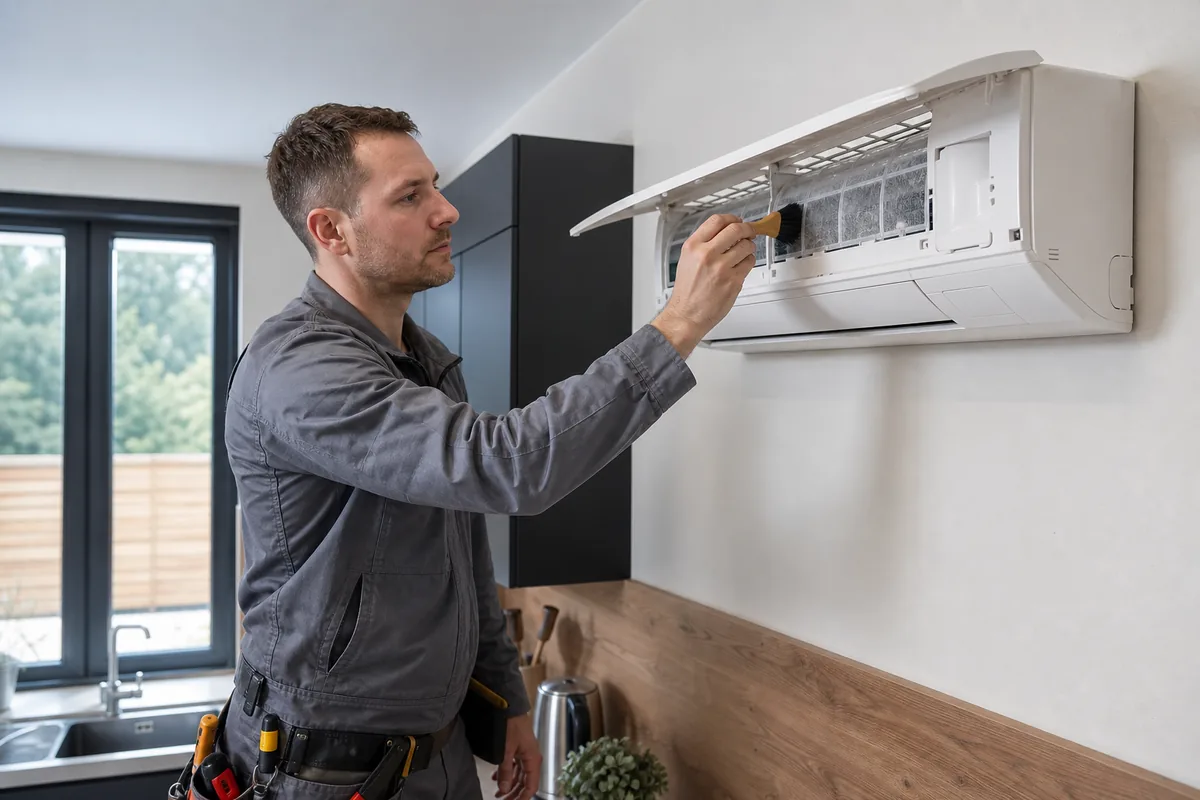
One chirp when the louvre moves
One chirp as the louvre moves is normal. A beep every few seconds all evening is not. UK flats with condensate pumps often beep from the pump or the indoor unit when the float lifts. That sound is there to stop you cooling into a full tank. Filter icons beep on a timer, sometimes after a set number of hours, even if the mesh looks acceptable. The timer does not know about pollen. It only knows runtime.
Write the pattern down: single beep at start, three beeps and a stop, or a continuous tone. Video is better. Do not match that pattern to a random code list. Manuals disagree, and a wrong clear sequence can hide a pump alarm.
A documented filter reset, or a pump you do not clear
If the manual for your model says the beep is a filter reminder, wash and dry the filters, then perform that model's reset. Do not borrow the button sequence from a different badge. If the filter light beeps but the filter looks clean, check the filters anyway and follow that reset. If the beep returns at once, stop. Do not repeat the reset all week.
If the manual says the beep is a pump fault, do not reset it. Switch cooling off and look for water. Check that a window or a door sensor on a commercial-style unit is not the cause if you have one. Domestic wall splits rarely do. Do not silence the sound by blocking the speaker grille with tape. You will miss the next alarm. Do not disconnect the beeper. The beep is often the high-water or fault warning. Disconnecting it does not fix the cause and can lead to a leak or a damaged compressor.
Stop if beeping continues after a proper filter reset, if water is at the indoor unit, if the outdoor unit will not stay running, or if lights flash as well. An F-gas engineer can read the pattern against the service data for that pair. GOV.UK certification applies if the unit has to be opened. Pump alarms in flats need a same-day response when a neighbour lives below. HSE electricity guidance is the reason to isolate, rather than keep pressing on/off, if a beep arrives with a burning smell or a tripped breaker.
The refrigerant circuit is not how you stop a buzzer, and nobody should open valves because the unit is noisy. Energy Saving Trust's air-to-air note is about the heat pump, not a beep chart. Say whether you already washed the filters and tried one documented reset. Guessing the code is less useful than the video.
A beep with water or a tripped breaker
A beep with a burning smell or a tripped breaker means isolate if you can do so safely and leave it. Note whether water is there: beeps only when the remote is used, a filter icon, a continuous alarm, or an alarm with a wet floor.
Frequently asked questions
Can I disconnect the beeper?
No. The beep is often the high-water or fault warning. Disconnecting it does not fix the cause and can lead to a leak or a damaged compressor.
It beeps once when I press power. Is that a fault?
Usually no. That is the unit hearing the remote. Repeated beeps on their own are the pattern to record and, if they continue, to report.
The filter light beeps but the filter is clean. What now?
Follow that model's reset after you have checked the filters anyway. If the beep returns at once, stop and book an engineer. Do not repeat the reset all week.
The beep is a pump alarm and someone lives below. How urgent is it?
Switch cooling off and look for water. Do not reset a pump fault. Pump alarms in flats need a same-day response when a neighbour lives below, because the next step is water in their ceiling.
Core buying guides
Start with these high-intent guides, then dig into the rest of the library.
Related guides
Sources and further reading
How this guide was prepared
This guide was written by the Local AC Installers Editorial Team. We compare official guidance, legislation and established consumer information, separate general information from project-specific advice, and show publication dates and sources. We do not accept installer accreditation claims at face value.