
A wall-mounted air conditioner (an air-to-air heat pump) delivering 2 kW of heat at a seasonal efficiency (SCOP) of 4 costs about 13.2p an hour at the Ofgem price cap of 26.32p per kWh (1 Oct to 31 Dec 2026). The same 2 kW from a plug-in electric heater costs about 52.6p an hour, and from a 90% efficient gas boiler about 17.7p. From 1 January 2027 the cap rises to 32.69p for electricity and 10.96p for gas, taking those figures to 16.3p, 65.4p and 24.4p an hour.
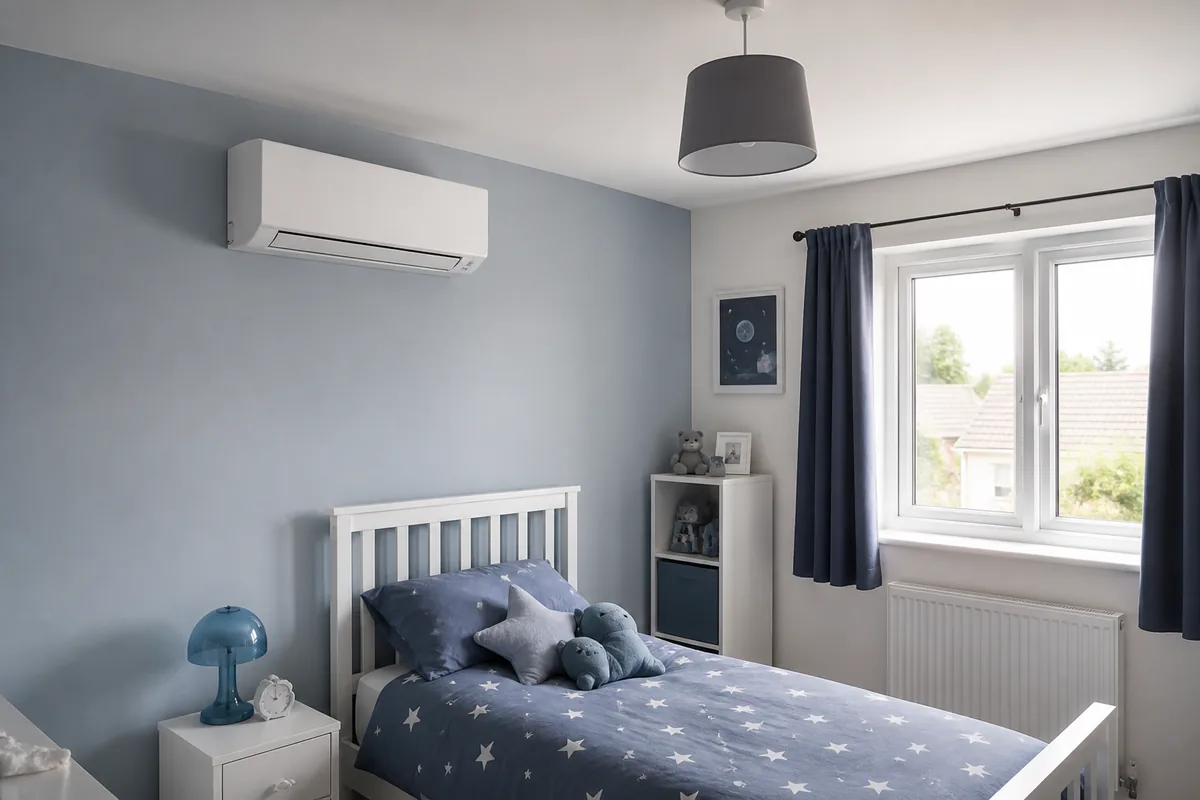
Heating cost per hour at 1, 2, 3 and 5 kW
Cost per hour depends on how much heat you need, not on the size of the heater. A small bedroom on a mild evening may need 1 kW; a large living room on a cold night may need 3 kW or more. The table gives the hourly cost of each amount of heat from three sources at both price caps.
Air-to-air heat pump: heat ÷ SCOP 4 × electricity rate. Plug-in electric heater (fan, oil-filled or panel): every unit of electricity becomes one unit of heat, so heat × electricity rate. Gas boiler: heat ÷ 0.9 efficiency × gas rate. Rates are Ofgem's cap averages for Direct Debit customers on a standard variable tariff, and exclude standing charges, which you pay whether the heating is on or not.
At both caps the heat pump split is the cheapest of the three per hour of heat, and the plug-in heater costs 4 times as much as the split for the same warmth. Gas sits between them.
| Heat delivered | Heat pump split, SCOP 4 (Oct to Dec / from Jan) | Plug-in electric heater (Oct to Dec / from Jan) | Gas boiler, 90% (Oct to Dec / from Jan) |
|---|---|---|---|
| 1 kW | 6.6p / 8.2p | 26.3p / 32.7p | 8.9p / 12.2p |
| 2 kW | 13.2p / 16.3p | 52.6p / 65.4p | 17.7p / 24.4p |
| 3 kW | 19.7p / 24.5p | 79.0p / 98.1p | 26.6p / 36.5p |
| 5 kW | 32.9p / 40.9p | £1.32 / £1.63 | 44.3p / 60.9p |
Worked example: a living room needing 2 kW for 5 hours
Take a living room that needs about 2 kW of heat to hold 20°C once it is warm (the figure varies with size and insulation). Over a 5 hour evening that is 10 kWh of heat a day. The monthly figures assume 30 evenings.
At the 1 Oct to 31 Dec 2026 cap, the heat pump split costs about 65.8p a day (£19.74 a month), the gas boiler about 88.6p a day (£26.57 a month) and a plug-in heater about £2.63 a day (£78.96 a month).
This heats one room only. A gas boiler heating the whole house will cost more than the gas figure here, because it also heats rooms you are not using. Running the split in the living room and turning down the radiators elsewhere is where the per-hour saving above can turn into a lower bill.
| Heat source | Per day (1 Oct to 31 Dec 2026) | Per month | Per day (1 Jan to 31 Mar 2027) | Per month |
|---|---|---|---|---|
| Heat pump split, SCOP 4 | 65.8p | £19.74 | 81.7p | £24.52 |
| Gas boiler, 90% efficient | 88.6p | £26.57 | £1.22 | £36.53 |
| Plug-in electric heater | £2.63 | £78.96 | £3.27 | £98.07 |
Where SCOP 4 comes from
SCOP (seasonal coefficient of performance) is the heat delivered over a standard heating season divided by the electricity used. Makers publish it for each model on the energy label and technical data sheet.
Entry and mid-range 2.5 kW wall splits sold in the UK sit at or just above 4: Daikin Sensira 4.2, Mitsubishi Electric MSZ-HR 4.3, Samsung WindFree Comfort 4.0, from the makers' own technical tables and data sheets. Premium ranges reach 5 or more, which would cut the heat pump column by a fifth or more. We used 4 so the figures hold for an ordinary unit rather than the best on the market.
SCOP is a seasonal average. On a frosty day the unit works harder to collect heat from cold air and runs short defrost cycles, so its efficiency that day is lower. As an illustration, if efficiency fell to 2.5 on a very cold day, 2 kW of heat would cost about 21.1p an hour at the 1 Oct to 31 Dec 2026 cap. Mild days run better than SCOP, which is why the seasonal figure is the fairer one for monthly costs.
The formula, so you can use your own tariff
Electricity used per hour (kWh) = heat delivered (kW) ÷ COP. Cost per hour = electricity used × your unit rate.
For gas: gas used per hour (kWh) = heat delivered (kW) ÷ boiler efficiency. Cost per hour = gas used × your gas unit rate.
The unit rarely runs at full output. Once a room is warm, an inverter split modulates down and uses much less. The heat a room needs, not the rated size of the unit, decides the cost.
Getting the most from heating mode
Leave the unit running at a steady temperature rather than switching it on and off. Inverter splits are most efficient at low, steady output.
Keep the filters clean and the outdoor unit clear of leaves and snow. Do not cover the outdoor unit in winter; it needs airflow and somewhere for defrost water to drain.
Insulation, draughts and the setpoint matter as much as the unit. Each degree lower reduces the heat the room needs. If you are on a time-of-use tariff, warming rooms during cheaper hours can lower costs further.
Frequently asked questions
How much does heating cost per hour?
For 2 kW of heat at the 1 Oct to 31 Dec 2026 cap: about 13.2p an hour from an air conditioner at SCOP 4, 17.7p from a 90% gas boiler and 52.6p from a plug-in electric heater. From 1 January 2027 these rise to 16.3p, 24.4p and 65.4p.
How much does a 2 kW heater cost per hour?
A 2 kW plug-in heater on full uses 2 kWh an hour, which is about 52.6p at 26.32p per kWh, or 65.4p at 32.69p from January 2027. An air conditioner gives the same heat for about 13.2p.
Is heating with air conditioning cheaper than gas?
Per unit of heat, yes, at both the current and January 2027 caps, for a split with a SCOP of 4 against a 90% efficient boiler. The gap narrows on very cold days and widens with a higher SCOP unit.
Does air conditioning use more electricity in winter?
Efficiency falls as it gets colder, and defrost cycles add a little, so each unit of heat costs more on frosty days than on mild ones. The SCOP on the label averages this over a season.
What electricity rate should I use?
Use the unit rate on your bill. The Ofgem cap average is 26.32p per kWh for 1 Oct to 31 Dec 2026 and 32.69p for 1 Jan to 31 Mar 2027, for Direct Debit customers on a standard variable tariff.
Core buying guides
Start with these high-intent guides, then dig into the rest of the library.
Related guides
More costs guides
- Air Conditioning for a Rental Property in the UK
- How Much Does Air Conditioning Installation Cost in the UK and London?
- Air Conditioning for a Landlord HMO in the UK
- Air Conditioning Maintenance Contract Cost in the UK
- Air Conditioning Finance Warning Signs in the UK
- Air Conditioning New Circuit Cost in the UK
Sources and further reading
- Ofgem: changes to the energy price cap, 1 October to 31 December 2026
- Ofgem: changes to the energy price cap, 1 January to 31 March 2027 (checked 29 Nov 2026)
- Daikin Europe: Sensira FTXF-F / RXF-F technical table
- Mitsubishi Electric UK: MSZ-HR data sheet
- Samsung Climate Solutions UK: WindFree Comfort product information sheet
- Energy Saving Trust: Air-to-air heat pumps
- GOV.UK: energy labels and ecodesign
How this guide was prepared
This guide was written by the Local AC Installers Editorial Team. We compare official guidance, legislation and established consumer information, separate general information from project-specific advice, and show publication dates and sources. We do not accept installer accreditation claims at face value.