
It is close. At the October to December 2026 price cap, gas costs 7.97p and electricity 26.32p per kWh. A 90% efficient boiler delivers heat for about 8.9p per kWh. A split air conditioner at a COP of 3.5 delivers it for about 7.5p, and at a COP of 2.5 on a cold day for about 10.5p. So a good split is slightly cheaper in mild weather and roughly level in cold weather. The real saving comes from heating one room instead of the whole house.
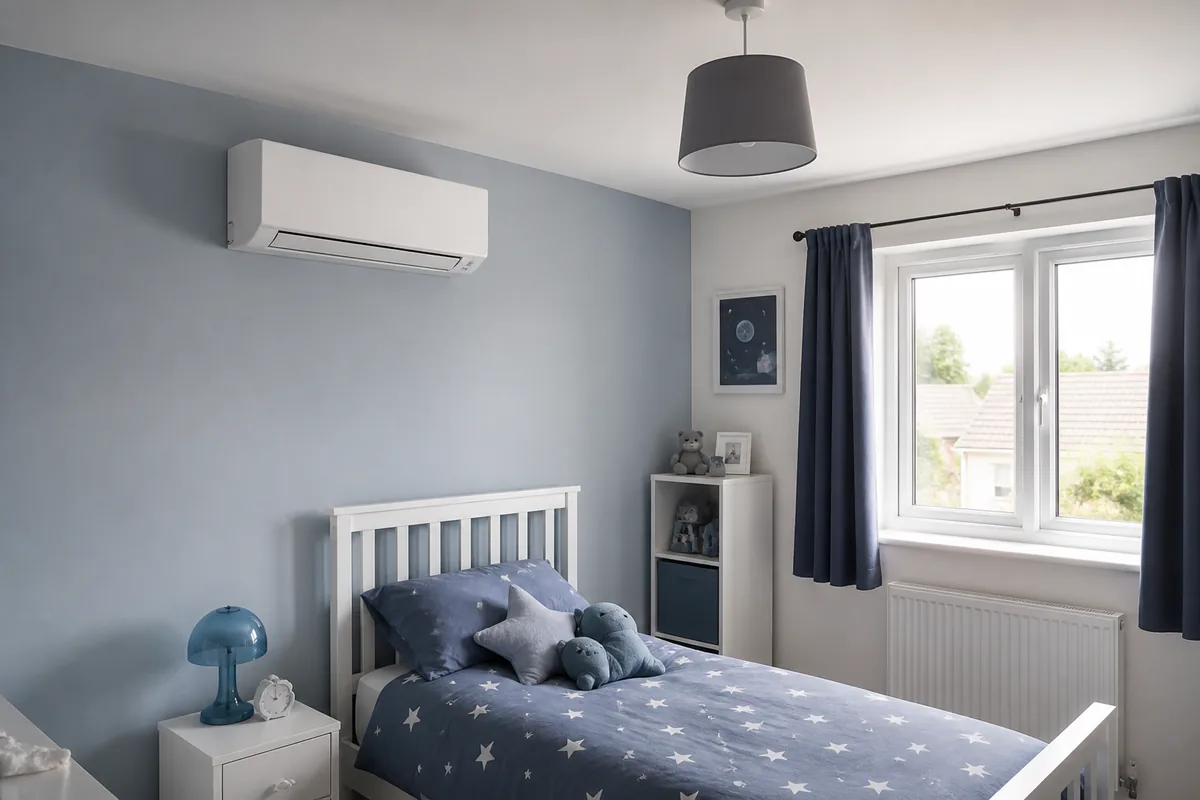
Cost per unit of heat
These figures use Ofgem's price cap averages for 1 October to 31 December 2026: 26.32p per kWh for electricity and 7.97p per kWh for gas, for Direct Debit customers on a standard variable tariff.
| Heat source | Efficiency | Cost per kWh of heat |
|---|---|---|
| Gas boiler, older | 85% | About 9.4p |
| Gas boiler, modern condensing | 90% | About 8.9p |
| Split air conditioner, cold day | COP 2.5 | About 10.5p |
| Split air conditioner, typical | COP 3.5 | About 7.5p |
| Split air conditioner, mild day | COP 4.0 | About 6.6p |
Where the split actually saves money
A boiler heats the whole system: every radiator on the circuit, the pipework and often the hot water cylinder. If you only need one room warm, such as a home office during the day, a split heats just that room.
That is where the real saving lies. Heating one room with the split while the boiler stays off can cost far less than running the whole house to keep one room comfortable.
In mild autumn and spring weather, when COP is high, the split also beats gas per unit of heat.
What the comparison leaves out
Standing charges: if you keep gas for hot water or cooking, the gas standing charge stays, so using the split for heating does not remove it.
Boiler efficiency in real homes is often lower than the label, especially when the flow temperature is set high. Lowering a condensing boiler's flow temperature can improve its efficiency.
Prices change every quarter when Ofgem updates the cap, and fixed or time-of-use tariffs may differ. Recalculate with your own rates.
Making the most of both
Use the split for the rooms you use most during the day and in mild weather, and the boiler for whole-house heat on the coldest days.
Turn down or turn off radiators in rooms the split heats, or the two systems will work against each other.
If you are thinking of replacing the boiler entirely, that is a whole-home heat pump design, which our air-to-air heat pump and grant guides explain.
Frequently asked questions
Is it cheaper to heat with air conditioning or gas?
Per unit of heat it is close: about 8.9p from a 90% boiler against about 7.5p from a split at a COP of 3.5, at the October to December 2026 price cap. The split saves more when it heats one room instead of the whole house.
Should I turn the boiler off and use air conditioning?
For one room in mild weather, it can be cheaper. For the whole house on the coldest days, the boiler is often similar or cheaper. Many homes use both.
Does using a split remove my gas standing charge?
No, not if you still use gas for hot water or cooking. The standing charge stays while the gas supply is connected.
What prices are these figures based on?
Ofgem's price cap averages for 1 October to 31 December 2026: 26.32p per kWh for electricity and 7.97p per kWh for gas, for Direct Debit customers on a standard variable tariff.
Core buying guides
Start with these high-intent guides, then dig into the rest of the library.
Related guides
- Air Conditioning vs Electric Heaters: Which Costs Less to Heat a Room?
- How Much Does Heating Cost per Hour? Air Conditioning, Electric Heaters and Gas Compared
- Can your air conditioner heat the house in winter?
- Air Conditioning Servicing Cost UK: 2026 Prices from 9 Firms
- How Much Does Air Conditioning Installation Cost in the UK and London?
More costs guides
Sources and further reading
How this guide was prepared
This guide was written by the Local AC Installers Editorial Team. We compare official guidance, legislation and established consumer information, separate general information from project-specific advice, and show publication dates and sources. We do not accept installer accreditation claims at face value.