
Cooling requirements for a small UK server room start from continuous IT heat load, not floor area. Convert measured rack and UPS electrical demand into cooling capacity, keep cold supply air at equipment inlets, decide whether one unit is enough or N+1 cover is needed, and plan condensate, electrics, outdoor siting and alarms before buying plant. A comfort split chosen from room size alone is the wrong tool for process cooling that runs overnight and at weekends.
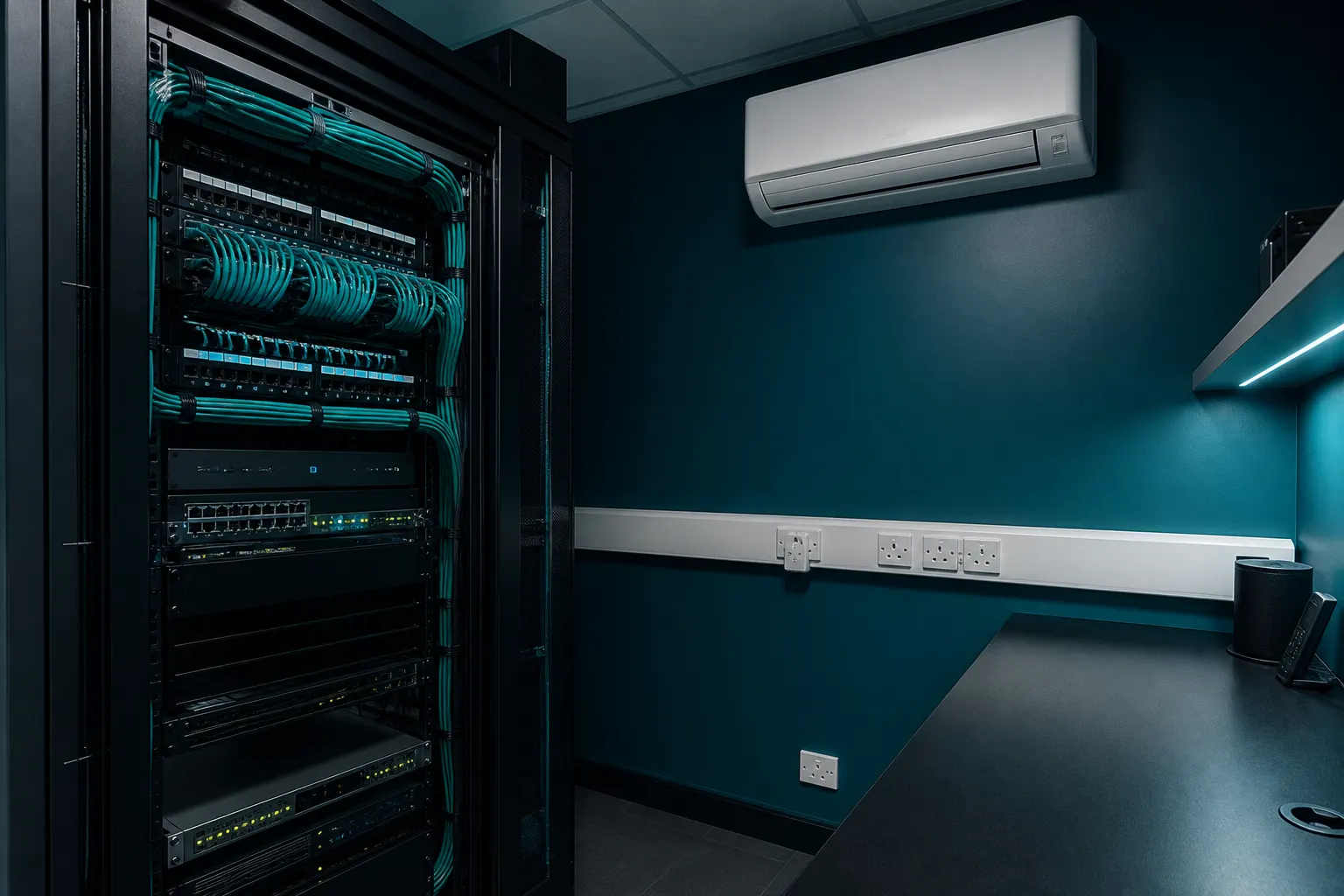
Measure heat load before choosing equipment
Treat the IT electrical load as the primary heat source. Nameplate watts can overstate real draw, so measure representative busy periods and add a justified growth allowance for new racks or denser servers. Include UPS conversion losses, PDUs and lighting where they sit in the same space.
Convert continuous kilowatts of heat into the cooling capacity the designer must prove at the relevant indoor and outdoor conditions. Ask for the basis in writing. A brochure '2.5 kW' comfort unit is not automatically a 2.5 kW continuous process solution.
- Record present draw and planned IT growth.
- Separate office comfort loads from the IT cupboard.
- Check low-ambient cooling if the room needs year-round reject heat.
- Budget alarms and maintenance access in the same brief.
Airflow is part of the requirement
Capacity without airflow control creates hot spots at the top of racks while the thermostat reads fine. Blank unused rack U, avoid short-circuiting supply air straight back to the indoor unit, and place sensors at equipment inlets rather than only on a wall.
Small rooms often use wall-mounted or ceiling cassettes rather than full containment. That can work at modest density if the surveyor shows supply and return paths and tests temperatures after install.
Resilience, drainage and electrics
Decide the failure you must survive: one cooling unit down, one power feed lost, or a blocked condensate pump. N+1 means more than a second indoor unit sharing every single point of failure.
Condensate must leave the room reliably. Electrical supply, isolation and whether cooling stays up during a UPS-only event are cooling requirements as much as the indoor coil rating.
What to ask for in a quote
A useful proposal lists design load, selected equipment at stated conditions, outdoor position, pipe and drain routes, redundancy mode, alarm points and commissioning tests. Compare those assumptions, then price.
Use the server room cost calculator for an early budget band, then replace it with surveyed figures. For a wider overview of airflow and resilience, read the main server room air conditioning guide.
Frequently asked questions
How do I estimate server room cooling requirements quickly?
Start from measured IT and UPS heat in kW, add growth, then ask a designer to select equipment that delivers that capacity continuously at your site conditions. Floor area alone is not enough.
Do small IT cupboards need redundant cooling?
Not always, but you should decide consciously. If downtime is costly, budget N+1 plant with separate power and controls rather than hoping a single unit never fails.
Is a domestic air conditioner enough for a server room?
Sometimes for very low continuous loads with suitable low-ambient performance and drainage, after a survey. Many comfort units are a poor fit for 24/7 IT heat. Do not assume interchangeability.
Core buying guides
Start with these high-intent guides, then dig into the rest of the library.
Related guides
Sources and further reading
How this guide was prepared
This guide was written by the Local AC Installers Editorial Team. We compare official guidance, legislation and established consumer information, separate general information from project-specific advice, and show publication dates and sources. We do not accept installer accreditation claims at face value.