
A small server room or IT cupboard still needs continuous process cooling based on measured heat output, equipment inlet conditions and a clear failure plan. Do not rely on office comfort air conditioning that is switched off overnight or shared with occupied spaces. Improve airflow inside the enclosure, provide dedicated cooling with reliable condensate disposal, monitor temperatures at the equipment, and document how staff should respond if cooling stops.
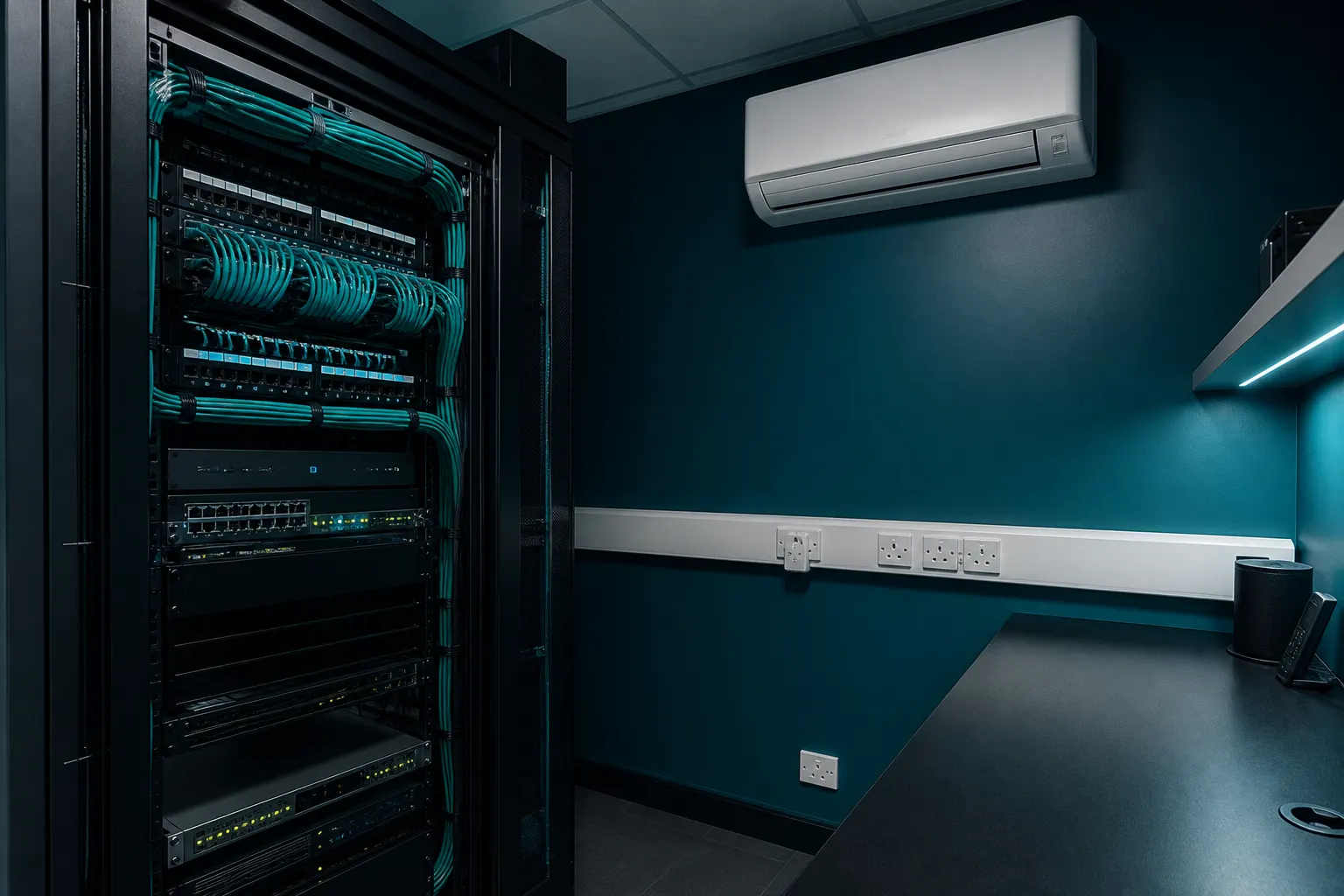
Treat a cupboard as a miniature process space
Even a few servers, switches and a UPS can create a concentrated heat load in a poorly ventilated enclosure. Door seals, cable openings and adjacent plant rooms all affect how heat leaves the space. Measure electrical demand over busy periods and include growth rather than sizing only from floor area.
Confirm manufacturer environmental limits for the installed equipment. A single wall thermostat in the aisle or corridor is a weak control point for rack inlets. Place sensors where cooled air enters critical kit and set alarms before conditions become unsafe.
- Record present and forecast wattage for IT and UPS plant.
- Check whether the cupboard door is left open during the day and closed at night.
- Identify condensate routes before choosing equipment.
- Agree who receives temperature and leak alarms out of hours.
Separate IT cooling from office comfort systems
Office comfort cooling is usually designed for people, variable occupancy and limited operating hours. An IT cupboard often needs cooling whenever equipment is energised, including winter nights when office plant may be off or in heating mode.
Shared systems also create operational conflict: office users may raise set points, open windows or isolate plant during maintenance. A dedicated indoor unit or close-control arrangement serving only the IT space is usually easier to control, alarm and maintain.
Manage airflow in a confined footprint
In a small room, short air paths can short-circuit cooled supply straight back to the cooling unit while hot exhaust recirculates at the top of racks. Blank unused rack units, dress cables to reduce blockage, and avoid placing the indoor unit so that supply air cannot reach equipment intakes.
If racks face each other, keep hot and cold paths as distinct as the layout allows. Verify changes with inlet temperature readings at several heights rather than by average room feel.
Plan maintenance and temporary cover
Small rooms often have limited access for filter cleaning and outdoor-unit service. Design so a technician can work without leaving doors permanently open into a warm corridor that defeats cooling. Confirm low-ambient capability if year-round cooling is required.
Have a written response for cooling failure: alarm contacts, safe shutdown order for non-critical loads, and whether temporary cooling can be powered and drained without creating a water or fire risk. Temporary kit is a contingency, not a substitute for a maintained primary system.
Frequently asked questions
Is leaving the IT cupboard door open enough cooling?
Usually not. Heat then enters occupied spaces, conditions become uncontrolled, and overnight or weekend cooling may disappear. Dedicated cooling and monitoring are more reliable.
Do I need redundancy in a small cupboard?
It depends on business impact. If downtime is costly, consider a second cooling path or at least rapid temporary cooling plus remote alarms. Document the accepted risk if only one unit is installed.
Can a portable air conditioner be the permanent solution?
Portable units can help briefly, but exhaust heat, condensate, noise, efficiency and reliability limits make them a poor permanent design for continuous IT loads.
What should be monitored in a small server room?
At least equipment inlet temperature, preferably at more than one height, plus cooling-unit fault and condensate or leak detection where water risk exists.
Core buying guides
Start with these high-intent guides, then dig into the rest of the library.
Related guides
Sources and further reading
How this guide was prepared
This guide was written by the Local AC Installers Editorial Team. We compare official guidance, legislation and established consumer information, separate general information from project-specific advice, and show publication dates and sources. We do not accept installer accreditation claims at face value.