
Cabinet and rack cooling starts with managing airflow inside and around the enclosure, then matching any dedicated cooling product to measured heat load and resilience needs. Blanking unused U-spaces, separating hot and cold air, and monitoring inlet temperatures often improve conditions before larger plant is added.
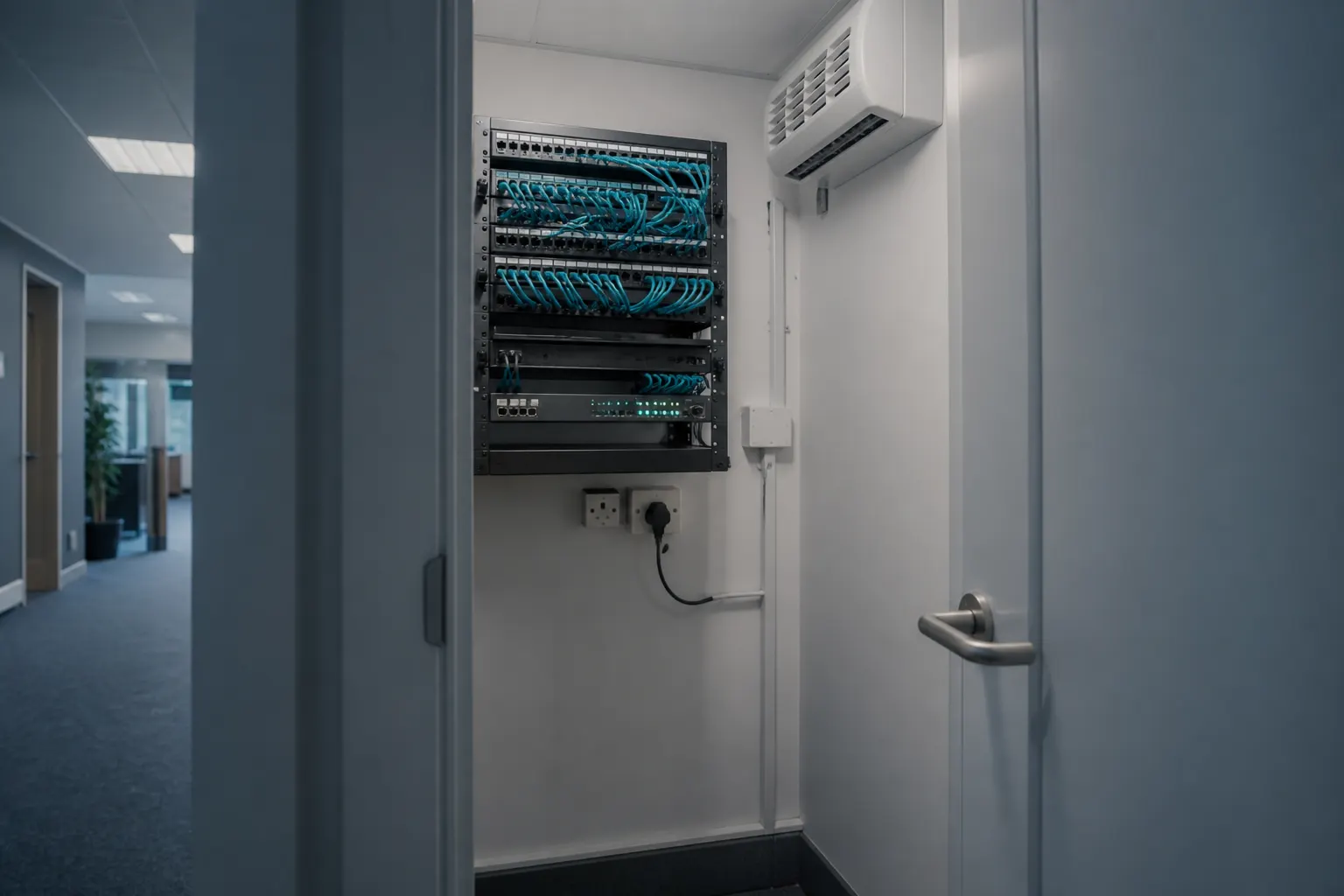
Start with rack airflow hygiene
Many overheating complaints are airflow problems rather than a simple shortage of cooling capacity. Unused rack openings allow hot exhaust to mix into the intake path. Cable congestion at the rear can obstruct discharge and raise inlet temperatures at neighbouring equipment.
Fit blanking panels, manage cable entry points and keep supply air aimed at cold intakes where the room layout allows. Measure before and after changes so improvements are evidenced rather than assumed.
- Blank unused rack U-spaces.
- Avoid mixing exhaust into adjacent intakes.
- Check inlet temperatures at top, middle and bottom.
- Record IT load when validating any cooling change.
Match the cooling method to the cabinet duty
Low-density cabinets in a well-managed room may be served by the room's split or close-control system. Higher-density racks may need improved containment, in-row cooling, rear-door heat exchangers or specialist cabinet cooling, selected against measured load and available services.
Dedicated cabinet solutions still reject heat somewhere: to room air, a chilled water loop or an outdoor condenser route. Confirm electrical supply, condensate handling, noise, maintenance access and what happens if the dedicated unit fails.
Do not confuse comfort AC with rack process cooling
A comfort wall unit can lower average room temperature while leaving a dense cabinet overheated if supply air never reaches the intakes. Continuous IT loads also need year-round capability that office comfort schedules may not provide.
Where cabinets sit inside occupied offices, noise, aesthetics and security become part of the design. A locked cabinet with poor ventilation can create a local hot spot even when the office feels comfortable.
Specify monitoring and serviceability
Cabinet-level sensors and alarms help detect blockage, fan failure or rising load early. Service clearances must allow filter changes, coil cleaning and safe isolation without exposing live IT unnecessarily.
Change control should cover adding servers, rearranging patching or closing vents for appearance. Small enclosure changes can undo carefully balanced airflow.
Frequently asked questions
Do all server cabinets need their own air conditioner?
No. Many cabinets are adequately served by room cooling if airflow is managed and the load is within the room system's capability. Dedicated cabinet cooling is more relevant for dense or poorly served locations.
Will open racks cool better than closed cabinets?
Open racks can reject heat more freely into the room, but they still need a managed cold intake path. Closed cabinets need designed ventilation or active cooling so heat is not trapped.
Can fans alone solve cabinet overheating?
Extra fans move air but do not remove heat from the building. Without adequate cooled air supply and a heat-rejection path, fans may only redistribute the problem.
What should be measured before buying cabinet cooling?
Rack inlet and exhaust temperatures, IT electrical draw, room cooling capacity and any single points of failure in power or drainage.
Core buying guides
Start with these high-intent guides, then dig into the rest of the library.
Related guides
Sources and further reading
How this guide was prepared
This guide was written by the Local AC Installers Editorial Team. We compare official guidance, legislation and established consumer information, separate general information from project-specific advice, and show publication dates and sources. We do not accept installer accreditation claims at face value.