
A proper air conditioning service cleans or replaces the filters, cleans the indoor coil and fan, tests the condensate drain, checks the outdoor coil and fan, checks electrical connections and controls, measures temperatures and performance, and looks for refrigerant leaks. The engineer should leave a written report. A single wall split often takes about an hour; repairs, gas top-ups and parts are extra.
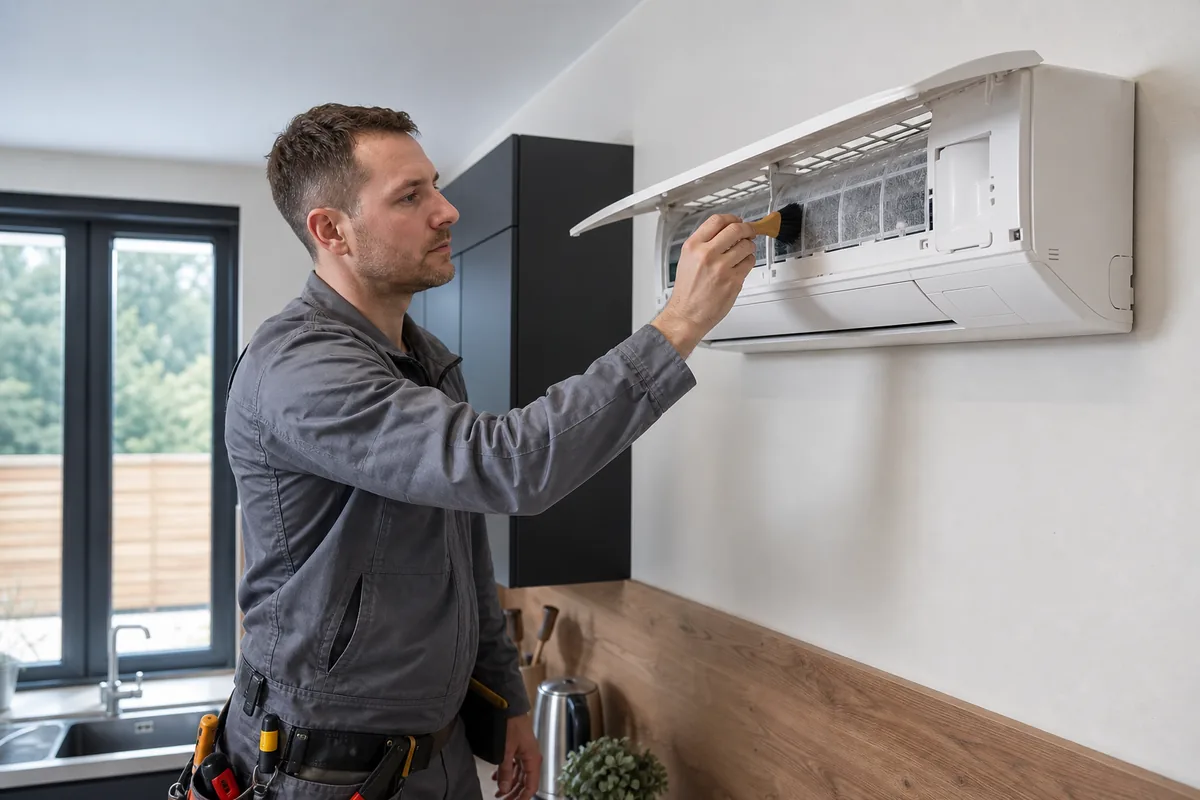
Indoor unit checks
Most of the visible work happens indoors. These are the tasks you should expect on a standard visit.
- Remove, clean and refit the filters, or replace disposable ones
- Clean the indoor coil and treat it with a suitable cleaner
- Inspect and clean the fan barrel where it is fouled
- Flush the condensate tray and drain and confirm water leaves freely
- Test the condensate pump if one is fitted
- Check louvres, display and remote or wired controller
- Measure supply air temperature in cooling and heating
Outdoor unit checks
Outdoor units collect leaves and dirt that choke the coil and push running costs up.
- Clear debris from the coil and around the unit
- Check the fan blade, guard and mounting brackets or feet
- Check anti-vibration mounts and fixings
- Inspect pipe insulation and trunking for damage
- Check the isolator and electrical terminations
- Look for oil marks at joints, a common sign of a refrigerant leak
Performance and refrigerant
A good engineer runs the system and compares what it does with what it should do: temperature drop across the indoor coil, running current, and in some cases pressures. Connecting gauges is not needed on every visit and some engineers avoid it unless there is a reason, because each connection risks a small loss.
Most single domestic splits hold less refrigerant than the level at which F-gas law requires periodic leak checks. Larger systems are above it, and those leak checks and records are a legal requirement, done by a certified company.
| Usually included | Usually extra |
|---|---|
| Filter clean | Replacement parts |
| Coil clean and drain flush | Refrigerant leak repair and recharge |
| Electrical and control checks | Condensate pump replacement |
| Performance readings | Deep clean with the indoor unit stripped |
| Written report | Out-of-hours or roof access |
How often and what to keep
Most homes service once a year. Busy shops, salons, gyms and kitchens often need more. Keep each report; manufacturers usually ask for evidence of servicing in a warranty claim.
A single split service often falls around £80 to £180 including VAT before parts, with multi-split and small commercial visits higher. If a quote seems very low, ask what the visit includes against this checklist.
Frequently asked questions
What does an air conditioning service include?
Filter cleaning, indoor coil and fan cleaning, a condensate drain test, outdoor coil and fan checks, electrical and control checks, performance readings and a written report.
Does a service include re-gassing?
No. A healthy system should not need gas. If it is low, there is a leak, and finding and repairing it is a separate job.
How long does an air conditioning service take?
About an hour for one wall split, longer for multi-splits, cassettes and systems with difficult access.
Does a service keep my warranty valid?
Many manufacturers require regular servicing for the full warranty. Keep each dated report.
Core buying guides
Start with these high-intent guides, then dig into the rest of the library.
Related guides
More installation guides
- Weekend Air Conditioning Installation at Home
- What Happens on an Air Conditioning Survey in the UK
- Wall Mounted Air Conditioning Installation in the UK: Process and Cost Shape
- What the Engineer Should Leave Behind After Install
- Using Air Conditioning with the Windows Cracked
- What to Do If the Install Team Leaves a Mess
Sources and further reading
How this guide was prepared
This guide was written by the Local AC Installers Editorial Team. We compare official guidance, legislation and established consumer information, separate general information from project-specific advice, and show publication dates and sources. We do not accept installer accreditation claims at face value.