
Fan coil units need filter changes or cleaning, condensate tray and drain checks, fan and motor checks, valve and actuator tests, and coil cleaning. Offices commonly plan two visits a year, with filters more often in dusty or busy buildings. The chilled and heating water circuits also need water treatment and testing, and condensate trays should be kept clean because standing water can grow bacteria.
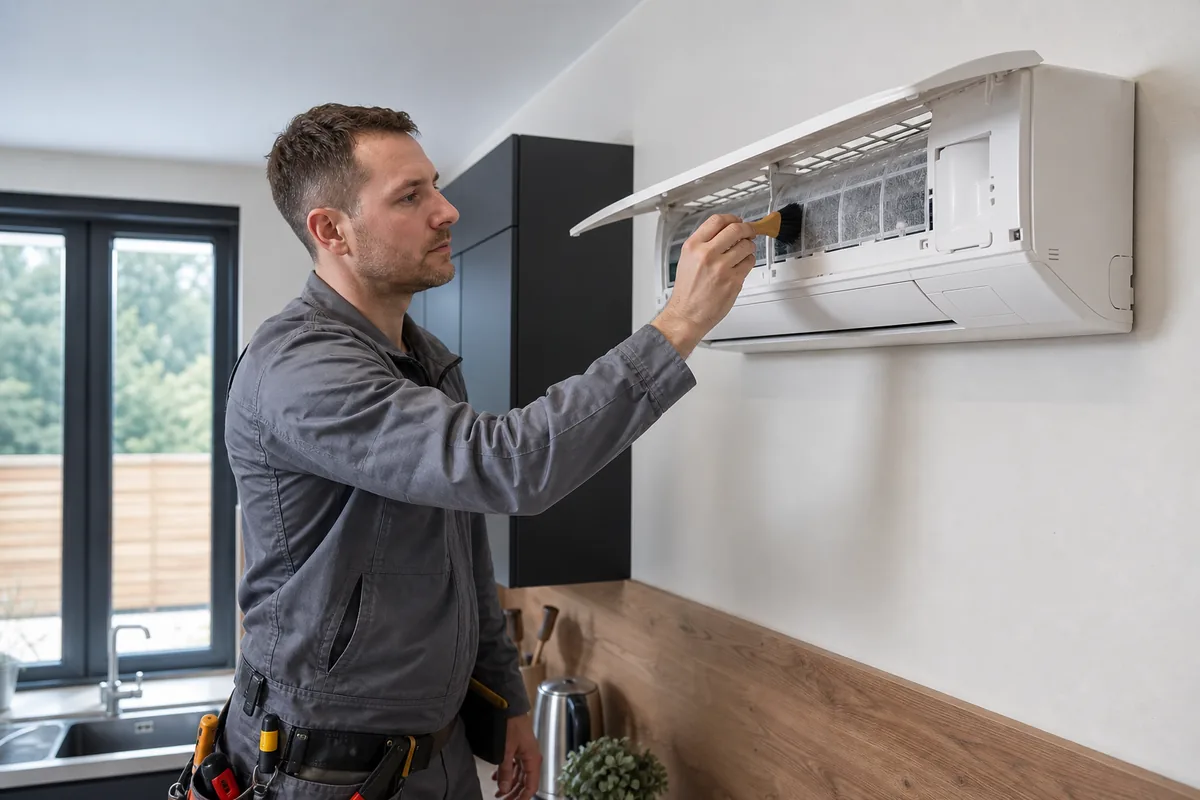
A typical planned maintenance visit
A good fan coil service is unit by unit, with each unit's condition recorded against its reference on the floor plan. Ask for the checklist up front so you know what you are paying for.
| Task | What it involves | Typical frequency |
|---|---|---|
| Filters | Clean or replace, record condition | Every visit, more often in dusty sites |
| Condensate tray | Inspect, clean, treat if needed | Every visit |
| Drain and pump | Flush, test the pump and high-level alarm | Every visit |
| Fan and motor | Check bearings, noise, current, speeds | Annually |
| Coil | Inspect fins, clean when fouled | Annually or as found |
| Valves and actuators | Stroke test, check for leaks | Annually |
| Controls | Check sensors, setpoints, BMS link | Annually |
| Electrical | Visual checks, terminations, isolation | Annually |
Condensate trays and hygiene
Chilled-water fan coils pull moisture from the air and collect it in a tray. If the tray does not drain fully, water stands in a warm ceiling void and slime builds up. That causes smells, drips through the ceiling and, in the worst case, conditions where bacteria such as Legionella can grow.
HSE guidance for water systems treats air conditioning condensate as a low but real risk. The practical answer is trays that drain, drains that are flushed, and a record that shows it was done.
If ceiling tiles show tide marks under units, treat that as a maintenance finding, not decoration. Lift the tile and find the source.
Water treatment and the plant room
Fan coils are only as good as the water reaching them. Closed chilled and heating circuits need inhibitor, regular sampling and strainers that are cleaned. Poor water treatment leads to blocked valves and coils across the whole floor.
The chiller, heat pump or boiler serving the fan coils sits under its own maintenance. A chiller contains refrigerant, so its leak checks and records fall under the F-gas rules and must be done by a certified company.
Records and contracts
Keep a unit schedule with each fan coil's location, model, filter size and last service date. Most disputes about whether maintenance was done end with that sheet.
When comparing contracts, check whether the price includes filters, how many units are seen per visit, whether ceiling tiles are lifted and replaced by the contractor, and the response time for a leak. Out-of-hours access in occupied offices often costs more but avoids lifting tiles over desks.
Frequently asked questions
How often should fan coil units be serviced?
Two planned visits a year is common for offices. Filters may need attention more often in busy or dusty spaces, and hotels often plan around room turnover.
Do fan coil units need F-gas checks?
Water-based units do not, because they contain no refrigerant. The chiller or heat pump that serves them does, and it needs leak checks by a certified company at the interval its charge requires.
Why does my fan coil unit smell?
Most often a dirty condensate tray or a drain that holds water. Cleaning the tray, clearing the drain and replacing the filter usually fixes it.
Can fan coil filters be washed?
Some can, others are disposable. The unit manual or the filter label says which. Washable filters must be dry before refitting.
Core buying guides
Start with these high-intent guides, then dig into the rest of the library.
Related guides
More installation guides
Sources and further reading
How this guide was prepared
This guide was written by the Local AC Installers Editorial Team. We compare official guidance, legislation and established consumer information, separate general information from project-specific advice, and show publication dates and sources. We do not accept installer accreditation claims at face value.