
A licence to alter, also called a licence for alterations, is a formal legal document recording that your freeholder has agreed to an alteration and the conditions attached. Whether air conditioning in your flat needs a full licence or only a letter of consent is decided by the alterations clause in your lease, not by the size of the job. There is no set fee. If the lease allows it, the freeholder can recover the legal and surveyor's costs of dealing with your request, and those costs have to be reasonable. Ask for the figure in writing before anyone starts work on it, and send a complete application so there is less for their surveyor to chase.
Letter of consent, licence to alter or lease variation
The Leasehold Advisory Service lists five positions a lease can take on alterations: it can ban them, allow them, allow them with the landlord's written permission, allow them only with a licence, or allow them subject to conditions set out in a licence. Find the alterations clause in your lease and match it to the table.
| What the lease says | What you need | What it involves |
|---|---|---|
| Alterations allowed with the landlord's written consent | A letter of consent | A written application and a written reply. The cheapest and quickest route. |
| Alterations allowed only with a licence | A licence to alter | A legal document, usually drafted by the freeholder's solicitor, often after their surveyor has reviewed your proposal. |
| Alterations banned | A variation of the lease | The landlord does not have to consider the request. The clause would have to be changed, which needs their agreement and legal advice. |
| Nothing about alterations | Professional advice first | The Leasehold Advisory Service suggests a solicitor, conveyancer or the council's building department. |
Why air conditioning often needs one
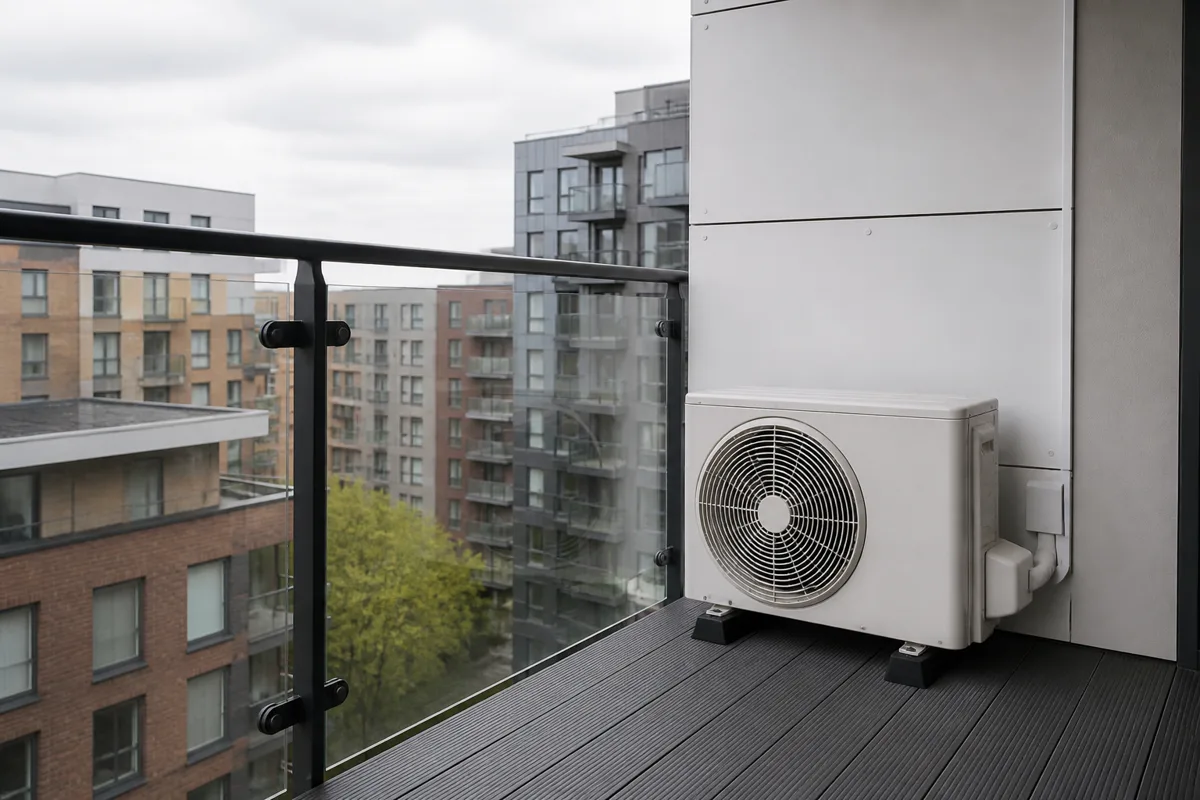
A split system touches the two things leases are strictest about. The outdoor unit usually sits on an external wall, roof or grounds that belong to the freeholder, and the pipework needs a hole through an external wall. The Leasehold Advisory Service gives "no cutting of external walls" and installing a heat pump on an external wall as examples of work a lease commonly restricts.
Even where the lease allows alterations with consent, a freeholder can insist on the formality of a licence when their own parts of the building are involved. A unit that stands on your own balcony with nothing fixed to the structure, or a system with no outdoor unit at all, gives them less to formalise.
What a licence for air conditioning usually contains
The licence describes the approved work by reference to your drawings and schedule, then sets conditions. The Leasehold Advisory Service gives three examples of conditions: approving your contractors, asking for proof that the finished work meets building standards, and updating the lease so there is a permanent record.
For air conditioning, expect the conditions to cover the things a managing agent worries about. Agreeing to them in your application, before you are asked, shortens the process.
- The exact position, size and colour of the outdoor unit.
- A noise limit at neighbouring windows, with the installer's calculation attached.
- Working hours, protection of common parts and making good.
- An F-gas certified, insured installer.
- Regular servicing, and removal and reinstatement if the freeholder later requires it.
- Inspection by the freeholder's surveyor when the work is finished.
What it costs
There is no fixed or standard fee, and anyone quoting you a national price is guessing. What you can be charged depends on your lease. If the lease allows, the freeholder can charge for legal or other expenses related to giving consent. The Leasehold Advisory Service gives a surveyor's costs and an inspection of the finished work as examples.
Those fees are administration charges. Under Schedule 11 to the Commonhold and Leasehold Reform Act 2002, a charge for dealing with an application for approval under a lease is an administration charge, a variable one is payable only to the extent that it is reasonable, and you can ask the tribunal to decide whether it is payable and how much. In England that is the First-tier Tribunal (Property Chamber). In Wales it is the Leasehold Valuation Tribunal.
A premium is different. The Leasehold Advisory Service says a landlord might be able to charge one where structural work affects parts of the building they own, that it is usually worked out as a share of the value the alteration adds, and that it has no legal limit and cannot be challenged at a tribunal. It also says it is against the law to charge a premium for non-structural alterations that need the landlord's consent or licence, whatever the lease says. If a premium is mentioned for an air conditioning unit, take advice before agreeing.
- Ask for a written estimate of all fees before any cost is incurred.
- Ask which clause of the lease makes each fee payable.
- Ask whether the fee covers the licence, the surveyor's review and the final inspection, or only one of them.
- Your own solicitor's fee for checking the licence is separate. Ask for a fixed price.
How long it takes
No law sets a deadline. Your lease might say how long the landlord has. If it does not, the Leasehold Advisory Service says to give a reasonable period to respond, with two weeks as an example, and notes that the landlord does not have to meet your date. A licence adds a surveyor and a solicitor to the chain, so allow longer than you would for a letter of consent.
The delays are usually missing information. A surveyor who has to ask where the unit goes, how loud it is and who is fitting it will ask one question at a time. Send it all with the first letter.
How to apply
Get an installer's survey first, so that the schedule and the noise figures are real. Then apply in writing, dated, with everything enclosed, and ask what form of consent the lease requires and what it will cost.
- A covering letter asking for consent under the alterations clause.
- A schedule of works: what is fitted, where, the pipe route, the drain and the fixings.
- Marked-up photographs of each position.
- The manufacturer's data sheet and the installer's sound calculation.
- A note of the planning position.
- The installer's quote, insurance and F-gas certificate.
- The undertakings you are offering.
Planning is a separate permission
A licence to alter does not replace planning permission, and planning permission does not replace the licence. Since 29 May 2025, England's permitted development right for air source heat pumps has covered blocks of flats, with conditions that include one unit for the whole block, an outdoor unit of no more than 0.6 cubic metres and a unit that heats as well as cools. In Wales the right covers houses only. State the planning position in your application so the freeholder is not left to assume the worst.
Frequently asked questions
What is a licence to alter?
A formal legal document that shows you have the landlord's permission for an alteration and records any conditions, such as approved contractors or proof that the finished work meets building standards. It is also called a licence for alterations.
Do I need a licence to alter for air conditioning?
It depends on your lease. Some leases accept the landlord's written consent by letter. Others allow alterations only with a licence. Read the alterations clause, and ask the freeholder or managing agent which form of consent they require when you apply.
How much does a licence to alter cost?
There is no set fee. If your lease allows, the freeholder can recover legal and surveyor's costs of dealing with the request. These are administration charges, which must be payable under the lease and reasonable, and which you can ask a tribunal to rule on. Get the figure in writing before costs are incurred.
Can the freeholder charge a premium for air conditioning?
The Leasehold Advisory Service says a premium might be charged where structural work affects parts of the building the landlord owns, and that it is against the law to charge one for non-structural alterations that need consent or a licence. If you are asked for a premium, take professional advice.
Can I fit the unit while the licence is being drafted?
No. Start only when you have the consent or the completed licence in writing. An alteration made without required permission can put you in breach of your lease and make the flat harder to sell, remortgage or insure.
Is a licence to alter the same as planning permission?
No. The licence is your freeholder's permission under the lease. Planning permission, or permitted development, is the council's. You need both to be in order, and one does not grant the other.
Core buying guides
Start with these high-intent guides, then dig into the rest of the library.
Related guides
More planning guides
- How to Ask Your Landlord for Air Conditioning in a Rented Home, With a Sample Letter
- Lost Your TM44 Report? How to Find or Replace an Air Conditioning Inspection Report
- How to Ask Your Freeholder for Air Conditioning Consent, With a Sample Letter
- Manchester Air Conditioning Planning and Noise Rules
- Air Conditioning in Rented Premises: Landlord Responsibilities and Tenant Consent
- Manchester City Centre Flat Air Conditioning Consent Guide
Sources and further reading
How this guide was prepared
This guide was written by the Local AC Installers Editorial Team. We compare official guidance, legislation and established consumer information, separate general information from project-specific advice, and show publication dates and sources. We do not accept installer accreditation claims at face value.