
Ask in writing before you speak to an installer about dates, and make the request easy to approve. A fixed air conditioner is an alteration to the landlord's property, so you need their written permission, and they are not obliged to give it. Landlords say yes more often when the letter answers their questions up front: what will be fitted and where, who is fitting it, who pays, who services it and what happens when you leave. If you rent a flat, your landlord is probably a leaseholder who needs their own freeholder's consent, so give them documents they can pass straight on. A portable unit needs no permission because nothing is altered.
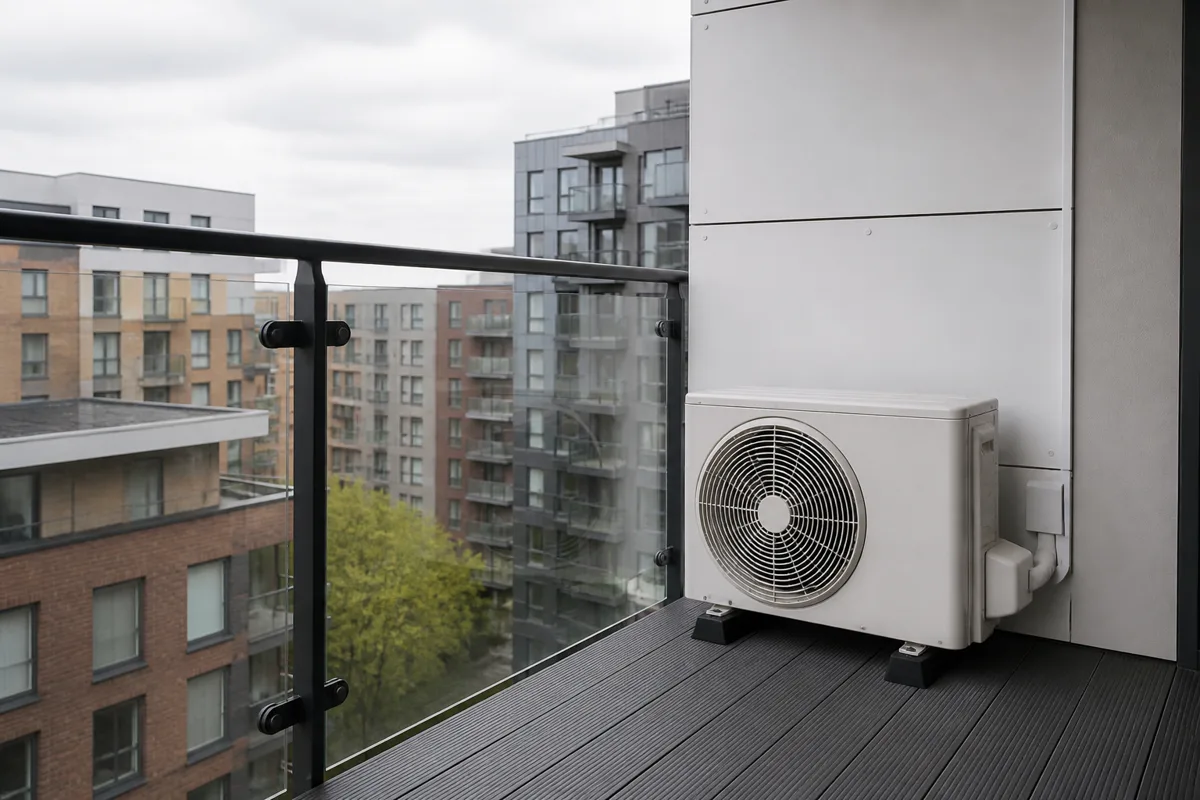
Check your tenancy agreement first
Find the clause on alterations, fixtures or decoration. Most agreements say you must not alter the property, or must not do so without the landlord's written consent. Fixing an indoor unit to a wall, drilling through an external wall and mounting an outdoor unit all count.
Whatever the clause says, get permission in writing and keep it. A verbal yes from a letting agent will not help you if the landlord later disagrees or the property changes hands.
In a flat, your landlord has someone to ask too
If you rent a flat, your landlord usually holds it on a long lease and does not own the external walls. The Leasehold Advisory Service's guidance for leaseholders is that they cannot change parts of the building the freeholder owns without permission, and that leases commonly restrict cutting external walls or fixing equipment to them. Your landlord therefore has to apply to the freeholder or managing agent before they can say yes to you.
This is where most tenant requests stall. A landlord who has to write that application themselves will often just say no. Hand them a complete set of documents, written so they can forward it, and you have done the hard part for them.
What to offer
A landlord is weighing cost, risk and hassle. Deal with each in the letter. The table lists what they will want settled and a fair starting offer.
| Question | A fair offer from a tenant |
|---|---|
| Who pays for the installation? | You do, unless the landlord wants to own it as an improvement to the property |
| Who owns the system? | Agree this in writing. If it stays when you leave, it becomes the landlord's |
| Who fits it? | An F-gas certified, insured installer, named in the letter |
| Who services and repairs it? | You, for as long as you live there, with a service at least once a year |
| What about noise? | The installer's sound calculation at the nearest neighbouring window |
| What happens when you leave? | Either it stays in working order, or you pay for removal and making good. Let the landlord choose |
| What consents are needed? | You supply the documents for the freeholder and the planning position |
A short sample letter
Dear [landlord or letting agent], I am the tenant of [address]. I am writing to ask for your written permission to install a reversible split air conditioning system with [number] indoor unit(s) and one outdoor unit, at my own cost.
The outdoor unit would be [position]. The installer would be [company name], which holds an F-gas company certificate and public liability insurance. I enclose their quotation, the manufacturer's data sheet, marked-up photographs of each position and a note of the planning position.
I would pay for the installation, have the system serviced each year while I live here and, at the end of the tenancy, either leave it in working order or pay for its removal and for making good, whichever you prefer. If you need the freeholder's consent, I enclose a schedule of works, a noise statement and a list of undertakings that you are welcome to send on.
Please let me have your decision in writing by [date three weeks from now]. I will not arrange any work until I have it. Yours sincerely, [your name].
Planning still applies
Permission from the landlord is not planning permission. In England, a reversible unit on a house or on a block of flats can be permitted development if it meets every condition. For flats those include one unit for the whole block and an outdoor unit of no more than 0.6 cubic metres. In Wales the right covers houses only, so a flat needs a planning application. Say in your letter which applies, so that the landlord does not have to find out.
If the answer is no
Ask what the objection is. If it is the outdoor unit, a through-wall unit has none, though it still needs two openings in an external wall and therefore still needs permission. If it is any fixed alteration, a portable unit is what remains: it is louder and less efficient, but it leaves with you and needs no one's consent.
Do not install without permission. You would be in breach of the tenancy agreement, and you could be charged for removal and repairs when you leave.
Frequently asked questions
Can a tenant install air conditioning in the UK?
Only with the landlord's written permission. A fixed system alters the property, and most tenancy agreements forbid alterations without consent. A portable unit needs no permission because nothing is altered.
Does my landlord have to agree?
No. A landlord can refuse a request to alter their property. Your best chance is a complete written request that settles cost, installer, servicing and what happens at the end of the tenancy.
Who pays for air conditioning in a rented property?
Whoever agrees to. A tenant asking for it would normally pay, unless the landlord wants to fit it as an improvement they own. Put the agreement in writing, including who pays for servicing and repairs.
Does my landlord need the freeholder's permission?
In a flat, usually yes. The landlord is normally a leaseholder, and fixing equipment to an external wall or cutting through it involves parts of the building the freeholder owns. Give your landlord documents they can pass on.
Do I have to remove it when I leave?
That depends on what you agreed. Offer the landlord the choice in your letter: leave it in working order, or pay for removal and making good. Refrigerant must be recovered by an F-gas certified business.
What can I use without permission?
A portable air conditioner with a hose through an open window, because it does not alter the property. Check that your tenancy agreement does not restrict appliances, and expect more noise and higher running costs than a fixed system.
Core buying guides
Start with these high-intent guides, then dig into the rest of the library.
Related guides
More planning guides
- How to Ask Your Freeholder for Air Conditioning Consent, With a Sample Letter
- Licence to Alter for Air Conditioning in a Flat: What It Is and What It Costs
- Air Conditioning in Rented Premises: Landlord Responsibilities and Tenant Consent
- Lost Your TM44 Report? How to Find or Replace an Air Conditioning Inspection Report
- How Long Does a Split Air Conditioner Last in the UK?
- Manchester Air Conditioning Planning and Noise Rules
Sources and further reading
How this guide was prepared
This guide was written by the Local AC Installers Editorial Team. We compare official guidance, legislation and established consumer information, separate general information from project-specific advice, and show publication dates and sources. We do not accept installer accreditation claims at face value.