
Most UK houses are single phase, and a bedroom split or two is a normal 230 volt job once the consumer unit can take the circuit. Three phase comes into the conversation when the supply itself is the limit: several outdoor units, a VRF system, or a house that already carries an EV charger and an air-source heat pump. A large single wall unit can still be single phase. Mitsubishi's 7.1 kW MSZ-AP is published as a single-phase outdoor unit. The single-phase guide on this site stays with ordinary homes and refuses a fake amp ceiling. This page is for the quote line that says three phase.
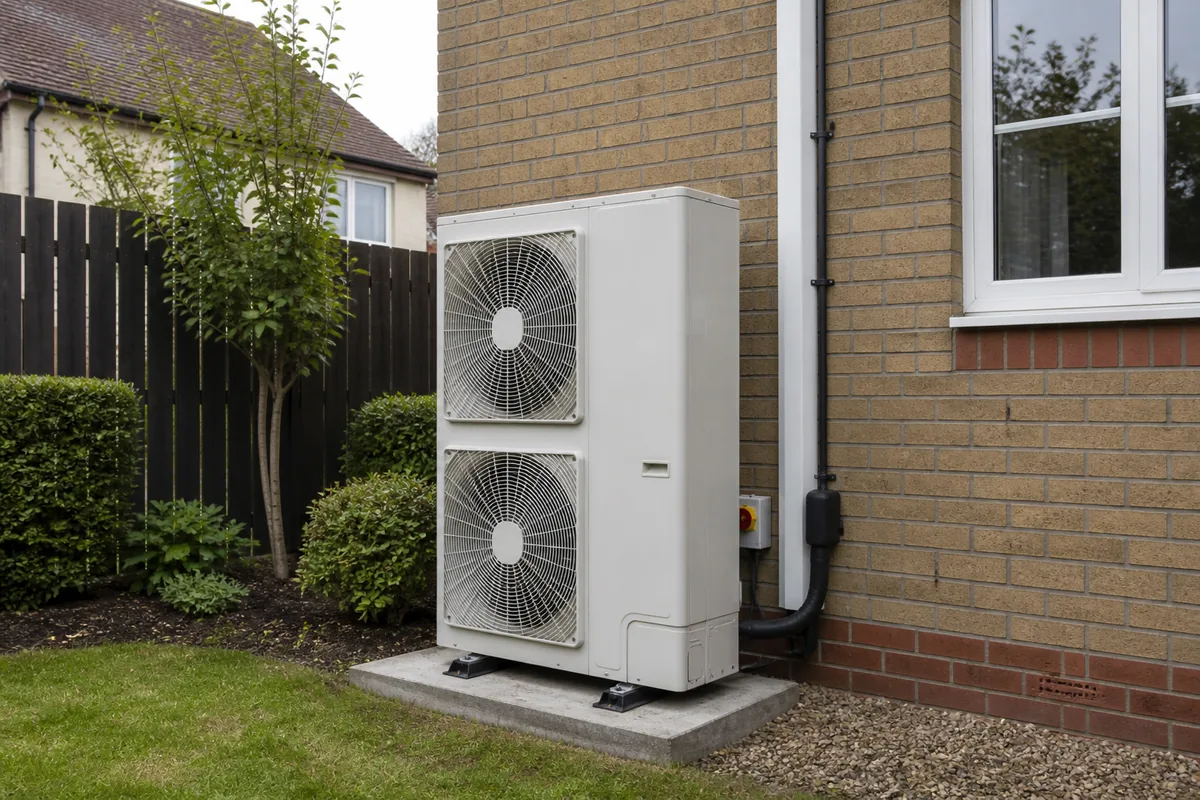
The sentence on the quote
Commercial proposals sometimes include a line such as 'supply to be confirmed' or 'three phase preferred'. That is the designer saying the cooling load and the other plant may be more than a domestic cut-out wants to carry. It is an electrical scope item, with its own price and its own wait, and it belongs in the open before anyone orders condensers.
Houses meet the same sentence less often. It shows up when the board is already full of large loads and the new system is a whole-home bank rather than one indoor head. The consumer-unit guide covers the board in the cupboard. The single-phase guide covers why two small splits are everyday work. Here, the supply cable in the street is the topic.
A 7 kW-class wall split is a clue. The Mitsubishi Electric MSZ-AP71 data lists a single-phase outdoor unit, with cooling input around 2 kW at the nominal point. That is a serious circuit for a single-phase board to absorb alongside everything else. It is still a single-phase machine on Mitsubishi's sheet. The electrician has to see what else shares the cut-out before anyone says the supply must change.
Who actually changes the supply
The distribution network operator for your area owns the service cable and the cut-out. A competent electrician is the person who looks at the board and says whether the existing supply can take the new load or whether an application to that operator is the next step. Householders can start that conversation. The operator's clock is the operator's clock. Build it into the plan as a lead time you learn from them, rather than a number copied from a forum.
The price of a supply upgrade is a network and electrician figure for that address. A spare way in a three-phase factory board and a terraced house with a looped service are different jobs, so a national average would blur the only number that matters. Looped supplies have their own guide.
Phase converters and 'just add a box' products are an electrical design, for an electrician who is willing to own them. They are a way to skip the network conversation with a plug from a DIY site. HSE's electricity guidance is the backdrop: this is not casual work.
What the cooling designer can do before the cable changes
Sometimes the better redesign is fewer outdoor units, a multi-split with one electrical feed, or staging so only part of the building is cooled. Diversity matters. A server room that runs all year is a different load from a bedroom used on hot nights. Say which it is.
VRF and larger commercial systems often expect three phase because that is how the manufacturers build the bigger outdoors. Daikin VRV and Mitsubishi City Multi pages on this site are the product context. The electrical confirmation still sits in the proposal as its own line, with a name for who is applying to the network.
While the supply is unresolved, a fixed equipment price is a forecast. A good quote says so. You can still choose indoor types, pipe routes and a noise plan. You order the big outdoor unit once the supply path is real.
How to keep the two trades speaking
One photo of the supply head, one photo of the consumer unit, and the list of large loads already connected. Send those with the cooling enquiry. The F-gas company and the electrician can then see the same facts.
Ask for the outdoor unit's maximum current or the manufacturer's breaker size on the datasheet, next to the cooling kilowatts. Those are the numbers an electrician can use. A sales line that only says 'it is efficient' leaves them guessing.
Planning and noise rules still apply to whatever outdoor unit lands on the wall. Three phase solves a power question. It chooses the bracket, the neighbour, or the condensate route.
Frequently asked questions
Do I need three phase for home air conditioning?
Usually you need a checked single-phase circuit. Three phase is the upgrade conversation when the supply, not the indoor unit, is what limits the job.
Is a 7 kW split always three phase?
Mitsubishi publishes the MSZ-AP71 outdoor unit as single phase. Confirm the model on your quote, and still let an electrician see the rest of the board.
Can I share the EV charger circuit?
Treat them as separate loads that happen to share a supply. The electrician decides whether the cut-out can carry both at once.
Who pays for a network upgrade?
That is between you, your electrician and the distribution network operator for the address. Get it in writing before the cooling order is placed.
Core buying guides
Start with these high-intent guides, then dig into the rest of the library.
Related guides
More technology guides
- A Suspended Ceiling Ready for a Home Cassette in the UK
- Two-Pipe vs Four-Pipe Fan Coil Units: Which System Fits Your Building
- Split vs portable air conditioning for UK homes
- 2 Ton Air Conditioners in the UK: kW, Rooms and Quotes
- Split System Air Conditioning Cost in the UK
- Under Ceiling Air Conditioners in the UK
Sources and further reading
How this guide was prepared
This guide was written by the Local AC Installers Editorial Team. We compare official guidance, legislation and established consumer information, separate general information from project-specific advice, and show publication dates and sources. We do not accept installer accreditation claims at face value.