
A dehumidifier helps new plaster dry, but only after it has set and only on a moderate setting. On British Gypsum's own figures, a skimmed 3.5 m square room has about 29 litres of water to lose and a full replaster about 134 litres. At 10°C, Meaco's Arete One 20L removes 5.68 litres a day at 80% humidity, which is about 6 and 24 days, and 3.4 litres a day once the room is down near the 60% you should set, about 9 and 40 days. The plaster gives its water up more slowly than that in depth, so treat those as days of dehumidifier work, not a promise, and check the wall, not the calendar, before you paint.
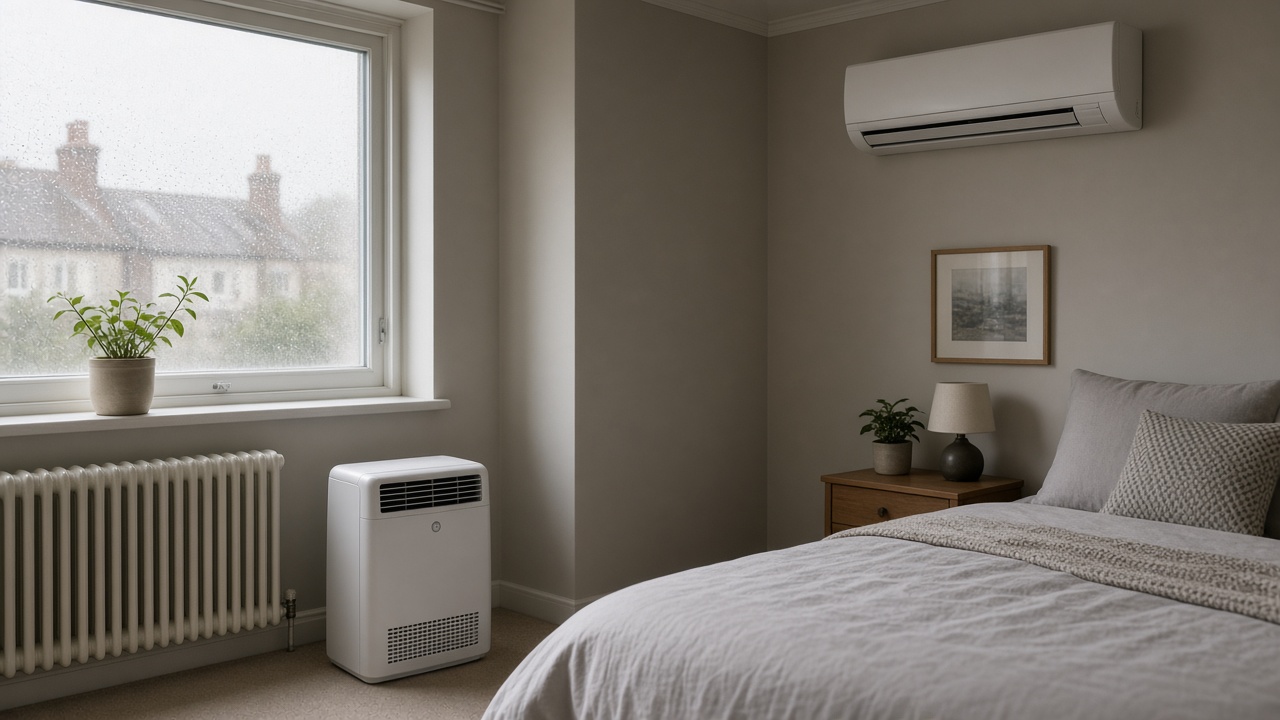
Where the water in new plaster goes
Gypsum plaster comes out of the bag as calcium sulphate hemihydrate. Mixed with water it turns back into gypsum, and that reaction locks some water into the crystals for good. The New Zealand Institute of Chemistry's guide to plaster production gives the reaction and says it needs 18.3 parts of water per 100 parts of plaster by weight, far less than plasterers actually add to make it workable. Everything over that has to evaporate.
So a 25 kg bag locks in about 4.6 litres. British Gypsum's data sheet for Thistle MultiFinish says to mix each 25 kg bag with 11.5 litres of water, which leaves about 6.9 litres per bag to dry out. Thistle HardWall, the backing coat used on block and brick, takes 15 litres per bag, which leaves about 10.4 litres. HardWall also contains lightweight aggregate, so less of each bag is plaster and its real figure may be a little higher. These are our workings from the makers' figures, not measurements.
| Plaster | Water mixed | Covers | Left to dry |
|---|---|---|---|
| Thistle MultiFinish | 11.5 L | 10 m² at 2 mm | about 6.9 L |
| Thistle HardWall | 15 L | 3 m² at 11 mm | about 10.4 L |
A worked example: one 3.5 m square room
Take a bedroom 3.5 m by 3.5 m with a 2.4 m ceiling. After a door and a window that is about 30 m² of wall, plus 12.25 m² of ceiling. Using the coverage on each data sheet:
A skim of walls and ceiling over plasterboard or sound old plaster uses about 4.2 bags of MultiFinish and leaves about 29 litres to dry out. A full replaster on masonry, 10.0 bags of HardWall on the walls with a MultiFinish skim over everything, leaves about 134 litres. That is why a backing coat takes so much longer than a skim: on these figures it is more than four times the water.
Thicker coats, deep patches around rewiring, a new screed floor or new blockwork all add to this, and they carry on releasing water after the plaster looks dry.
How many days with a dehumidifier
The figure on a dehumidifier's box is measured at 30°C or more and high humidity. A cold house removes far less. Meaco publishes water removal tables for its own models, so we used those for three of them.
To read the next table: days is the water to remove divided by the dehumidifier's daily rate, rounded up. All three columns use 60% humidity, the level to hold the room at: 10°C for a cold house and 20°C once it is heated. While the plaster is wet the humidity can be higher, and the rate with it: at 10°C and 80% Meaco gives 5.68 litres a day for the MeacoDry Arete One 20L, which would cut the cold column to about 6 and 24 days. As the room dries, the humidity falls and so does the rate.
Treat these as days of dehumidifier work, not a promise. Water has to move from deep in the wall to the surface before any machine can take it from the air, and ventilation carries some of it away too. British Gypsum warns that HardWall dries from the surface and can look dry before it is dry in depth.
| Job | Water | Arete 20L, 10°C 60% | Arete 20L, 20°C 60% | DD8L Pro, 10°C 60% |
|---|---|---|---|---|
| Skim walls and ceiling | 29 L | 9 days | 4 days | 5 days |
| Full replaster, walls and ceiling | 134 L | 40 days | 16 days | 20 days |
Compressor or desiccant in a cold new build
Meaco rates its Arete One range from 5°C and the DD8L Pro desiccant model from 1°C. At the same 10°C and 60% humidity, Meaco's tables give 3.4 litres a day for the MeacoDry Arete One 20L, 3.54 for the MeacoDry Arete One 25L and 6.89 for the Meaco DD8L Pro on its top fan speed. In a cold, unheated shell the desiccant model takes out about twice as much, and its heat goes into the room.
It costs more to run. At the Ofgem cap of 26.32p per kWh, the MeacoDry Arete One 20L at 10°C and 60% works out at about 33p a litre and £1.14 a day, and the Meaco DD8L Pro at about 58p a litre and £3.98 a day. Once the heating is on and the room is near 20°C, the compressor model removes more for less: 8.5 litres a day at 20°C and 60%, against 7.97 for the DD8L Pro.
A simple rule: below about 10°C or with no heating yet, desiccant. Heated room, compressor. These are three models from one maker's tables, not a test of every machine, and we have not tested any of them. Our compressor vs desiccant guide covers the difference in more detail.
| Model | 10°C, 60% | 10°C, 80% | 20°C, 60% |
|---|---|---|---|
| MeacoDry Arete One 20L | 3.4 L | 5.68 L | 8.5 L |
| MeacoDry Arete One 25L | 3.54 L | 7.19 L | 10.73 L |
| Meaco DD8L Pro (top speed) | 6.89 L | Not published | 7.97 L |
Don't force it: what the makers warn
British Gypsum's data sheets say gypsum plasters need some of the mixing water to set and reach full strength, and that if the water is dried off too quickly, the strength is impaired. They also say plaster must be protected from freezing after it goes on, which matters in an unheated new build in winter.
So the order is: let the plaster set first (British Gypsum gives 1.5 hours for MultiFinish and 1.5 to 2 hours for HardWall), keep the room above freezing, then start the dehumidifier. City Plumbing's guide suggests waiting a day or two, running it on a moderate setting and aiming for 55 to 65% humidity. Meaco's humidistat on the Arete One goes from 40 to 70%, so set around 60% rather than the lowest setting.
Keep heat gentle. Screwfix and MyBuilder both warn against direct heat on fresh plaster because it dries the surface too fast and cracks it. Don't point the dehumidifier or a fan straight at the wall, keep a window on trickle vent, and keep the door shut so the machine is working on that room.
- Wait for the plaster to set, ideally a day or so, before switching on.
- Hold the room above freezing, and around 10 to 20°C if you can.
- Set the humidistat to about 60%, not the minimum.
- No heaters or fans aimed at the wall.
- Empty the tank or use continuous drainage, or the machine stops.
When it is dry enough to paint
British Gypsum's own words are that gypsum plasterwork must be thoroughly dry before decorating, although a coat of permeable paint can go on in the meantime. That is why a mist coat of thinned emulsion is the usual first coat: it lets the wall keep drying. Dulux's Dr Dulux advice says new plaster can take up to 4 weeks to dry completely and suggests 10 parts paint to 1 part water for the mist coat.
The visual sign is colour. Plaster goes from dark brown to an even pale pink as it dries; dark patches mean water is still there, often in corners and on cold outside walls. Screwfix gives 3 to 7 days for a skim and up to 4 weeks for a fully plastered wall, and MyBuilder up to 10 days for plaster in winter. The worked example above shows why: the full replaster has several times the water.
A moisture meter helps, but read it the right way. Protimeter's guide says percentage moisture content means little for plaster, because most plasters are wet at 1%. Its meters instead show a wood moisture equivalent scale with green, amber and red bands, and say any reading above 20% in any material is in the red zone. No plaster maker we found publishes a meter reading to paint at, so look for green readings across the wall, including low down and on outside walls, and paint vinyl or other non-breathable finishes last.
If you are adding air conditioning
Plastering is the point to run any air conditioning pipework and cables, so the walls only get made good once. Our guide to air conditioning before you plaster covers what to agree with the installer. A fitted system will not dry plaster for you, and running it in cooling mode on wet walls is not what it is for, but once the house is dry it controls humidity as it cools in summer.
Dehumidifiers by the numbers
Dehumidifiers are sold on the litres they remove at 30°C and 80% humidity, which no UK room reaches in winter. Meaco also publishes figures for cooler conditions, which is why these are the ones we can compare.
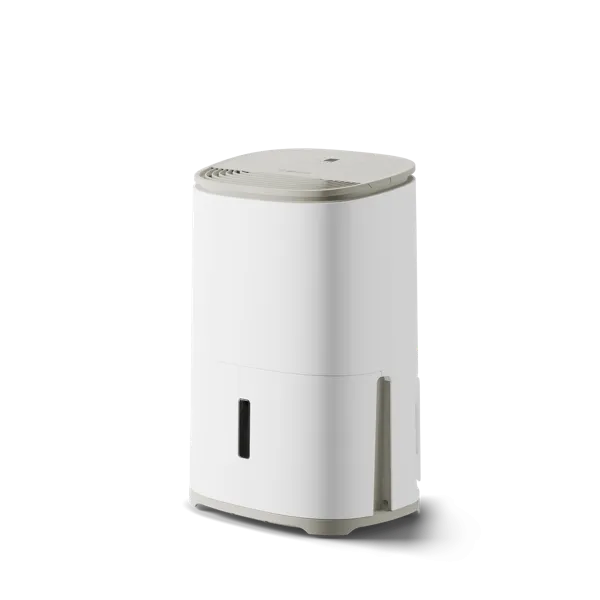
Flat or small house
MeacoDry Arete One 12L
7.5 litres a day at 27°C and 60%, 151 W, from 35 dB
About 4p an hour while running. The quietest of the three, with a 2.5 litre tank.
Check price on AmazonPhoto: Meaco
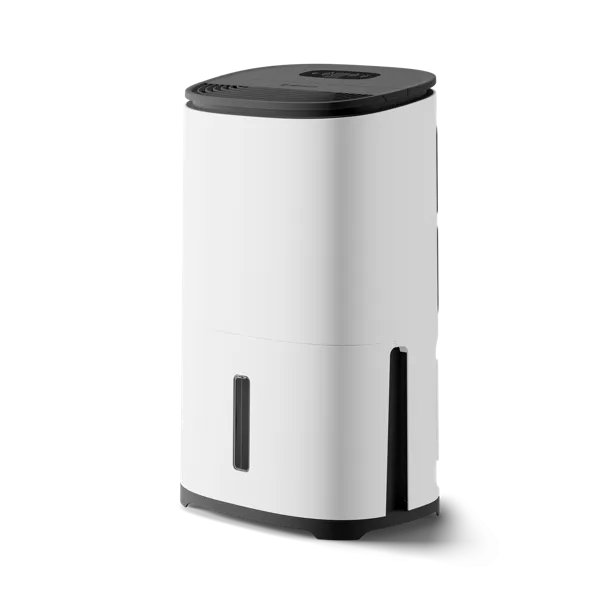
Family house or laundry
MeacoDry Arete One 20L
12 litres a day at 27°C and 60%, 216 W, from 38 dB
About 6p an hour while running. Rated by Meaco for homes of up to four bedrooms.
Check price on AmazonPhoto: Meaco
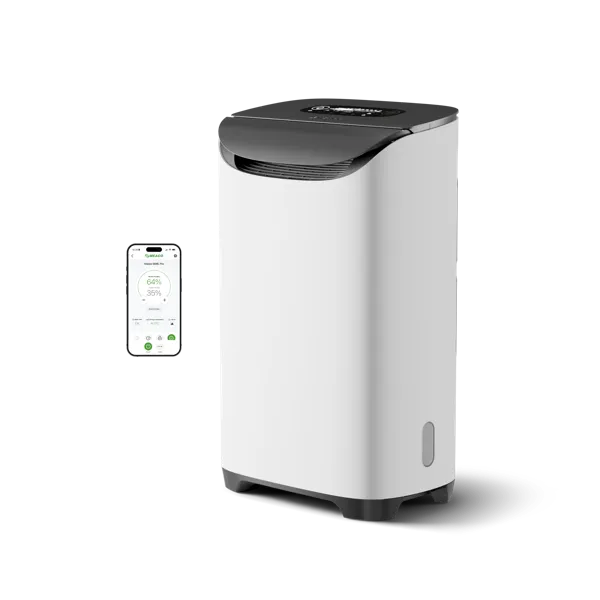
Garage, boat or cold room
Meaco DD8L Pro
up to 7.97 litres a day at 20°C and 60%, 623 W, from 40 dB
About 16p an hour while running. A desiccant model rated down to 1°C, where a compressor machine stops working.
Check price on AmazonPhoto: Meaco
Comparing another model? Ask for its extraction and its wattage in cooler conditions, then divide: fewer watts per litre is better.
Frequently asked questions
Should I use a dehumidifier on new plaster?
Yes, once the plaster has set, ideally after a day or so, on a moderate setting of about 60% humidity. British Gypsum warns that drying the water off too quickly weakens the plaster, so avoid the lowest setting, heaters aimed at the wall and fans blowing on it.
How long does plaster take to dry with a dehumidifier?
On our working from British Gypsum's figures, a skimmed 3.5 m square room has about 29 litres to lose and a full replaster about 134 litres. At 10°C, Meaco's Arete One 20L removes 5.68 litres a day at 80% humidity, about 6 and 24 days, and 3.4 litres a day at 60%, about 9 and 40 days. Thick coats dry more slowly in depth, so treat these as days of dehumidifier work, not a promise.
How much water is in new plaster?
British Gypsum gives 11.5 litres per 25 kg bag of MultiFinish and 15 litres per bag of HardWall. Setting locks in about 4.6 litres a bag (18.3 parts water per 100 parts plaster), so about 6.9 and 10.4 litres a bag have to evaporate.
Compressor or desiccant dehumidifier for drying out a new build?
Desiccant if the house is unheated or below about 10°C: at 10°C and 60% Meaco lists 6.89 litres a day for the DD8L Pro against 3.4 for the Arete One 20L. Compressor once the heating is on, because it removes more water for less electricity at 20°C.
When can I paint new plaster?
When it is an even pale pink with no dark patches, and a moisture meter reads in the green across the wall. British Gypsum allows a permeable paint such as a mist coat in the meantime. Dulux says new plaster can take up to 4 weeks to dry completely.
Can I use a heater to dry plaster faster?
Gentle background heat is fine, but not a heater aimed at the wall. British Gypsum says gypsum plaster needs part of its mixing water to set and loses strength if it dries too fast, and retailers' guides warn that direct heat cracks it.
Core buying guides
Start with these high-intent guides, then dig into the rest of the library.
Related guides
More homes guides
- Dehumidifier Bags and Moisture Absorbers vs an Electric Dehumidifier
- Does a Dehumidifier Stop Condensation on Windows? A Dew Point Guide
- Ururu Sarara or Daikin Perfera?
- Dehumidifier Hire UK: Rates From 9 Hire Firms, Per Day and Per Week
- Daikin Ururu Sarara: the UK split that also ventilates
- Dehumidifier or air conditioning for a damp UK room?
Sources and further reading
- British Gypsum: Thistle MultiFinish product data sheet PDS-110-04, water requirement, coverage, setting time, effect of temperature and decoration (retailer-hosted copy, checked 27 Nov 2026)
- British Gypsum: Thistle HardWall product data sheet PDS-103-02, November 2011 issue, water requirement, coverage, setting time and drying from the surface (retailer-hosted copy, checked 27 Nov 2026)
- British Gypsum: Thistle Finishing Plaster product data sheet, 9 September 2022, painting and effect of temperature (hosted by Wickes, checked 27 Nov 2026)
- NZ Institute of Chemistry: Plaster and plaster board production, rehydration reaction and water needed (checked 27 Nov 2026)
- Meaco: MeacoDry Arete One 20L, water removal table, operating range and humidistat (checked 27 Nov 2026)
- Meaco: MeacoDry Arete One 25L, water removal table (checked 27 Nov 2026)
- Meaco: DD8L Pro desiccant dehumidifier, water removal table and operating range (checked 27 Nov 2026)
- Dulux: Dr Dulux, painting on new plaster (checked 27 Nov 2026)
- GE Measurement & Control (Protimeter): How to measure moisture in buildings, BR-200 Rev. A (checked 27 Nov 2026)
- Screwfix: How long does plaster take to dry? (checked 27 Nov 2026)
- MyBuilder: Drying plaster in winter, updated 21 August 2026 (checked 27 Nov 2026)
- City Plumbing: Dehumidifiers for projects (checked 27 Nov 2026)
- Ofgem: energy price cap, 1 October to 31 December 2026 (checked 27 Nov 2026)
How this guide was prepared
This guide was written by the Local AC Installers Editorial Team. We compare official guidance, legislation and established consumer information, separate general information from project-specific advice, and show publication dates and sources. We do not accept installer accreditation claims at face value.