
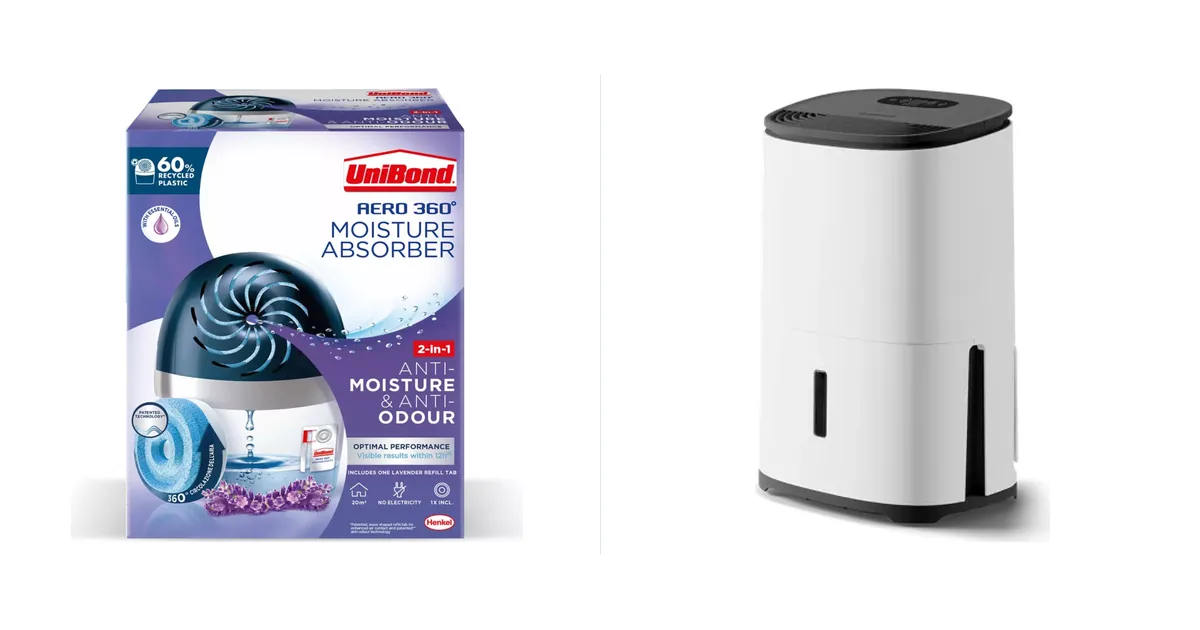
Moisture traps and dehumidifier bags do work, but only on a small scale: on makers' own figures a disposable tub or tab holds about 1 litre in total over 1 to 3 months, and a 500 g reusable bag about 125 ml before it needs drying out. A small electric dehumidifier removes several litres a day, for example 3.5 litres a day for the MeacoDry Arete One 6L at 27°C and 60% humidity, so it collects a tub's worth of water in about 6.9 hours. Use bags and absorbers for wardrobes, cupboards, cars and stored caravans, and an electric dehumidifier for a damp room or for drying washing, where it costs about 16p to 49p of electricity per litre at the Ofgem cap of 26.32p per kWh. We have not tested any of these products.
How much water a bag or absorber tub holds
Disposable moisture traps use salt crystals or a tab, usually calcium chloride, which pull water from the air and dissolve into a brine that drips into a tray. Reusable bags usually hold silica gel, which takes water into its pores and is then dried out in a microwave or oven. Makers publish only a few figures: how much water the trap or container holds, the room size, and how long a refill lasts. None publishes a rate in millilitres a day.
The figures below are each maker's own, from its product page or technical data sheet. Absodry gives the size of the water container, not a tested absorption figure, so treat its rows as a ceiling. Lakeland's page for the Kontrol tabs says they absorb up to two litres but does not say whether that is per tab or for the pack of two.
| Product | Absorbent | Water held | Maker's lifespan |
|---|---|---|---|
| UniBond Aero 360 tab | 450 g calcium chloride | About 1 litre, up to 1.3 | Up to 3 months |
| Lakeland Moisture Trap | 500 g crystals | Up to 1 litre | Up to 3 months |
| Acana Advanced Safety cartridge | Sealed cartridge | Up to 1 litre | Not stated |
| Kontrol Aqua Refill Tabz | 2 x 450 g tabs | Up to 2 litres | Not stated |
| Absodry Series 3 | 300 g bag | 800 ml container | 1 to 3 months |
| Absodry Series 6 | 600 g bag | 1 litre container | 1 to 3 months |
| Lakeland Moisture Magnet (reusable) | 500 g | Up to 125 ml | Recharge in microwave |
Why reusable bags hold less
Silica gel can only hold part of its own weight in water. Topas, a German silica gel maker, gives a water absorbing capacity of at least 25% by weight on its data sheet, and says silica gel can take up to 36% of its own weight. A 500 g bag therefore holds roughly 125 to 180 ml before it is full, which matches Lakeland's 125 ml figure for its 500 g Moisture Magnet.
Calcium chloride keeps taking up water as it dissolves, so a tab holds more than its own weight. Henkel's data sheet for the UniBond Aero 360 gives an average of 1 litre of brine from a 450 g tab, and up to 1.3 litres depending on humidity and room temperature. The trade-off is that the tab is used up: you pour the brine away and buy a refill, where a silica bag can be dried and reused.
Days to fill, not cost per litre
We have not worked out a cost per litre for bags and tubs. That would need a price for each refill, and we do not put shop prices on our pages. Most of these products are sold through shops at prices that vary, and we could not find a maker's own recommended price for 8 or more of them, which is the least we use for a cost comparison. So we compare on capacity and time instead.
If a tub collects about 1 litre over 1 to 3 months (UniBond and Lakeland say up to 3 months, Absodry 1 to 3), it is taking up somewhere around 11 to 33 ml a day on average. That is our working from the makers' lifespans, not a figure any of them publishes, and a very damp space fills a tub faster. UniBond rates one 450 g device for a room of about 20 m² with poor air circulation, Absodry rates its Series 3 for up to 12 m² and Series 6 for up to 25 m², and the Acana trap sold by Lakeland is rated for up to 45 cubic metres.
What an electric dehumidifier removes
Electric dehumidifiers are rated in litres a day. The headline figure is measured at 30°C and 80% humidity, warmer and damper than a UK home, so the table uses the cooler condition each maker also publishes. Cost per litre divides each model's power draw by its litres an hour at that condition, at the Ofgem cap of 26.32p per kWh. Figures are from the makers' pages, read on 21 November 2026. Compare rows within one condition only: 20°C and 60% is a harder test than 27°C and 60%.
| Model | Litres a day | Time for 1 litre | Cost per litre |
|---|---|---|---|
| MeacoDry Arete One 6L | 3.5 (27°C and 60%) | 6.9 hours | 18p |
| MeacoDry Arete One 10L | 6 (27°C and 60%) | 4 hours | 16p |
| Meaco 12L Low Energy | 4.77 (20°C and 60%) | 5 hours | 21p |
| Meaco DD8L Pro | 7.97 (20°C and 60%) | 3 hours | 49p |
| EcoAir Piccola | 5 (20°C and 60%) | 4.8 hours | 40p |
| EcoAir DD1 Mini | 6 (20°C and 60%) | 4 hours | 47p |
Worked example: drying a load of washing
Tumble dryer energy labels are tested on cotton that starts at 60% moisture content, against the dry weight of the load. On that basis a 6 kg load of washing holds about 3.6 litres of water, all of which ends up in the room air if you dry it on an airer indoors.
The MeacoDry Arete One 10L removes 6 litres a day at 27°C and 60%, so it takes out 3.6 litres in about 14 hours, for about 57p of electricity. To absorb the same water with tubs you would need about 4 full ones, and at 11 to 33 ml a day a single tub would take roughly 109 to 327 days to take up one load's worth. The washing would be dry long before then, with the water on the windows and walls instead. Our dehumidifier for drying clothes guide has the full comparison with tumble dryers.
Where bags and absorbers make sense
Bags and tubs suit small, closed spaces where only a little moisture gets in and there is no socket, or where you cannot leave an appliance running.
- Wardrobes, drawers and cupboards: a small space with little moisture coming in, which is the scale a tub or hanging sachet is made for.
- Cars: a reusable bag on the dashboard or shelf takes up some of the moisture that mists the windscreen, and can be dried out at home.
- Caravans, boats and holiday homes left closed: a tub keeps working with no power. UniBond says its Aero 360 should be used above 10°C, so an unheated caravan in winter may be too cold for it to work well.
- Under-stairs cupboards, small storerooms and a downstairs WC with no window, as a top-up between airing.
Where they cannot keep up
A damp bedroom with condensation and black mould, a flat where washing is dried indoors, or a basement with water coming through the walls all produce far more than a tub can take up. A tub collecting tens of millilitres a day cannot remove the litres a day that cause condensation, so the room stays damp and the refill bill keeps growing. Treat the cause first: ventilation, heating and any leak or rising damp.
For a room, an electric dehumidifier is the tool that matches the scale. In an unheated room, a desiccant model such as the Meaco DD8L Pro, which Meaco rates to run from 1°C, copes with the cold better than a compressor model, which our compressor vs desiccant dehumidifier guide explains. For running costs over a week or a winter, see our dehumidifier running cost guide, for every model compared, our best dehumidifier comparison, and for damp across the whole home, our dehumidifier vs air conditioning for damp guide.
Using absorbers safely
Henkel's data sheet for the UniBond Aero 360 says to place the device at least 10 cm from the wall, keep the tab and the brine off metal surfaces such as chrome and gold plate, leather, fabrics and carpets, and pour the used brine down the toilet. It says the product is considered dangerous and points to a safety data sheet. Keep tubs where children and pets cannot knock them over, and empty them before the tray is full.
Dehumidifiers by the numbers
Dehumidifiers are sold on the litres they remove at 30°C and 80% humidity, which no UK room reaches in winter. Meaco also publishes figures for cooler conditions, which is why these are the ones we can compare.
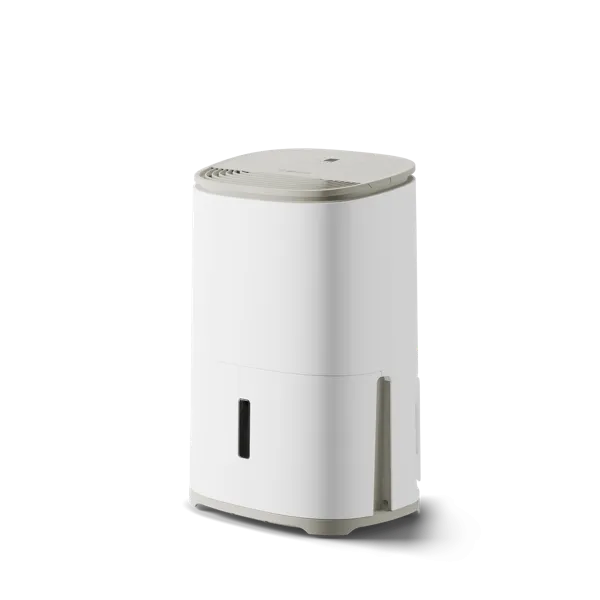
Flat or small house
MeacoDry Arete One 12L
7.5 litres a day at 27°C and 60%, 151 W, from 35 dB
About 4p an hour while running. The quietest of the three, with a 2.5 litre tank.
Check price on AmazonPhoto: Meaco
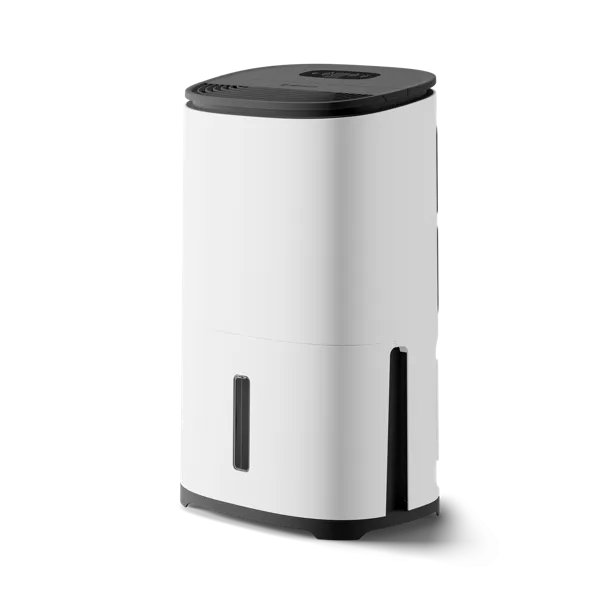
Family house or laundry
MeacoDry Arete One 20L
12 litres a day at 27°C and 60%, 216 W, from 38 dB
About 6p an hour while running. Rated by Meaco for homes of up to four bedrooms.
Check price on AmazonPhoto: Meaco
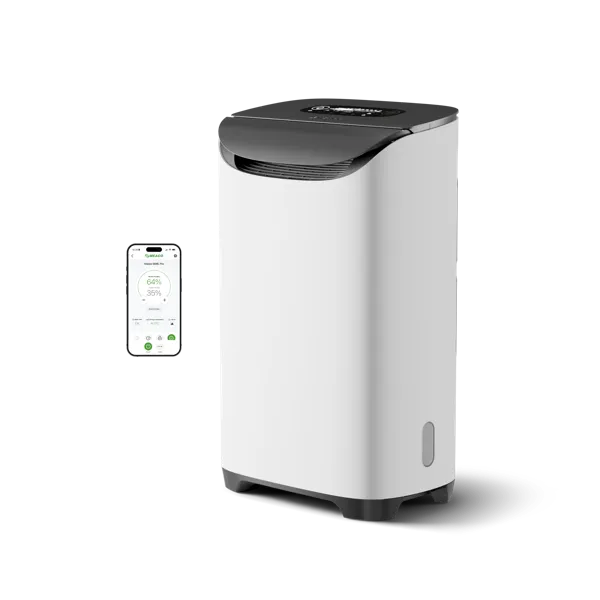
Garage, boat or cold room
Meaco DD8L Pro
up to 7.97 litres a day at 20°C and 60%, 623 W, from 40 dB
About 16p an hour while running. A desiccant model rated down to 1°C, where a compressor machine stops working.
Check price on AmazonPhoto: Meaco
Comparing another model? Ask for its extraction and its wattage in cooler conditions, then divide: fewer watts per litre is better.
Frequently asked questions
Do moisture traps work?
Yes, on a small scale. On makers' figures a tub or tab holds about 1 litre over 1 to 3 months, which suits a wardrobe, cupboard or closed caravan. It cannot keep up with a damp room or washing dried indoors, where an electric dehumidifier removes several litres a day.
How much water does a dehumidifier bag absorb?
It depends on the type. Henkel says a 450 g UniBond Aero 360 calcium chloride tab gives about 1 litre of brine on average, up to 1.3 litres. Lakeland rates its reusable 500 g Moisture Magnet at up to 125 ml before it needs recharging.
Are reusable dehumidifier bags better than disposable ones?
They hold less water each time, about a quarter of their own weight for silica gel, but you dry them out and reuse them instead of buying refills. Disposable calcium chloride tabs hold more water each, but are used up. For a car or a drawer, a reusable bag is usually enough.
How many moisture absorbers do I need for a room?
Makers rate one unit for a set room size: UniBond about 20 m² for one 450 g device, Absodry up to 12 m² for its Series 3 and 25 m² for its Series 6. If condensation keeps coming back with that many in place, the room needs an electric dehumidifier or better ventilation.
Is an electric dehumidifier expensive to run compared with bags?
An electric dehumidifier costs about 16p to 49p of electricity per litre for the models in our table, at 26.32p per kWh. We have not given a cost per litre for bags because we could not find makers' own recommended prices for enough products, and we do not quote shop prices.
Core buying guides
Start with these high-intent guides, then dig into the rest of the library.
Related guides
- Wardrobe Dehumidifier UK: What Works in a Damp Wardrobe, on Makers' Figures
- Best Dehumidifiers UK: 54 Compared, Including for Bedrooms, Bathrooms and Mould
- How Much Does a Dehumidifier Cost to Run? UK Cost per Hour, Day and Month
- Compressor vs Desiccant Dehumidifier: Which One for Which Room
- Dehumidifier for Drying Clothes: Cost per Load vs a Tumble Dryer
More homes guides
- Ururu Sarara or Daikin Perfera?
- Dehumidifier to Dry Plaster: How Much Water a Room Holds and How Many Days
- Daikin Ururu Sarara: the UK split that also ventilates
- Does a Dehumidifier Stop Condensation on Windows? A Dew Point Guide
- Daikin Stylish Air Conditioners in the UK
- Dehumidifier Hire UK: Rates From 9 Hire Firms, Per Day and Per Week
Sources and further reading
- Henkel: UniBond Aero 360 Device technical data sheet, tab capacity, room size, limitations (checked 26 Nov 2026)
- UniBond UK: moisture absorbers range, refill lifespan (checked 26 Nov 2026)
- Lakeland: Moisture Trap, 500 g crystals, holds up to a litre (checked 26 Nov 2026)
- Lakeland: Acana Advanced Safety Moisture Trap, up to 1000 ml, up to 45 cubic metres (checked 26 Nov 2026)
- Lakeland: Advanced Safety Moisture Absorber Refill cartridges (checked 26 Nov 2026)
- Lakeland: Kontrol Aqua Moisture Trap Refill Tabz (checked 26 Nov 2026)
- Lakeland: Moisture Magnet 500g, reusable, up to 125 ml (checked 26 Nov 2026)
- Absodry: Series 3 moisture absorber, 300 g bag, 800 ml container, 12 m² (checked 26 Nov 2026)
- Absodry: Series 6 moisture absorber, 600 g bag, 1 litre container, 25 m² (checked 26 Nov 2026)
- Topas GmbH: silica gel data sheet, water absorbing capacity min. 25%, up to 36% of own weight (checked 26 Nov 2026)
- Meaco: dehumidifier specifications
- EcoAir: dehumidifier specifications
- Ofgem: energy price cap, 1 October to 31 December 2026
- legislation.gov.uk: Regulation (EU) No 392/2012 as it applies in GB, Article 2, rated capacity and the standard cotton programme (checked 26 Nov 2026)
How this guide was prepared
This guide was written by the Local AC Installers Editorial Team. We compare official guidance, legislation and established consumer information, separate general information from project-specific advice, and show publication dates and sources. We do not accept installer accreditation claims at face value.