
A looked-after UK wall split commonly runs well into a second decade. There is no single expiry date, because the outdoor unit's weather, the filter habit and whether anyone has cleaned the coils matter more than the birthday on the invoice. Electronics, fan bearings and a slow refrigerant leak are the usual reasons a unit starts to feel finished. Once a system is around eight or twelve years old and already misbehaving, the repair-or-replace guides on this site are the decision pages. This one is about the life you can reasonably expect before you are standing in that choice.
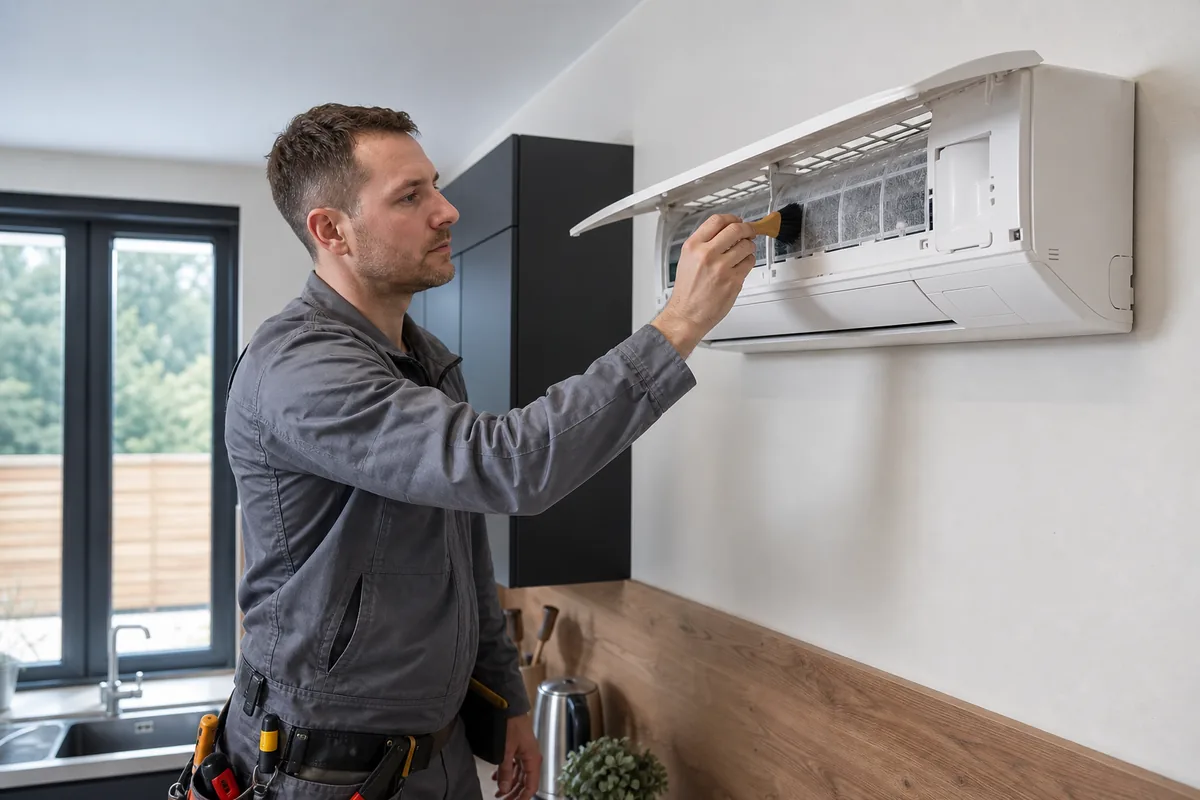
The unit in the spare room that everyone forgets
The splits that reach a long life tend to be boring. Someone rinses the filters a few times a season. The outdoor coil can see daylight and rain, and leaves are lifted off the top before they turn into a wet blanket. The condensate pipe keeps falling the way it was installed. None of that is glamorous. All of it is why a ten-year-old bedroom unit can still be the quietest thing in the house.
The splits that feel old at seven have usually lived a harder life. A condenser boxed in by a new fence. A coastal garden loading the coil with salt. A filter left until the airflow light has been on so long the household treats it as decoration. The machine then runs hotter, longer, and louder for the same room.
Manufacturers design domestic equipment for a long service life and sell it with a warranty that the installing company registers. The warranty length on your paperwork is the commercial promise. The mechanical life is the separate, longer question, and it follows maintenance.
What actually wears
The compressor is the expensive heart, and inverter compressors spend a lot of their life ticking over rather than slamming on and off. That modulation is kind to them, provided the system has the right charge and the outdoor unit can breathe. A leak that is ignored makes the compressor work in a way the designer left off the brochure.
Fans, capacitors and the little sensors that tell the unit where the coil is are everyday replacement parts on a service van. A failed fan motor on an otherwise healthy indoor unit is a repair conversation. A failed compressor on a unit whose refrigerant is an older type, with the outdoor coil half blocked, is often a replacement conversation. The eight-year and twelve-year guides walk through that fork. This page stops at the fork in the road.
Plastic fades. A white fascia on a south-facing wall goes cream. That is cosmetic. Performance lives in airflow, charge and the outdoor heat exchanger. Judge the machine by the room, the sound and the electricity, and let the colour be the colour.
Service is the variable you can still choose
A proper visit cleans both coils as far as access allows, checks the drain, looks at the electrics, and confirms the unit still heats and cools. For systems with a larger refrigerant charge there are also F-gas leak-check duties. A single bedroom split is often below the thresholds that force a logged leak check, and a clean and a test are still what keep it in the second decade.
Keep the invoice. A future engineer, or a buyer of the house, can see that the unit has been someone's responsibility. The maintenance log guide is there if you want a simple record. The servicing cost guide is there when you want to budget the visit itself.
Coastal and pigeon-heavy sites deserve a shorter gap between cleans. The salt-air and pigeon-guard guides cover those addresses. A sheltered suburban wall can live on a calmer rhythm. Match the diary to the wall, and the machine lasts.
When 'how long' turns into 'repair or replace'
Age on its own is a weak reason to scrap a split that still holds the room quietly. Age plus a warm coil, a noisy compressor and a refrigerant that a new single split would be supplied with today is a strong reason to price a replacement beside the repair. R32 is the refrigerant on current domestic quotes. An older R410A unit can still be maintained under the rules that apply to existing equipment. A brand new single split quoted as R410A is a different, and now regulated, question. The refrigerant-rules guide covers that.
Ask the engineer for two numbers when the unit is poorly: the repair, with the parts named, and a like-for-like new install with the old refrigerant recovered. Recovery at end of life is a legal handling job, covered on the end-of-life page. You then choose with both prices in the same week.
Fitted work stays with an F-gas certified company. A long life is mostly a clean coil, a clear drain and an outdoor unit that can still do its job in the weather you actually have.
Frequently asked questions
Is ten years a fair expectation?
It is a fair middle of the road for a serviced domestic split. Plenty run longer. A neglected outdoor coil or a slow leak can make a younger unit feel finished.
Does using heat in winter shorten the life?
Heating is what these units are built to do. Defrost cycles in cold weather are normal. A blocked outdoor unit in leaf season is the habit that ages it.
Should I replace a working unit just because it is R410A?
A working system can stay in service. Price a replacement when it needs a major repair, and read the current rules before anyone quotes a new single split on the old refrigerant.
Who services it?
A company that is properly set up for F-gas work. Filter rinsing at home is the household share. Opening the refrigerant circuit is theirs.
Core buying guides
Start with these high-intent guides, then dig into the rest of the library.
Related guides
More installation guides
Sources and further reading
How this guide was prepared
This guide was written by the Local AC Installers Editorial Team. We compare official guidance, legislation and established consumer information, separate general information from project-specific advice, and show publication dates and sources. We do not accept installer accreditation claims at face value.