

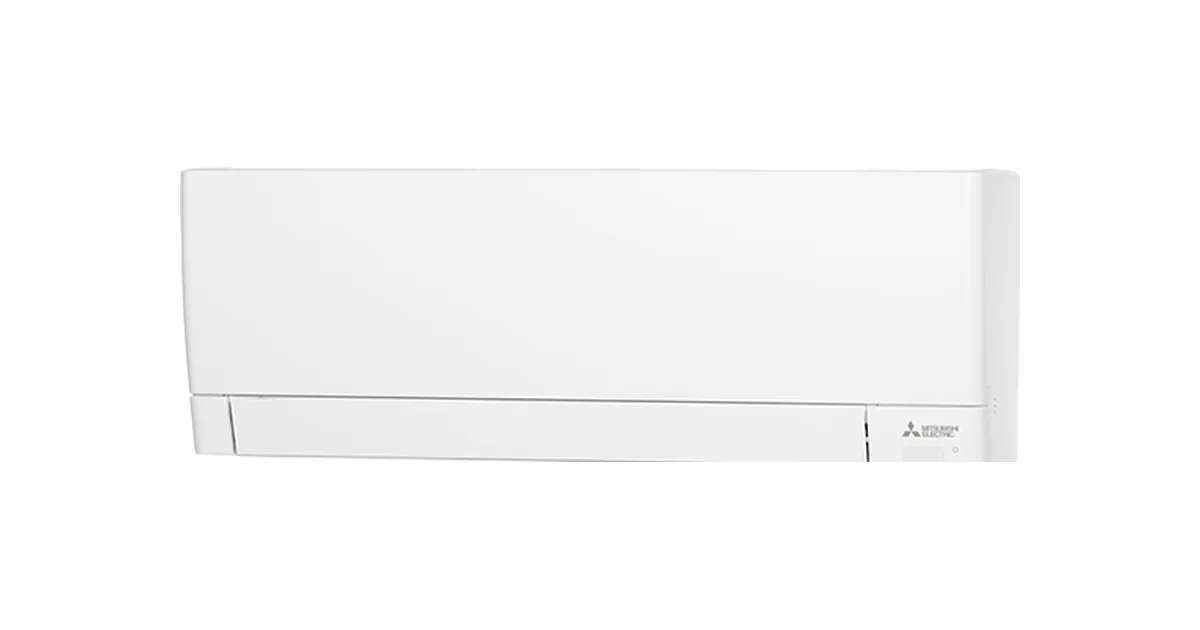
Both have the same SEER (8.70) and the same 18 dB(A) quietest setting, so the choice is capacity. AY25 cools 0.9 to 3.4 kW and suits most bedrooms; AY35 cools 1.1 to 3.8 kW for larger or south-facing living rooms. Let the heat-gain survey pick.
AY25 and AY35 are not stickers on one box
AY25-class units and AY35 or AY50-class units are not stickers on one box. Nominal cooling kW, heating output, airflow and the outdoor partner all change. People reuse a bedroom model because they liked the remote. That only works if the living room's gain is genuinely in the same band. Mitsubishi Electric lists them as different duties inside one family.
MSZ-AY25 for a bedroom vs MSZ-AY35 for a living room
Figures are from the sources listed below, checked 21 November 2026. Running costs use the Ofgem price cap for October to December 2026 (26.32p per kWh of electricity) divided by the published efficiency.
| MSZ-AY25VGK2 | MSZ-AY35VGK2 | |
|---|---|---|
| Cooling, rated (range) | 2.5 kW (0.9 to 3.4) | 3.5 kW (1.1 to 3.8) |
| Heating, rated (range) | 3.2 kW (1.0 to 4.1) | 4.0 kW (1.3 to 4.6) |
| SEER / SCOP | 8.70 / 4.80 | 8.70 / 4.70 |
| Sound, cooling, quietest to highest | 18 to 42 dB(A) | 18 to 42 dB(A) |
| Buy it if | Most bedrooms and studies | Living rooms and larger bedrooms |
Glass, bi-folds and a door that stands open
Start with a survey of each space. Orientation, floor area, kitchen appliances, bi-folds and how often the door stands open matter more than the fact both rooms could accept an AY fascia. Energy Saving Trust describes the air-to-air heat pump. The Planning Portal is the outdoor-unit check when a second condenser enters the conversation.
The bedroom unit, the pillow and the landing door
The point is sleep. Keep the outdoor unit off that window.
- Bedroom: often lower kW, door shut, low fan, night hours.
- Lowest fan speed, a setpoint you can leave.
- Opening the landing door is a leak, not a duct.
- A roof bedroom with end-of-day sun is a separate load from a spare room.
Afternoons, televisions and a longer run
Living rooms collect people, televisions, late sun and trips to the kitchen. The unit runs longer and restarts more often. Many UK living rooms land around 3.5 kW after a proper survey, and open-plan kitchen diners often need more than a bedroom AY can give. A pretty match with the upstairs indoor is not a sizing method. Noise still matters, but it is conversation and the sofa, not a silent night. Outdoor siting still matters, because evening use is when neighbours notice. The larger outdoor match is often physically bigger. Compare sound data for the actual outdoor model, and keep it off bedroom windows even if the indoor is downstairs.
Simultaneous capacity, not the sum of the nameplates
Ask for a capacity per room, with the outdoor model written next to it. If one multi-split outdoor will serve both, ask for the simultaneous capacity, not the sum of the indoor nameplates. A bedroom AY and a living-room AY can share a compatible Mitsubishi outdoor only when that outdoor lists them and the combined load fits. GOV.UK F-gas rules apply either way.
When the spare-room code is the wrong living room
Use the same AY model in the bedroom and the lounge only if both rooms survey to the same nominal duty, which is uncommon. The family can match. The capacity code should follow each room's load. A bedroom AY will cool the landing poorly, and it will struggle to hold the bedroom while it tries. Splits cool the room they are in. Do not duplicate the spare-room paperwork so the remotes match. Say which room is for sleep and which runs through the afternoon.
Core buying guides
Start with these high-intent guides, then dig into the rest of the library.
Related guides
More homes guides
- Mitsubishi Approved Installers in the UK
- Mitsubishi City Multi vs Mr Slim in the UK
- What a mini-split heat pump means in the UK
- Mitsubishi Electric Air Conditioning UK: Ranges, Room Fit and Installers
- Midea Wall Air Conditioners in the UK: Breezeless E, Penrose XT and Solstice
- Mitsubishi Electric vs Mitsubishi Heavy Industries Air Conditioning
Sources and further reading
How this guide was prepared
This guide was written by the Local AC Installers Editorial Team. We compare official guidance, legislation and established consumer information, separate general information from project-specific advice, and show publication dates and sources. We do not accept installer accreditation claims at face value.