
A school that searches for air conditioning usually has more than one hot room. Top-floor classrooms, a hall, an IT suite and a comms cupboard overheat for different reasons, and the people in them cannot simply open a window onto a road. The classroom guide covers one teaching room. The nursery guide covers the early-years version. This page is the estate: several spaces, safeguarding, a holiday install window, and the chance that the combined plant needs a TM44 inspection.
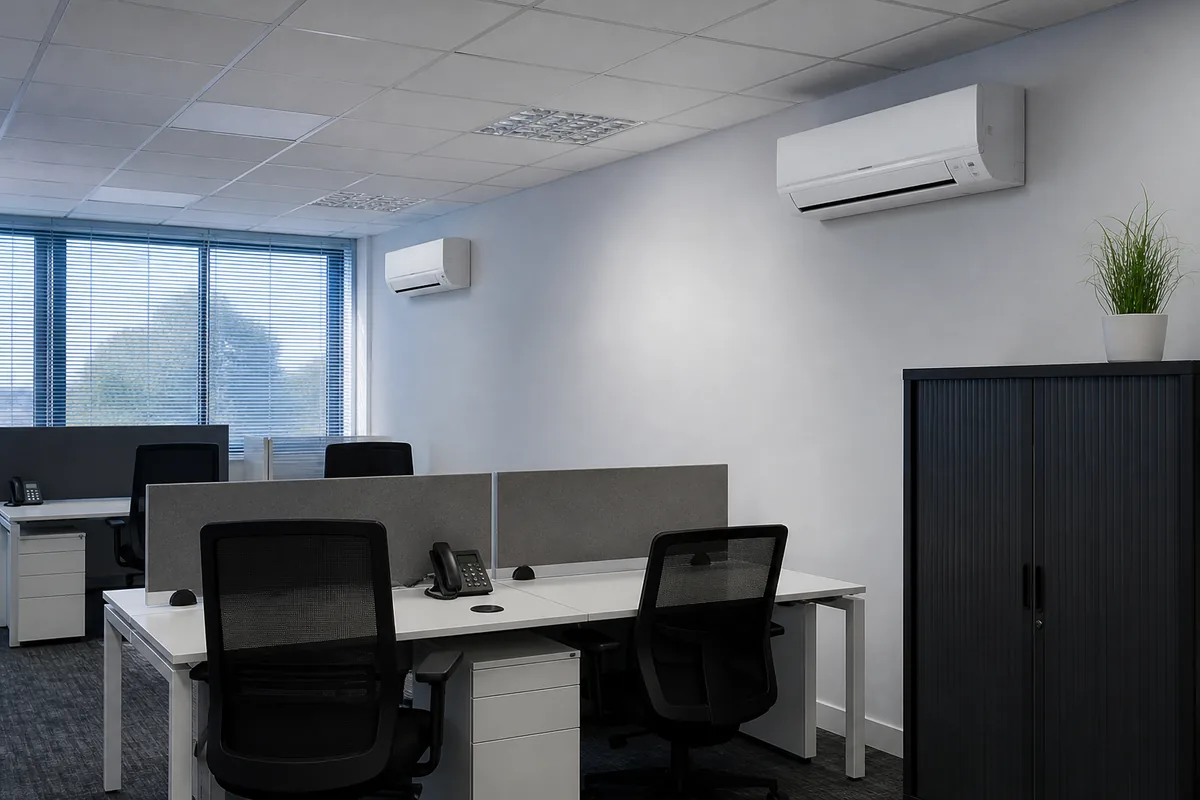
Name the rooms before you name the kit
A south-facing classroom with thirty people is a people load plus glass. An IT suite is equipment. A hall is high and intermittently full. A server cupboard is a small continuous load that must not be solved by propping the fire door. Write those as separate lines. One cassette quoted for 'the school' will disappoint all four.
Ventilation stays its own subject. Cooling a classroom with a split recirculates the air that is already there. Fresh air for teaching spaces is a design question of its own, often discussed in school ventilation guidance such as Building Bulletin 101. Tell the designer you need both truths: temperature and outdoor air. A larger indoor unit does not become a fresh-air system.
HSE's workplace-temperature guidance is the staff side of the same building. There is no single legal maximum, and there is a duty to manage heat. A survey that only counts kilowatts and ignores occupancy and the school day has missed the brief.
Holidays, safeguarding and noise
The install that is easy for the contractor is the install in the summer holiday, with children off site. Term-time work needs safeguarding checks, a route that does not cross a playground at the wrong hour, and a noisy drill that is not under an exam. Put the window in the tender. A keen price that assumes Easter-week access to a live corridor is not keen.
Outdoor units beside a playground or a neighbour's garden need the same noise care as a house, with the added fact that schools generate complaints from people who are there all day. Plant on a roof can be right if the structure and the maintenance path exist. Plant outside the Year 2 window can be wrong even if the pipe run is short.
Governors and trusts will ask who owns the system and who services it. Answer with a contract, a filter regime the site team can actually do, and a specialist visit. The servicing cost guide is domestic-and-general. A school wants the commercial version of that conversation: several units, a holiday visit, and a phone number in September.
When the kilowatts add up
Several splits can cross an effective rated output of 12 kW and bring a TM44 inspection duty. GOV.UK explains the inspection. The legal-requirement guide on this site is the plain version. A trust that buys classroom units one budget at a time can arrive at the threshold without a single meeting that noticed. Add the outputs up.
The report, if you need one, is an energy-assessor document, separate from installation. The report guide explains what you receive. Budget it beside the plant, not as a surprise in year five.
IT and comms cooling may want alarms more than the classrooms do. A cupboard that cooks on a Sunday is invisible until Monday. The server-room guides are the right depth if that cupboard is really a server room. A single cabinet is often a smaller, still serious, job.
A phased brief that a trust can fund
Phase one is the rooms that close early in a heatwave: top floor, IT, the hall if exams sit there. Phase two is the rest. Each phase should leave pipe routes and outdoor space for the next, so you are not boxing the plant into a corner that cannot grow.
Ask each tender to use the same room list, the same holiday window and the same assumption about fresh air: in scope, or excluded and named. Then you can compare. The commercial cost guide is the band. The school building is the reason your number may sit at the top of it.
F-gas certification for the installer, a drain that does not cross a fire escape, and a handover the site manager can repeat: those close the job. The classroom guide remains the right read when the project really is one room and a willing headteacher.
Frequently asked questions
Is this different from cooling one classroom?
Yes. One classroom is the classroom guide. A school project is several room types, a holiday programme, safeguarding, and a possible TM44 duty once the kilowatts add up.
Will air conditioning meet school ventilation rules?
A split cools and recirculates. Fresh air for teaching spaces needs its own design. Ask for ventilation to be in scope or clearly excluded.
Can you install in term time?
Sometimes, with safeguarding and a route that respects the school day. Holidays are simpler. Put the constraint in the tender so the price includes it.
Who is responsible for TM44?
The person who controls a system over 12 kW. Trusts should add the outputs up. GOV.UK sets out the inspection duty, and an energy assessor writes the report.
Core buying guides
Start with these high-intent guides, then dig into the rest of the library.
Related guides
More commercial guides
Sources and further reading
How this guide was prepared
This guide was written by the Local AC Installers Editorial Team. We compare official guidance, legislation and established consumer information, separate general information from project-specific advice, and show publication dates and sources. We do not accept installer accreditation claims at face value.