
Computer room air conditioning is the older name for cooling a room full of IT, the job people also label CRAC or a server room. The equipment is on all night. The heat is dry and steady. A comfort split designed for a living room can be the right tool for a single cupboard, and the wrong tool for a room that must hold a tight temperature with a backup. The CRAC-versus-split guide is that choice in detail. The network-closet and server-room guides are the room types. This page is the name, so the search lands on the right brief.
What the old name was pointing at
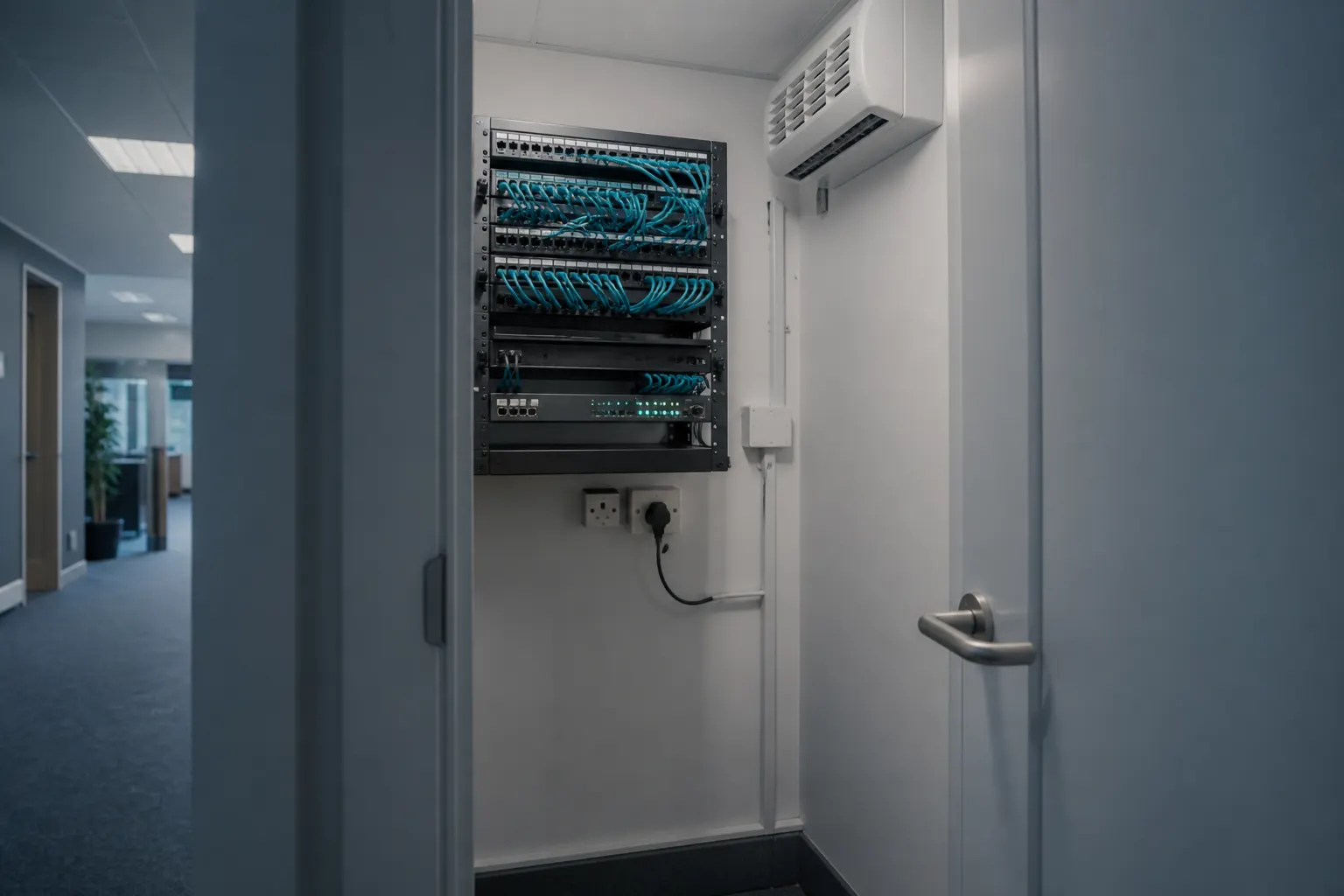
CRAC means computer-room air conditioning: plant built to run continuously, often with tighter temperature control than a shop system, sometimes with humidification, often with a path to an alarm. In a modern office the 'computer room' may be two racks in a former store. The name survived. The load might be 2 kW or 20 kW. Those are different purchases.
A comfort DX split cools air and, while cooling, pulls out some moisture. It can keep a small cupboard safe if it is sized for continuous duty, the condensate is alarmed, and someone knows it has failed. It will not, by itself, give you the redundancy a business-critical room expects. Say which failure you can tolerate.
Portables appear when the room is already hot. They are a bridge. The portable server-room guide says so. A brief for a permanent system should say the portable is leaving.
Write the load, then the label
Kilowatts of IT load, hours, and whether there is already ventilation that must keep running. The briefing guide for server-room installers is the full email to send. If you only remember one line, make it the load and the phone number that answers at night.
Close control costs more because it is built for the duty and the alarm, not because the grille looks serious. A cupboard that can run warm for an hour without disaster should not be sold a data-centre product. A room that takes card payments all weekend should not be sold a bedroom unit with no alarm. The CRAC comparison helps you land between those.
Moisture matters. Too dry and some equipment complains. Too wet and you grow other problems. Comfort cooling's side effect is dehumidification while it runs. A proper computer-room unit may control humidity on purpose. If you have a specification, attach it. If you do not, ask the installer to say what they are assuming.
The rest of the building
Heat rejected from the outdoor unit, condensate, electrical supply and fire stopping are the parts the office fit-out forgets. They are the same physical facts as any commercial install, with a higher embarrassment if they fail. The commercial removal guide is relevant the day the old kit comes out of a London cupboard.
If the system grows past 12 kW, TM44 can apply. GOV.UK describes the inspection. Many cupboards stay under it. Add the number up when you add the second rack.
F-gas certification applies to whoever installs the refrigerant circuit, CRAC or split. The acronym does not change the gas.
What to ask for
A proposal that states continuous duty, the design load, the alarm, the condensate failure path, and the noise. Model codes. A maintenance visit that exists on weekends if the room does. If the proposal reads like a living-room quote with the word server typed at the top, send the briefing guide's list back to them.
Compare that with the server-room cooling guide's advice and the cost guide's band. You are allowed to choose a simple split for a simple cupboard. You should choose it on purpose.
Keep the load figure with the invoice. The next engineer, and your future self, will ask what the room was supposed to survive. The older name, computer room, can sit on the folder. The numbers are what matter.
Frequently asked questions
Is CRAC the same as a normal air conditioner?
CRAC is cooling built for a computer room: continuous duty and closer control. A normal split can cool a small cupboard if it is specified for that, with alarms and drainage. The CRAC-versus-split guide compares them properly.
What load should I tell the installer?
The IT electrical load in kilowatts, or a list of equipment if you have not measured it. Mark estimates as estimates. The briefing guide shows the rest of the email.
Do I need a portable while I wait?
Often, as a temporary bridge, watched by someone. It is not the permanent design. Say that in both the hire and the install briefs.
Does the name change the refrigerant rules?
No. A certified company still handles the F-gas. Ask for certification whichever acronym is on the brochure.
Core buying guides
Start with these high-intent guides, then dig into the rest of the library.
Related guides
More technology guides
Sources and further reading
How this guide was prepared
This guide was written by the Local AC Installers Editorial Team. We compare official guidance, legislation and established consumer information, separate general information from project-specific advice, and show publication dates and sources. We do not accept installer accreditation claims at face value.