

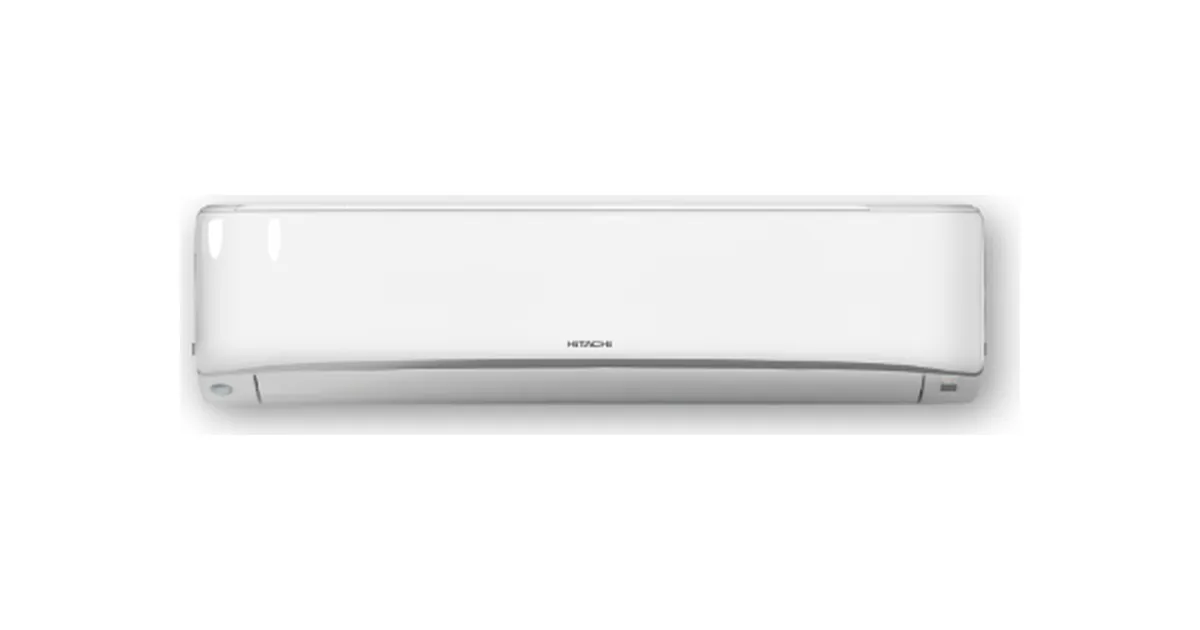
airHome 800 is Hitachi's best wall unit for UK homes. The 2.5 kW pair, RAK-XJ25RHAE with RAC-XJ25WHAE, is certified at SEER 9.50 and SCOP 5.20, both A+++, and Hitachi says it keeps heating at outdoor temperatures down to minus 20°C. It is quiet to 21 dB(A) and adds a motion sensor, built-in Wi-Fi and FrostWash 3.0 coil cleaning. Buy it if you will heat with it through winter; for a room cooled a few weeks a year, airHome 600 or 400 does the job for less.
Published figures
Hitachi's UK range page lists the airHome 800 as the RAK-XJ RHBE(G) indoor units with RAC-XJ WHBE outdoor units. The certified 2.5 kW figures below are from the Eurovent certificate for the RAK-XJ25RHAE pairing.
| airHome 800 (RAK-XJ25RHAE / RAC-XJ25WHAE) | |
|---|---|
| SEER / cooling class | 9.50 / A+++ |
| SCOP / heating class (average climate) | 5.20 / A+++ |
| Quietest indoor setting | 21 dB(A) in silent mode |
| Outdoor operating range | Minus 20°C to 46°C |
| Wi-Fi | Built in, airCloud Go app |
| Cost per hour at full 2.5 kW cooling | About 6.9p at the price cap |
| Cost per kWh of heat | About 5.1p at the price cap |
What the extra money buys
Three things separate airHome 800 from the cheaper Hitachi wall units. First, efficiency: SEER 9.50 against 8.5 on airHome 600 and 7.5 on airHome 400 at the same 2.5 kW size, so it uses about a fifth less electricity than the 400 for the same cooling. Second, winter heating: the stated range runs down to minus 20°C outside, which matters if the unit will heat a room through January. Third, the motion sensor, which drives Smart Eco mode and SleepSense, turning output down when the room empties or you fall asleep.
It also gets FrostWash 3.0, which heats the coil to 56°C before freezing and thawing it to shift grease and odours, and Mold Guard 2.0, which dries the inside of the unit when humidity is high. Hitachi notes that both fall back to the standard routines when the indoor unit is connected to an airHome Multi outdoor unit.
Who should buy it
airHome 800 makes sense for a room you will heat as well as cool for most of the year, such as a garden office, an extension or a cold bedroom. In that use the higher SCOP pays back: heat costs about 5.1p per kWh against about 5.7p from an airHome 400.
For a bedroom cooled a few nights a summer, the saving is small. At 100 hours of cooling a year at 60% load, airHome 800 costs about £4.20 to run against about £5.30 for an airHome 400. Spend the difference on a better outdoor position or a shorter pipe run instead.
Buying checks
Make sure the quote names both model codes, the indoor RAK-XJ and the outdoor RAC-XJ, and the capacity in kW. Ask whether the installer is fitting it as a single split or on a multi-split outdoor unit, because the figures above are for the single split.
Hitachi's dealer network is thinner than Daikin's or Mitsubishi Electric's, so ask who will service it and how quickly they can get parts. Any installer must hold F-gas company certification.
Frequently asked questions
What is the SEER of the Hitachi airHome 800?
The 2.5 kW pair, RAK-XJ25RHAE with RAC-XJ25WHAE, is certified at SEER 9.50 (A+++) and SCOP 5.20 (A+++) for the average climate.
How quiet is the airHome 800?
Hitachi quotes 21 dB(A) in silent mode for the 1.8, 2.5 and 3.5 kW models. Larger sizes are louder.
Does the airHome 800 have Wi-Fi?
Yes. It has built-in Wi-Fi and works with Hitachi's airCloud Go app, including Google Home and Amazon Alexa voice control.
Is airHome 800 worth it over airHome 600?
If you will heat with it through winter, usually yes: SCOP 5.20 against 4.9 and a stated heating range down to minus 20°C. For summer-only cooling, airHome 600 is close enough.
Core buying guides
Start with these high-intent guides, then dig into the rest of the library.
Related guides
More homes guides
Sources and further reading
- Hitachi Cooling & Heating UK: airHome 800 range
- Eurovent certificate: Hitachi RAC-XJ25WHAE / RAK-XJ25RHAE (airHome 800, 2.5 kW)
- Hitachi Cooling & Heating UK: airHome 600 range and technical table
- Hitachi Cooling & Heating UK: airHome 400 range and technical table
- Ofgem: energy price cap, 1 October to 31 December 2026
- GOV.UK: certification for companies working on equipment containing F-gas
How this guide was prepared
This guide was written by the Local AC Installers Editorial Team. We compare official guidance, legislation and established consumer information, separate general information from project-specific advice, and show publication dates and sources. We do not accept installer accreditation claims at face value.