

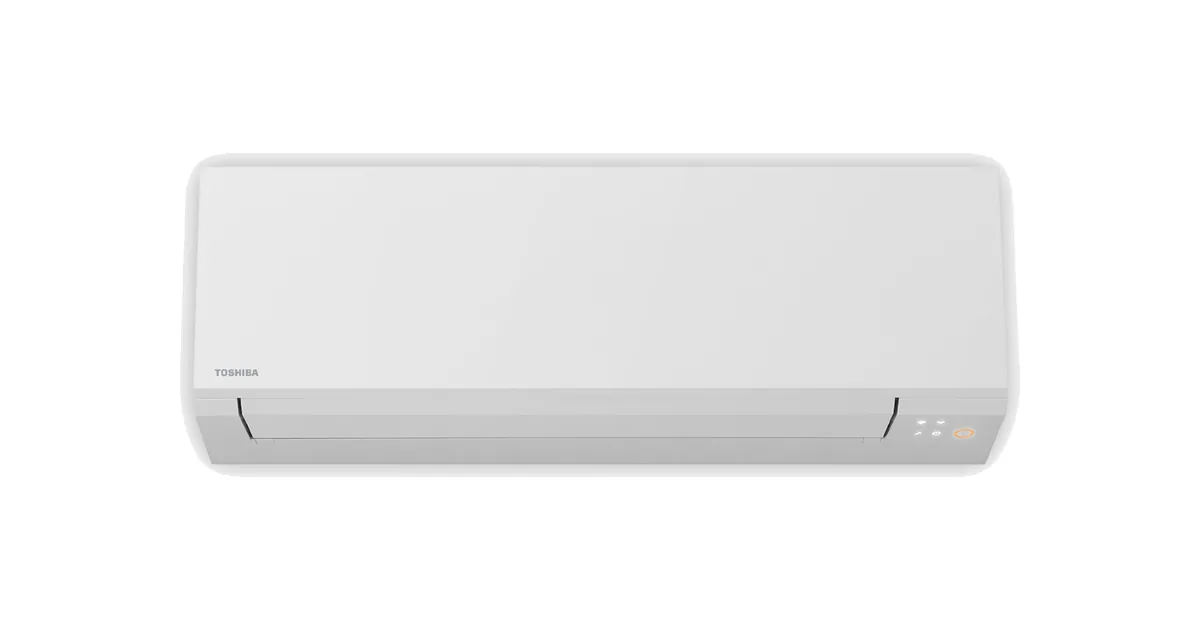
Shorai Edge is Toshiba's slim matt wall unit in white or black, the step most households actually live on if they want the brand to look considered. Toshiba's brochure lists the 2.5 kW at SEER 8.6 and SCOP 5.1, A+++ both ways, with indoor sound down to 19 dB(A). The range runs from 2.0 kW up to 7.0 kW, and the big sizes give back some of that label. Seiya is the plainer value unit. Haori is the fabric front. Edge is the one in between. Update, 29 November 2026: Toshiba UK no longer lists the Shorai Edge among its wall units; its current matt black and white unit is the Shorai Curve, so a new quote will usually name the Curve. Ask the installer for the Curve's figures at your size before comparing.
The panel you get
Straight lines, a matt finish, and piping pre-cuts so the connections can disappear more neatly. White and black have their own indoor codes (RAS-B..G3KVSG-E and the B suffix for black on the brochure). The remote matches the colour. It is a designed box. The textile cover belongs to Haori, which is a different indoor unit.
Smaller indoors are 293 mm high, 800 mm wide and 226 mm deep, about 10 kg. From the 5 kW class upward the brochure moves to a larger chassis, 320 mm by 1053 mm by 245 mm. Order the size and you order the furniture. A 7 kW Edge is a wide presence on the wall.
R32, reversible, and an ordinary F-gas install. Toshiba's UK product pages are the home of the engineering data if the quote uses a newer suffix than the brochure on your desk. Ask for the sheet that matches the code, not the family name alone.
Numbers worth putting on the quote
From the Shorai Edge black and white brochure, nominal cooling and the seasonal figures look like this. Quiet is the low sound-pressure figure in cooling.
| Nominal cooling | SEER | SCOP | Class cool / heat | Quiet cooling |
|---|---|---|---|---|
| 2.0 kW | 8.5 | 5.1 | A+++ / A+++ | 19 dB(A) |
| 2.5 kW | 8.6 | 5.1 | A+++ / A+++ | 19 dB(A) |
| 3.5 kW | 8.6 | 5.1 | A+++ / A+++ | 19 dB(A) |
| 5.0 kW | 7.3 | 4.6 | A++ / A++ | 26 dB(A) |
| 7.0 kW | 6.3 | 4.1 | A++ / A+ | 28 dB(A) |
Where it sits in the Toshiba ladder
Seiya is the unit for a spare room or a tight budget, with its own guide. Haori is the unit when the front of the machine has to look like fabric, and the Stylish comparison is where people cross-shop that idea. Edge is the middle: high seasonal numbers on the sizes people fit most, two colours, a slimmer story than the value box.
Outdoor units on the brochure include a silent mode with lower sound-pressure figures than the standard high setting. If the condenser faces a bedroom window next door, ask for that mode in the handover, and still apply Planning Portal judgement to the position itself. A silent setting is not a planning consent.
Heating SCOP of 5.1 on the 2.0 to 3.5 kW sizes is a genuine winter credential for a room you heat with the split. The 7 kW's SCOP of 4.1 is the reminder to read the size you are buying. Big rooms need capacity. They should see their own label.
A clean way to commission it
Colour confirmed in writing, because black and white are different stock. Pipe route, drain, and an isolator the household can find. The app or controller options Toshiba offers for the range, named on the quote if you are paying for them.
Service is ordinary: filters, coils, drain, and a company that will still answer when the remote is the least of the problem. The Toshiba brand guide covers the wider catalogue, including cassettes. Keep this page for the Edge wall unit.
If you are holding a Haori quote and an Edge quote, use the comparison page. If you are holding only Edge, this is the sheet to check the size against.
Frequently asked questions
Is Shorai Edge quieter than Seiya?
Edge publishes 19 dB(A) on the popular small sizes. Seiya's own page has its figures. Compare the same kilowatt and the same fan step, not the family names.
Can I get it in black at 7 kW?
The brochure lists black and white indoor codes through the range, including the largest. Confirm stock against the exact RAS-B code rather than assuming the showroom sample.
Is A+++ on every size?
On Toshiba's Edge brochure the 2.0, 2.5 and 3.5 kW sizes are A+++ for cooling and heating. The 5.0 and 7.0 kW sizes step down. Read the row you are buying.
Does silent outdoor mode replace good siting?
It lowers the published outdoor figure when selected. The unit still needs airflow, access and a lawful place under Planning Portal guidance.
Core buying guides
Start with these high-intent guides, then dig into the rest of the library.
Related guides
More homes guides
Sources and further reading
How this guide was prepared
This guide was written by the Local AC Installers Editorial Team. We compare official guidance, legislation and established consumer information, separate general information from project-specific advice, and show publication dates and sources. We do not accept installer accreditation claims at face value.